Diplomacy rarely moves at the speed of a breaking news alert. Usually, it crawls while people die.
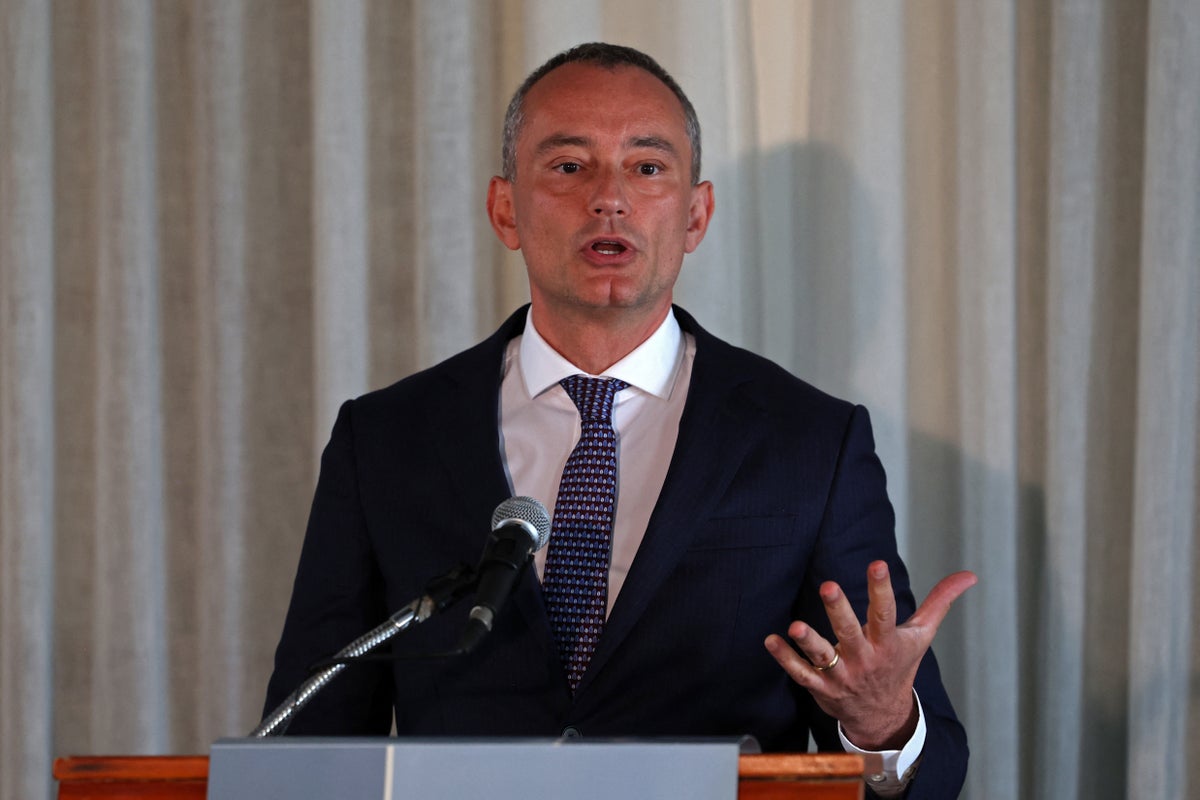
Nickolay Mladenov just blew past standard diplomatic politeness. As the high representative for Donald Trump's Board of Peace, he didn't mince words at the United Nations Security Council. He called out Israel directly. He argued that ongoing military strikes are the main obstacle choking off a lasting Gaza ceasefire.
Most headlines treat peace talks like a simple yes-or-no vote. They aren't. They are messy, contradictory, and entirely dependent on what happens on the ground when the cameras turn off. Mladenov claims Trump's 20-point framework has moved from the negotiating table to the engineering table. Hamas has supposedly agreed to surrender its weapons and hand governance over to a civilian authority.
So why are people still dying?
Because reality on the ground refuses to match the talking points in New York.
The Core Disconnect Over Gaza Disarmament
Israeli Prime Minister Benjamin Netanyahu wants total security control first. He insists that Israeli military forces will stay put across the enclave until every single weapon in Hamas's arsenal is completely surrendered. It sounds logical on paper. If a threat exists, you crush it.
Mladenov says that approach is a trap.
During his address, he challenged the entire premise of continuing bombardments. He asked a pointed question. Will another strike on a munitions depot actually stop Hamas from rearming, or will it just delay the structural demilitarization that needs to happen through civilian transition?
His answer was blunt. It will not stop them. It only stalls progress.
You cannot build a new civic administration while bombs are actively falling on residential neighborhoods. People living through the rubble don't care about diplomatic phases. They care about survival. When ongoing strikes keep claiming lives, the promise of a peaceful future sounds like a cruel joke.
Behind Closed Doors in Washington and Jerusalem
Diplomacy happens in hotel rooms and secure conference rooms long before it hits a microphone. Mladenov recently met with Netanyahu and Jared Kushner, who serves as Trump's adviser. According to the envoy, they went through Israeli concerns one by one and managed to narrow down the technical gaps.
That sounds encouraging. But Washington and Jerusalem still have entirely different definitions of success.
The U.S. ambassador to the U.N., Mike Waltz, made it clear that Hamas's compliance will be measured through tangible conduct rather than empty promises. That is standard operating procedure for American foreign policy. Trust, but verify. Or in this case, don't trust at all until the guns go quiet.
Meanwhile, Israel's deputy U.N. ambassador, Noa Furman, doubled down on total disarmament as an absolute prerequisite for any forward movement. She confirmed coordination with Washington, but the ironclad stance on military occupation remains unchanged.
Netanyahu also rejects the idea of a two-state resolution, which Mladenov explicitly tied to Trump's blueprint as a credible long-term horizon. That is a massive ideological chasm. You cannot build a shared future when the leaders involved fundamentally disagree on what the map should look like when the dust settles.
What Happens When Talks Break Down
If you want to understand why peace initiatives fail, look at the margin for error. It is razor-thin.
Mladenov issued a stark warning to the Security Council. A return to open warfare wouldn't just be a minor setback. He called it a point of no return. If the current framework collapses under the weight of continued strikes, the physical infrastructure needed for reconstruction vanishes permanently.
Think about what that means for the region.
- A generation grows up inside total rubble.
- Radicalization deepens because hope is systematically erased.
- The next war stops being a distant threat and becomes an immediate certainty.
Leaders love to talk about political resolve. They use it as a buzzword when they want lower-level diplomats to perform miracles. But political resolve requires taking actual risks. For Israel, that means trusting a civilian transition process while security threats remain. For international backers, it means holding both sides accountable when violations happen, instead of looking the other way.
Mladenov laid out a binary choice to the international community. Either Gaza gets disarmed, rebuilt, and reconnected to the world, or it stays fractured, destroyed, and primed for the next cycle of bloodshed.
There is no middle ground left. The negotiations are no longer about refining text on a document. They are a race against time before the remaining trust evaporates completely.