Geopolitics in East Asia is changing fast. You see it in every headline coming out of the peninsula. Washington, Seoul, and Tokyo aren't just talking anymore; they're locking shields. The latest joint military exercises involving the U.S., South Korea, and Japan represent a massive shift in how these three nations respond to escalating provocations from Pyongyang.
Pyongyang wants to rattle cages. They test missiles. They issue fiery rhetoric against the West. They try to drive wedges between the democratic allies. But these massive trilateral military drills hit back hard against that pressure. They prove that trilateral cooperation isn't just a fragile diplomatic handshake. It is a working, breathing defense architecture.
If you are trying to understand why these joint military exercises matter right now, you have to look past the standard press releases. Let's break down what is actually happening on the ground and in the air.
The Real Message Behind the Trilateral Exercises
Most casual observers think military drills are just routine training. They are not. When strategic bombers, advanced stealth fighters, and multi-national naval strike groups coordinate maneuvers in close proximity to North Korean waters, it is a deliberate signaling campaign.
North Korea ramps up pressure on the U.S. and its regional partners through constant weapons testing. Kim Jong Un's regime calculates that they can exploit perceived gaps in the alliance. They bet that Tokyo and Seoul will hesitate to act together because of historical baggage.
They are wrong.
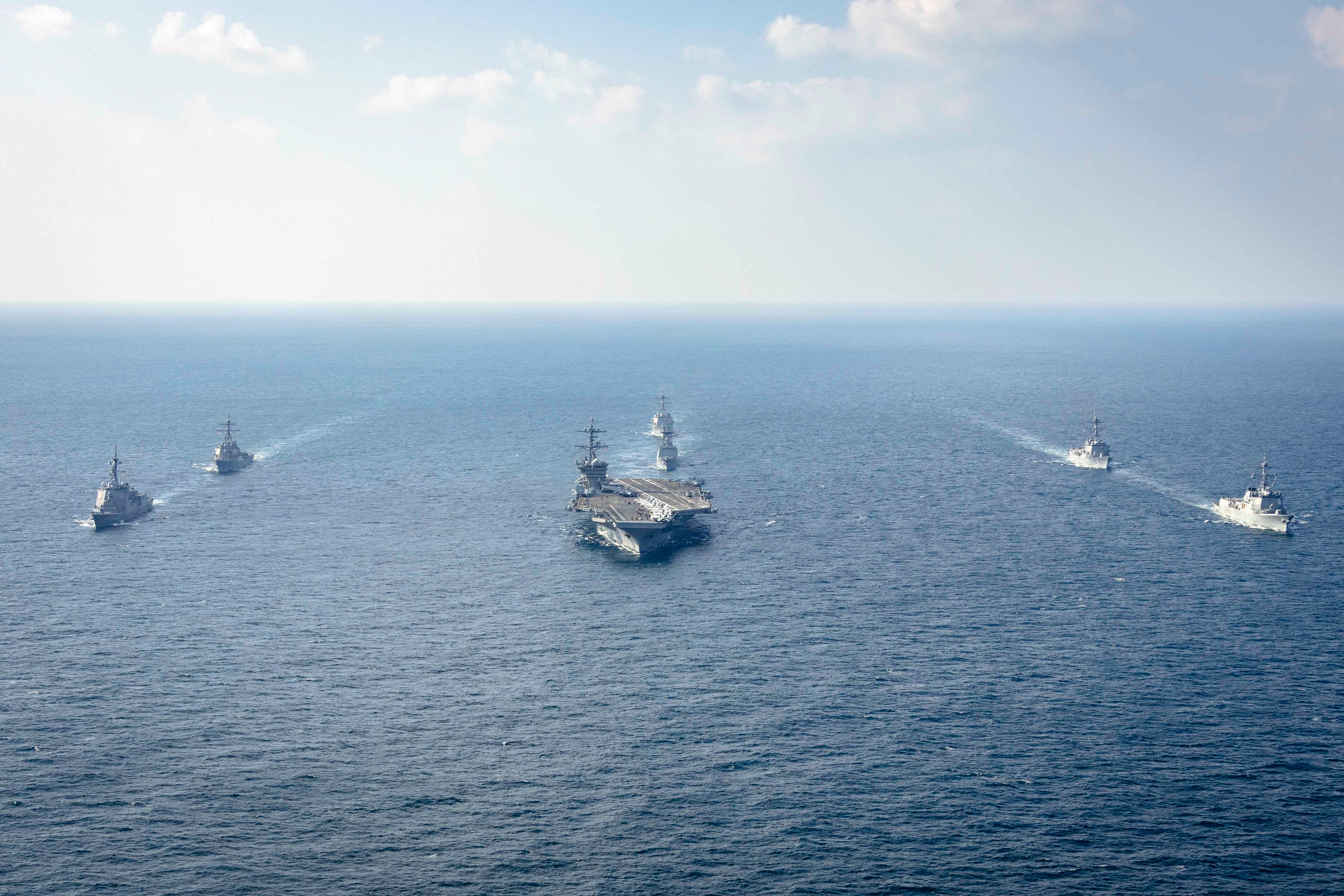
The trilateral framework changes the math entirely. Instead of fighting a fragmented response, Pyongyang now faces a unified front. When an American aircraft carrier docks in Busan, accompanied by Japanese and South Korean destroyers, the signal is unmistakable. Deterrence works best when it is loud, visible, and collective.
Why Seoul and Tokyo Are Burying the Hatchet
History doesn't vanish overnight. Japan and South Korea have decades of painful history stemming from the Japanese colonial period. Politicians in both countries have historically weaponized these grievances for domestic political points.
Yet, external threats have a way of forcing clarity. North Korea's advancing nuclear program and its cozy military alignment with Moscow left Seoul and Tokyo with very few good choices.
President Yoon Suk Yeol in South Korea took a massive political gamble. He chose future security over past wounds. Prime Minister Fumio Kishida matched that momentum. They realized that waiting for a crisis to coordinate defense is a recipe for disaster.
You can see the results in the frequency of these drills. They are no longer rare, symbolic gestures. They are regular, institutionalized, and increasingly complex operations. Anti-submarine warfare, missile defense tracking, and amphibious landings are now standard joint checklist items.
How Pyongyang Responds to Combined Pressure
Kim Jong Un hates these drills. Every time the U.S., South Korea, and Japan stage a joint exercise, North Korean state media explodes with outrage. They call the maneuvers a rehearsal for invasion.
That narrative is classic projection.
North Korea's entire defense doctrine relies on offensive readiness and nuclear coercion. When the allies train together, they disrupt Pyongyang's monopoly on escalation. North Korea is used to setting the rhythm of the conflict. They launch a missile; the West issues a statement.
Now, the rhythm is broken. The allies are dictating the pace. By staging continuous, high-profile drills, the U.S., South Korea, and Japan force Pyongyang to spend scarce resources reacting rather than planning new provocations.
The Strategic Value of Real-Time Data Sharing
Military hardware gets all the press, but information wins modern wars. One of the most important outcomes of this recent trilateral cooperation is real-time missile warning data sharing.
For years, South Korea and Japan shared radar data with the United States separately, but not directly with each other. That created dangerous lag times when detecting fast-flying North Korean ballistic missiles.
Connecting those radar systems directly changed everything. Seconds matter when a hypersonic or intermediate-range missile is inbound. Closing that communications gap makes the combined defense shield exponentially more effective.
What Happens Next on the Peninsula
The security situation in East Asia is not going to calm down anytime soon. North Korea continues to deepen its military ties with Russia, trading artillery shells and conventional munitions in exchange for aerospace and missile technology.
That globalization of the Korean conflict makes regional alliances even more vital. Security in Europe and security in Asia are no longer separate oceans. They are deeply connected.
You should expect to see these trilateral drills expand. They will likely incorporate more cyber defense elements and supply chain security measures. The alliance is evolving from a purely military pact into a comprehensive strategic partnership.
Keep your eyes on the frequency of these deployments. They are the true barometer of stability in the region. When deterrence is active and visible, the chances of miscalculation drop significantly.
Watch the skies, watch the waters, and remember that unity is the only language Pyongyang ultimately respects.