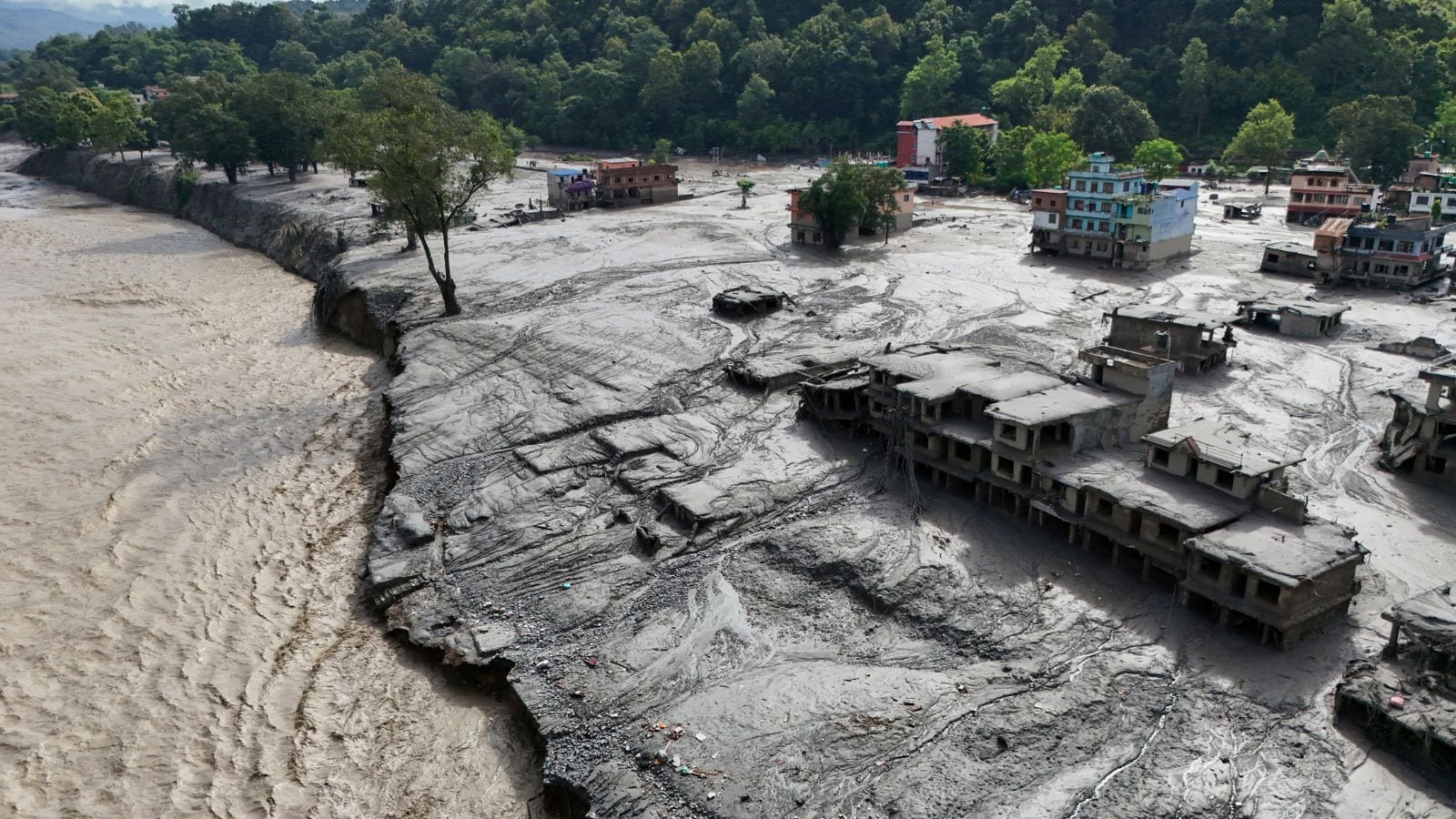
Himalayan communities are staring down another disaster. Following a catastrophic flash flood triggered by a high-altitude glacier and rock collapse in late August, both Nepal and China have issued urgent warnings regarding swelling barrier lakes threatening to burst. Millions of cubic meters of water are pooling behind unstable debris dams right as heavy monsoon rains continue to batter the region. It is a terrifying race against time.
If you think this is just standard seasonal flooding, look closer. The crisis unfolding along the border regions of Nepal and China's Tibet is a complex, multi-hazard emergency. When a section of the Langtang-Lirung mountain slope detached, it sent millions of tons of rock, ice, and mud crashing into river systems without warning. That initial avalanche blocked water flows, creating temporary barrier lakes that now pose an immediate, massive threat to everyone living downstream.
The Mounting Danger of Barrier Lakes
Water is accumulating fast. Chinese authorities calculated that roughly 3 million cubic meters of water—equal to about 1,200 Olympic-sized swimming pools—would rush into an already dammed lake area within just a few days. Drone footage from state broadcasters shows enormous pools of brown water pushing against unstable walls of stones and debris. There are no safe outlets.
Meanwhile, Nepal's disaster management authorities have flagged similar swelling near the initial impact zones. With fresh rainfall forecasted, the pressure on these natural dams mounts hourly. Rescuers and engineers know that if these barriers fail, a secondary wave of destructive slurry could wipe out what little remains standing along the river valleys.
Why Traditional Warning Systems Are Failing
One harsh reality of the August 2026 disaster is how caught off-guard everyone was. Many standard early-warning setups rely heavily on tracking known glacial lake outburst floods (GLOFs) or severe monsoon rain downpours. But this event started with a dry-slope glacier and rock collapse—meaning zero rain fell before the first wave struck.
Hydrologists and cryosphere specialists point out that conventional sensors simply cannot catch subterranean shifts or sudden ice detachments on remote peaks. When a disaster unfolds in seconds, traditional emergency protocols break down. Communities get minutes—sometimes seconds—to escape.
Climate Pressures in High Mountains
You cannot talk about this crisis without looking at the bigger picture. High-altitude regions across the Himalayas are warming significantly faster than the global average. This relentless temperature increase accelerates glacier retreat, thaws permafrost, and leaves massive amounts of loose debris clinging precariously to steep mountain walls.
When ice loses its grip, gravity does the rest. Experts emphasize that while tying every single weather anomaly directly to climate change is complex, the underlying ingredients for catastrophic slope instability are multiplying. As glaciers thin and retreat, more unstable rock faces are exposed, setting the stage for repeat disasters.
What Needs to Change Right Now
Fixing this problem requires a total overhaul of how Himalayan nations approach disaster preparedness. Relying on downstream river gauges is no longer enough.
- Deploy high-resolution satellite monitoring to track structural shifts on high-altitude peaks before they collapse.
- Install advanced, real-time sensor networks across remote tributary valleys to catch sudden blockages instantly.
- Upgrade community-level evacuation plans so that local residents and rescue teams have functional drills and rapid communication lines.
The water keeps rising, and the rain isn't stopping. Ignoring these warning signs is no longer an option.
Nepal-China Border Floods | Lake Breaches, Rescues On Hold
This video provides on-the-ground news coverage of the barrier lake breaches and the suspension of rescue operations following the Himalayan disaster.