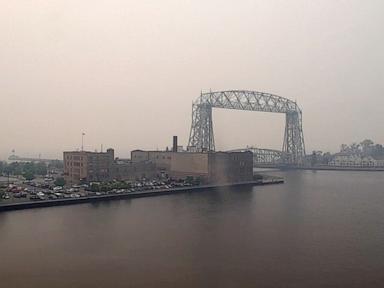
You step outside and the air feels heavy. The sun is a weird, angry orange orb hanging in a hazy, yellowish sky. It smells like a campfire, but there is no cozy bonfire nearby. Instead, a massive plume of toxic particulate matter is blanketing the state, shattering historical records and triggering emergency declarations from the highest offices.
Minnesota is currently locked in a dual crisis. Uncontrolled wildfires in the northern forests and Canada have collided with a brutal summer heat dome, sending air quality plummeting to levels never seen before in some parts of the state. On Wednesday, July 15, 2026, Governor Tim Walz extended a state of emergency as hazardous smoke pushed south.
This is not just a minor inconvenience for people with asthma. It is a full-blown public health emergency.
If you live anywhere in Minnesota right now, you need to know exactly what is happening, why this smoke is different, and how to keep your family safe.
The Sudden Emergency Blanketing the State
For days, wildfires have raged across Ontario and northeastern Minnesota. Lightning strikes paired with bone-dry conditions ignited more than 20 fires in the Arrowhead region and the Boundary Waters Canoe Area Wilderness. The Boundary Waters—a pristine crown jewel of northern Minnesota—is now closed indefinitely. Evacuations are actively underway, and search-and-rescue teams have already pulled at least 17 stranded people out of the path of the flames.
But the fire itself is only half the story. The wind is doing the rest of the damage.
A sagging cold front is acting like a giant broom, sweeping a massive wall of heavy surface smoke out of Canada and the Arrowhead directly down into central and southern Minnesota. The smoke has already choked Duluth, Brainerd, Moorhead, and St. Cloud. Now, it is moving deep into the Twin Cities metro area and Winona.
The numbers coming from air quality monitors are frankly terrifying.
- West Duluth: Recorded a preliminary hourly fine particle concentration of 600.1. This is the highest hourly reading measured in the state since 2014.
- Grand Portage: Hit a reading of 576.3. On Tuesday morning, this tribal nation officially had the worst air quality in the entire United States.
- Duluth: Registered a massive 513.3.
To put those numbers in perspective, anything over 300 on the Air Quality Index (AQI) is classified as "hazardous". At 600, the air is essentially a toxic soup. The Minnesota Pollution Control Agency (MPCA) has extended its air quality alerts through Friday morning, July 17, for a massive swath of the state.
Why the Air Turned Toxic So Fast
You might be wondering how things escalated so quickly. After all, we have had Canadian wildfire smoke drift across the border before.
It is a combination of bad luck and meteorology. The fires in Canada are burning hot and deep, fed by forests that have been dried out by weeks of intense heat. At the same time, a stagnant weather pattern—a heat dome—has settled over the Upper Midwest.
Normally, wind disperses smoke. It dilutes it as it travels. But right now, the atmospheric conditions are trapping the pollution close to the ground. The sagging front is literally pushing the heaviest, most concentrated layers of surface smoke downward, dragging it south across the state like a heavy blanket.
Because the air is hot and still, the smoke is not moving out. It is pooling.
Understanding the Real Threat of PM2.5
When we talk about wildfire smoke, we are talking about PM2.5. These are fine, inhalable particles that are 2.5 micrometers in diameter or smaller. For comparison, a single human hair is about 70 micrometers wide.
You cannot see individual PM2.5 particles, but you can feel them.
Because they are so incredibly tiny, your nose and throat cannot filter them out. When you breathe in smoky air, these particles travel deep into your lungs. They bypass your respiratory defenses and pass directly into your bloodstream.
Once they are in your blood, they trigger systemic inflammation.
For high-risk individuals—older adults, pregnant people, children, and anyone with heart or lung diseases like asthma or COPD—this exposure can be deadly. It can trigger instant asthma attacks, worsen heart disease, and significantly increase the risk of heart attacks and strokes.
Even if you are completely healthy, do not assume you are safe. Breathing air with an AQI over 300 or 500 will cause immediate physical symptoms. You will experience shortness of breath, stinging eyes, a raw throat, coughing, headaches, and intense fatigue.
Your body is telling you that the air is poison. Listen to it.
Actionable Steps to Keep Your Lungs Safe
Do not panic, but do take this seriously. Here is what you need to do immediately to protect yourself and your family while this alert remains in place.
Lock Down Your Home's Air Quality
Staying indoors is only effective if the air inside your house is actually cleaner than the air outside.
- Close every window and door. This seems obvious, but even a tiny crack can let in a massive amount of fine particles. Turn off any window air conditioning units that bring in fresh air from the outside.
- Set your HVAC to recirculate. If you have central air conditioning, make sure the system is set to "recirculate" rather than drawing in outdoor air.
- Upgrade your furnace filter. Standard cheap fiberglass filters do absolutely nothing for smoke. You need a filter rated MERV 13 or higher to capture PM2.5 particles.
- Build a Corsi-Rosenthal Box. If you cannot find or afford an expensive HEPA air purifier, you can make a highly effective DIY version. Tape four MERV 13 furnace filters together into a box shape, seal the bottom with cardboard, and tape a standard 20-inch box fan to the top blowing upward. It works incredibly well and costs under $100.
Stop Exercising Outdoors
If you are a runner, cyclist, or outdoor worker, you must stop vigorous outdoor activities immediately.
When you exercise, your respiration rate increases dramatically. You breathe deeper and faster, often through your mouth, which bypasses your nasal passages entirely. This forces massive quantities of PM2.5 deep into your lung tissues. Take your workouts indoors, or better yet, take a rest day until the smoke clears.
Wear the Right Mask
If you absolutely must go outside, a standard surgical mask or a cloth bandanna will not protect you. They are designed to stop large droplets, not microscopic smoke particles.
You need a tightly fitting N95 or KN95 respirator.
Make sure it forms a perfect seal around your nose and mouth. If air is leaking out of the sides when you breathe, the mask is not doing its job.
The Hard Truth About Future Summers
This is not a temporary blip. We have to stop treating these intense smoke events as shocking, one-off anomalies.
Decades of aggressive fire suppression have left our forests overcrowded and packed with dry underbrush. Combined with rising global temperatures and prolonged droughts, our landscapes are essentially giant tinderboxes waiting for a single spark.
We are living in an era of "mega-fires". The wildfire season is starting earlier, lasting longer, and producing far more toxic smoke than it did a generation ago.
For Minnesotans, this means the clean, crisp summer air we used to take for granted is now something we have to monitor constantly. Having a plan for smoky days is no longer just a concern for people living in California or Oregon. It is a basic survival skill for the Upper Midwest.
Keep your windows closed, keep your masks handy, and keep a close eye on the MPCA air quality map until this heavy front finally pushes the worst of the toxic air out of the state. Your health depends on it.