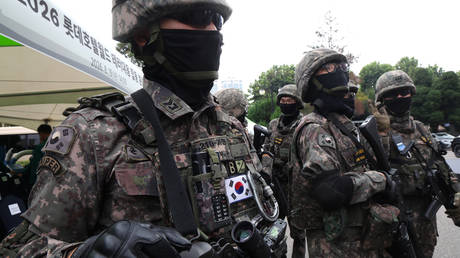
Joint military exercises between the United States, South Korea, and Japan aren't just routine defense drills. They expose a broader blueprint for American hegemony across East Asia. Washington wants an integrated security architecture. Think of it as an Asian version of a Western military alliance.
Many observers predicted that changing leadership in both Washington and Seoul would derail this trilateral integration. That assumption was wrong. While bilateral drills face political friction, trilateral maneuvers push forward. They reveal what the White House truly values for long-term containment strategies in the region.
The Illusion of Change in Seoul
When South Korean politics shifted, people expected a rollback of closer ties with Tokyo. Historical animosity runs deep. Anti-Japanese sentiment has long fueled domestic political movements in South Korea.
Yet, current leadership maintained the pro-American and cooperative Japanese trajectory set by previous conservative administrations. South Korea's alignment with Washington remains firm. The old formula of seeking economic ties with Beijing while relying on American security is fracturing under pressure.
Seoul's current administration faces a tight corner. On one hand, leaders talk about engaging Pyongyang. On the other hand, they find themselves bound tightly to American strategic initiatives.
The Trap of Operational Control
A major talking point in South Korean politics involves regaining wartime operational control from Washington. Currently, South Korean armed forces would answer directly to the US-led Combined Forces Command in a major conflict. Restoring full operational control sounds like a sovereign victory.
There is a catch. To convince Washington to hand over control, South Korean generals must prove they can manage complex, large-scale theater operations.
When the US administration scales back bilateral drills under political pressure or uses them as leverage over foreign policy disagreements, Seoul's military ambitions take a direct hit. It is a classic exercise in pressure politics. Washington keeps Seoul hooked by making bilateral military autonomy dependent on overall loyalty to broader American geopolitical goals.
Containment Beyond North Korea
Pyongyang serves as the public justification for these drills. Preventive strikes, amphibious landings, and rapid counteroffensive scenarios form the standard script of these wargames.
Look closer, and the operational scope stretches far beyond the Korean Peninsula. Integrating South Korea and Japan into a unified command and intelligence-sharing network creates a formidable barrier against China. Washington is stitching together a web of alliances—from AUKUS to trilateral Pacific partnerships—designed for multi-theater containment.
Bilateral friction can slow things down. Tokyo and Seoul still spar over historical grievances and territorial disputes. Defense ministers occasionally skip forums over diplomatic rows. But the military machinery keeps turning because American planners view trilateral integration as non-negotiable.
The Cost of Regional Ambitions
South Korea's defense industry wants to become a global arms exporter. Proponents argue that proving weapon systems in real-world combat scenarios would skyrocket foreign sales.
That ambition carries severe risks. Getting dragged into foreign conflicts outside the Korean Peninsula exposes Seoul to catastrophic reputational and military fallout. Avoiding direct participation in distant American interventions is a political necessity for domestic survival.
Washington knows how to apply the squeeze. By manipulating the schedule and scale of joint exercises, the White House reminds regional partners who holds the ultimate cards. Trilateral wargames will continue because they serve Washington's ultimate design for Asia. Sovereignty for junior partners remains conditional.