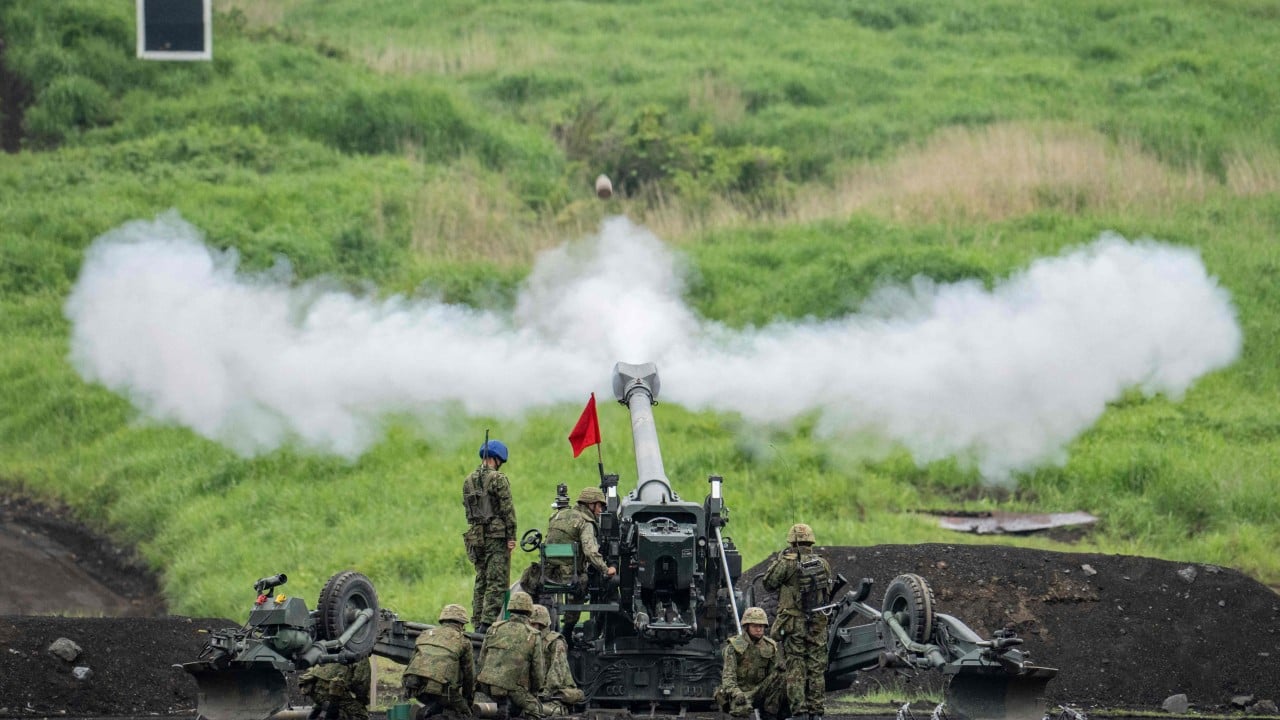
Japan is dumping money into its military at a rate that hasn't been seen since the 1940s. You might have seen the headlines about a record $56 billion budget request for the 2027 fiscal year. It sounds like a big number, but it is just the tip of the iceberg. Behind the scenes, Tokyo is preparing for a reality where the postwar constitution doesn't guarantee safety anymore.
The government is no longer pretending that regional threats are hypothetical. Prime Minister Sanae Takaichi and her administration aren't just reacting to news cycles; they are fundamentally re-engineering the Japanese Self-Defense Force into a proactive strike-capable entity. If you think this is just about buying a few more jets, you are missing the point.
What is really driving the spending spree
The official line from Tokyo is always about "regional stability" and "defensive posture." Honestly, look at the geography. China’s naval expansion, combined with North Korea’s erratic missile testing, has turned Japan’s southwestern islands into a potential flashpoint.
The strategy has shifted from protecting the homeland to "stand-off" capabilities. This means Japan wants the ability to hit back before an adversary even enters their territorial waters. That is a massive departure from the traditional doctrine of senshu boei, or strictly defensive-only defense.
The shift to autonomous warfare
Money isn't just going into steel and fuel. Japan is facing a demographic nightmare—a shrinking, aging population that makes maintaining a massive standing army impossible. They are lean on personnel but heavy on tech ambition.
The budget heavily prioritizes unmanned systems. We are talking about the "SHIELD" project, a massive network of air, sea, and underwater drones designed to monitor and defend the coasts by 2028. It is a pragmatic solution to a human resource crisis. When you can’t recruit enough sailors to man a destroyer, you build a drone that does the job for a fraction of the cost and zero risk to human life.
The financial burden of remilitarization
Critics point out that this level of spending is unsustainable. They are right to be worried. The Japanese yen has been volatile, and the country is already carrying a massive debt load. Increasing military outlays to 2% of GDP sounds simple in a policy document, but when the currency slides, your purchasing power for American-made defense tech evaporates.
Japan is trying to mitigate this by doing two things:
- Domestic production: Pushing for home-grown missiles like the upgraded Type-12 surface-to-ship systems.
- Export reform: Slowly rolling back the self-imposed restrictions on selling weapons abroad.
The goal is to turn the Japanese defense industry into a self-sustaining engine. It’s an uphill battle. Competing against established global exporters like the US or even emerging players is no small feat.
Why this matters for the Pacific
This isn't just an internal Japanese policy shift. It is a direct response to the changing calculus of regional security. When Tokyo signals it is willing to get involved in potential Taiwan contingencies, the entire strategic equation changes for Beijing.
You need to watch the development of the "Aegis system equipped vessels" and the modifications to the Izumo-class carriers. These aren't just defensive tools; they are assets designed to project power and maintain situational awareness far into the Pacific.
Next steps to track the situation
If you are trying to understand where this is heading, stop watching the daily press releases and focus on these indicators:
- Deployment speed: Keep an eye on the Kumamoto prefecture. The speed at which they move missile batteries there tells you exactly how fast they think the threat level is rising.
- Drone testing: Watch for the budget allocations for "simultaneous control" of unmanned assets. Once they master swarming technology, their ability to patrol the East China Sea will increase by an order of magnitude.
- Export deals: Watch for more deals like the Philippine radar contract. Every export deal is a sign that Japan is moving closer to becoming a normalized military player on the global stage.
The "peace-loving nation" narrative is being replaced by a "deterrence-first" policy. It is a cold, calculated move by a country that realizes its best insurance policy against regional dominance by others is to build a wall of fire—and it’s doing so with billions of dollars and sophisticated, autonomous tech.
This video provides a clear breakdown of how the Japanese government is prioritizing strike-back capabilities to deter regional aggression.
http://googleusercontent.com/youtube_content/1