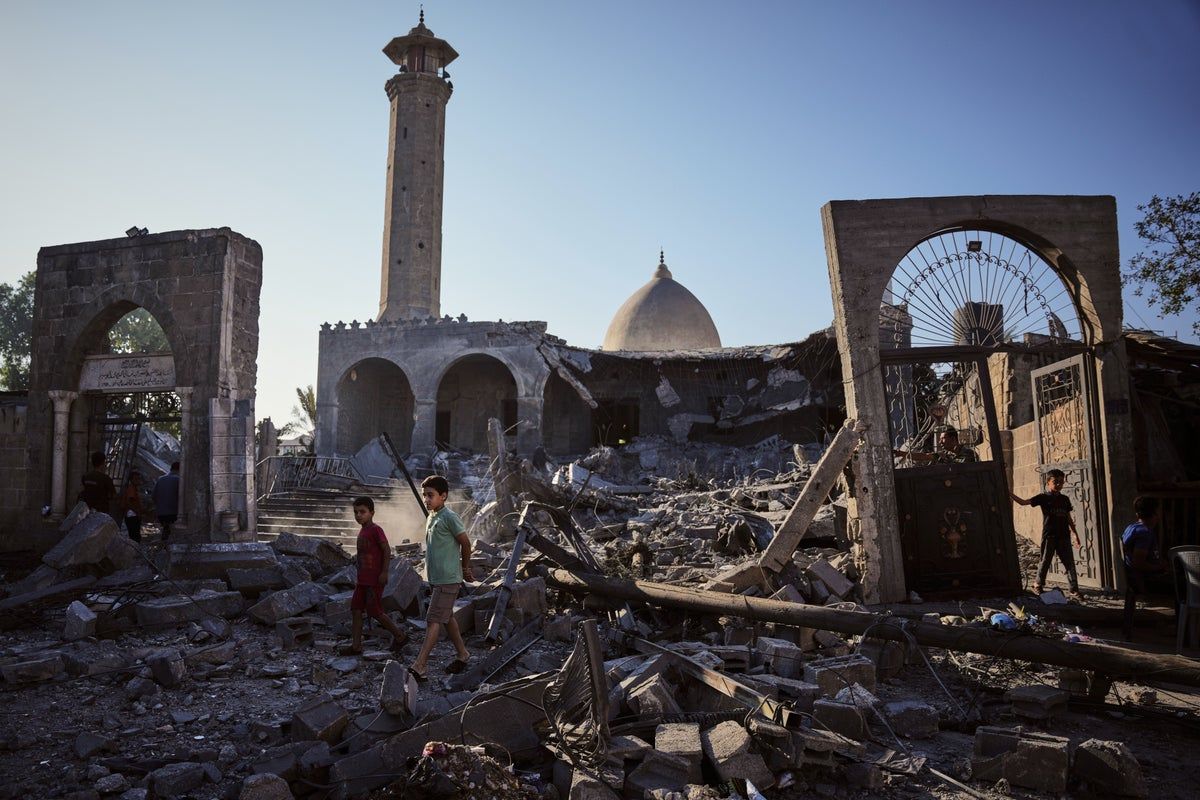
When the national power grid collapses entirely, a hospital doesn't just turn off the lights. It begins a desperate countdown. Right now, about 70 percent of electricity generators across medical facilities in the Gaza Strip are completely out of service.
If you look past the headlines about political ceasefires, you find an ongoing medical emergency driven by a stark reality: severe shortages of diesel fuel, engine oil, and basic generator spare parts. Without these vital supplies, intensive care units, operating rooms, and neonatal incubators face imminent shutdown. For a different view, check out: this related article.
Let's look at what is actually happening on the ground and why this crisis is reaching a breaking point.
The Mechanical Breakdown Behind the Power Cuts
Most people assume hospitals fail only when diesel runs dry. But technicians inside facilities like Nasser Hospital and Al-Aqsa Martyrs Hospital face a dual disaster. Not only is fuel restricted, but the engine oil required to keep heavy-duty generators running is critically scarce. Further coverage on this matter has been published by The New York Times.
Under normal operating conditions, a heavy industrial generator requires an oil change every 250 operating hours. Because of the blockade and severe supply shortages, maintenance teams have been forced to stretch those intervals to 1,000 hours.
The result is predictable mechanical failure. Generators are seizing up. Pistons are wearing down under twenty-four-hour loads that far exceed their original design capacity. Without replacement parts or specialized engine oils allowed freely through crossings like Kerem Shalom and Rafah, technicians are reduced to temporary, makeshift fixes that only delay total machine collapse.
Rotating Blackouts and the Human Cost
Inside the wards, doctors are playing a grim game of mathematical triage. At Nasser Hospital, internal medicine specialists have implemented strict austerity rotations. Power is deliberately cut to certain buildings so that emergency departments and critical care can survive for a few more hours.
Patients like Fatima Abu Taima, who relies on oxygen and ventilator support for pulmonary fibrosis, live in a state of constant anxiety. You wait, you count the minutes, and you pray the electricity returns before your oxygen monitor flatlines.
Surgeons face the same impossible choices. When power flickers or drops mid-procedure in operating rooms, medical teams must shorten or delay critical surgeries. There is no room for error, yet the margin for error shrinks every single day as backup systems fail one by one.
The Looming Threat of Complete Stoppage
The crisis isn't isolated to internal mechanical failures. Institutional support is also buckling. Officials from the Gaza Health Ministry, including Director-General Munir al-Bursh, recently warned that funding shortfalls have forced organizations like the World Health Organization to scale back or suspend diesel supplies to dozens of hospitals and health centers.
When those shipments stop, the impact cascades immediately across the entire territory:
- Operating rooms and intensive care units go dark.
- Oxygen generating stations shut down, threatening patients with chronic respiratory illnesses.
- Newborn infants in neonatal incubators lose thermal and respiratory regulation.
- Vaccine and medicine cold chains fail, ruining essential pharmaceutical supplies.
- Ambulances grind to a halt because public transport and emergency fuel supplies are exhausted, leaving injured people stranded.
Beyond major medical hubs, private neighbourhood generators that supply ordinary families with a few hours of electricity daily are failing too. Skyrocketing costs for diesel and engine oil have driven local electricity prices up exponentially, making power completely unaffordable for displaced families living across hundreds of informal sites.
The Road Ahead
This is not a temporary glitch. It is a grinding, structural collapse of civilian infrastructure that turns routine medical care into a life-or-death gamble.
If humanitarian organizations and international bodies don't secure immediate, unrestricted corridors for fuel, specialized engine oil, and mechanical spare parts, the remaining health facilities will cross the threshold from semi-functional to entirely dead. Keeping these generators alive requires more than short-term aid drops; it demands consistent monitoring, political accountability, and a permanent lifting of restrictions on basic energy supplies.