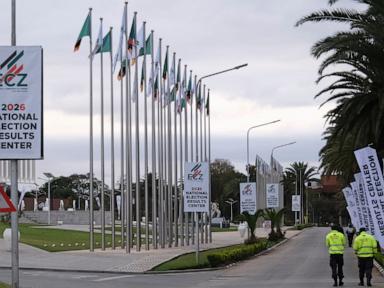
Democracy in southern Africa just took a brutal hit. If you've been watching the fallout from Zambia's August 13 presidential election, you know things went off the rails fast.
Incumbent President Hakainde Hichilema claimed victory with roughly 60% of the vote. His main challenger, Brian Mundubile, rejected those numbers outright. He cited missing vote tally papers and chaotic scenes at counting stations.
What followed wasn't just a political disagreement. It turned into a high-stakes security crisis involving a United Nations facility, a deadly raid, and a formal treason charge.
The Raid That Changed Everything
Trouble didn't start at the ballot box. It exploded the day after the election.
Security forces raided a property in Lusaka linked to Mundubile. Authorities claimed they found AK-47 assault rifles and military gear. They alleged the opposition was plotting an armed insurgency.
That raid left a former cabinet minister, Mutotwe Kafwaya, shot dead. Security officials insisted they returned fire after being shot at first. Mundubile told a completely different story. He maintained that opposition officials were entirely unarmed and that government forces carried out an unprovoked attack.
Facing arrest and fearing for his life, Mundubile went into hiding.
Seeking Shelter at the United Nations
Realizing the walls were closing in, Mundubile and his running mate, Makebi Zulu, did something extraordinary. They fled to a United Nations building in Lusaka to seek refuge.
It bought them temporary safety, but not for long. Pressure mounted on international bodies, and the duo eventually surrendered to police after receiving government assurances regarding due process.
Those assurances didn't stop the hammer from falling. Police locked them up and recorded warn-and-caution statements. Shortly after, authorities slapped Mundubile, Zulu, and 17 others with high treason charges.
Why You Can't Challenge the Results
If you're wondering why the opposition didn't fight this in court, the answer is simple. They weren't allowed to.
By the time the legal deadline arrived, courts were sealed off by authorities. That prevented the opposition from mounting any formal legal challenge to Hichilema's re-election. Hichilema has since been sworn in for a second five-year term.
Human rights groups are furious. Amnesty International called the killing of Kafwaya alarming. United Nations human rights chief Volker Turk expressed deep concern over the pre-election and post-election crackdowns.
Zambia has long prided itself on peaceful, stable democratic transitions. This election cycle shattered that reputation. When opposition figures seeking UN protection end up charged with treason and locked away, the rules of political engagement change completely.
Keep an eye on how international monitors respond to these fast-moving developments.


