Over two hundred thousand people are currently running for their lives across southwestern France and central Spain. If you think this is just another seasonal brush fire, you haven't looked at the maps. Entire communities near Bordeaux are scrambling to evacuate, the iconic Cap Ferret peninsula has been emptied village by village, and Madrid has hit a wall where local emergency services simply cannot cope anymore.
This isn't a drill. It is a terrifying turning point for European disaster management.
The Scale of the Crisis
Let's look at the actual numbers because they defy normal comprehension. In France alone, more than 141,000 people have been pushed out of the Gironde and Landes regions. Down in Spain, another 45,000 have fled or locked down as ferocious blazes merge near the capital.
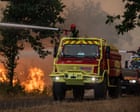
The pine forests of southwestern France are burning like dry matchsticks. Firefighters are dealing with ten-meter-high walls of flame whipped up by erratic, merciless winds. The famous Cap Ferret peninsula—a haven packed with million-dollar villas and packed tourist campsites—had its only land escape route cut dangerously close to the fireline. Boats had to ferry stranded holidaymakers off piers just to get them out.
Meanwhile, Spain declared a rare national emergency. Multiple aggressive fires converged outside Madrid, pushing emergency response chiefs to admit the frontlines were beyond human extinguishing capacity. When regional ministers start saying they cannot fight the walls of fire with standard resources, you know the playbook is broken.
Why Standard Firefighting Fails Now
Ground crews are facing a nightmare combination of factors that render old tactics useless. Years of mounting water stress, consecutive punishing heatwaves, and bone-dry soil have transformed normal woodlands into explosive fuel.
When fires reach this scale, they create their own weather systems. Wind directions change on a dime. Humidity plummets. Water-bombing planes and hundreds of ground firefighters can only hold defensive lines, hoping for a brief window of cool night air to carve out firebreaks.
French Prime Minister Sébastien Lecornu called an urgent ministerial crisis meeting and pulled the trigger on mobilizing military personnel—bringing in a thousand troops and requesting heavy transport aircraft like the Airbus A400M to assist. Both Paris and Madrid have formally triggered requests for European Union civil protection assistance. You don't call in the army unless the domestic line has already broken.
The Threat to Major Population Centers
The psychological shift in this crisis comes from its proximity to major cities. For weeks, the narrative centered on remote forests and rural campgrounds. Now, the suburbs of Bordeaux are actively evacuating as the winds push the front edge closer to urban infrastructure.
People living normal lives in suburban neighborhoods are suddenly packing cars with pets and passports. Smoke blankets the region, prompting authorities to distribute over a million FFP2 masks in Gironde just to protect residents and frontline personnel from toxic particulate matter.
In Spain, high-speed rail links between major hubs have faced intermittent shutdowns as smoke and flames crept too close to the tracks. The economic and logistical disruption ripples outward instantly. Tourism corridors are empty. Vineyards are under siege.
What Comes Next
Governments across southern Europe are staring down an ugly reality. The historical averages mean nothing anymore. France has already blown past its previous annual wildfire records, and July isn't even over yet.
If you are traveling anywhere near the affected regions of southwestern France, the Arcachon bay area, or central Spain, stop what you are planning. Obey local evacuation orders immediately, monitor official civil defense channels, and stay off local roads to let emergency convoys through.
The flames will eventually stop, but the way Europe prepares for summer will never be the same.