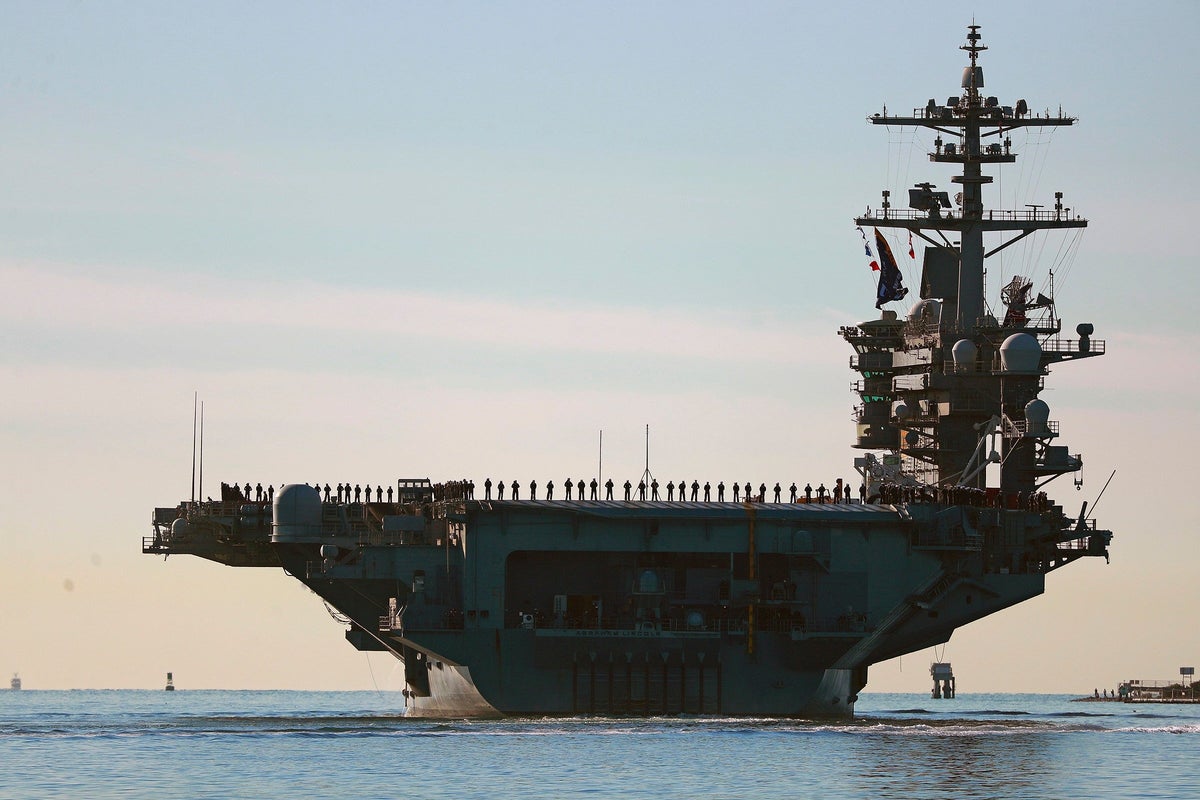
When roughly 5,000 sailors and Marines left San Diego aboard the USS Abraham Lincoln, they expected a standard deployment. Instead, they walked straight into an indefinite purgatory.
Operating in the Middle East amid active conflict, the carrier shattered modern endurance records by logging over 250 consecutive days at sea. That isn't just a tough shift. It's a breaking point that has triggered severe food rationing, plumbing collapses, and an alarming mental health crisis.
If you think modern military logistics protect service members from basic indignities, the reality onboard the Lincoln will shock you. Let's look at what's actually happening out on the water and why lawmakers are demanding immediate answers.
The Grim Reality of a 250 Day Deployment
Forget what you see in recruitment ads. Life on an extended warship deployment in 2026 involves brutal 12-to-16-hour shifts with zero days off. When you cross that with active combat operations in the region, the strain multiplies exponentially.
The old record for consecutive days at sea was 206 days, set by the USS Dwight D. Eisenhower in 2020. The Lincoln blew past that milestone, keeping its crew isolated from shore for nearly nine months straight.
During a tense meeting in San Diego, roughly 200 family members confronted Navy leadership to air grievances that paint a horrifying picture:
- Meals reportedly dwindled down to extreme basics, with families noting instances of half a cup of rice and two tortillas.
- Basic hygiene items like soap, toothpaste, and deodorant ran completely out of stock.
- Plumbing systems failed catastrophically, leaving sailors to deal with broken toilets and mold-infested showers for weeks.
- Laundry services broke down, and hot water became an intermittent luxury.
Representative Mike Levin of California didn't mince words when addressing the situation, pointing out that service members deserve basic human necessities like working plumbing and real food.
The Mental Health Toll Nobody Wants to Discuss
Physical decay is terrible, but the psychological toll is catastrophic. Reports surfacing from outlets like the Navy Times and Stars and Stripes reveal multiple harrowing incidents of sailors attempting to jump overboard out of sheer desperation.
Families have shared chilling text messages. One spouse noted that her husband texted her saying he hoped he wouldn't wake up the next day, driven to despair by deployment extensions and career anxiety. Another mother reported that her son and his shipmates constantly think about jumping just to find some form of release from the relentless pressure.
Senators Richard Blumenthal and Ruben Gallego have officially stepped in, demanding accountability and an immediate oversight visit from a congressional delegation. They want to know why basic supplies went missing, why water contamination issues persisted, and why leadership allowed the force to deteriorate to this extent.
What This Means for the Future of Naval Operations
The crisis on the USS Abraham Lincoln isn't an isolated accident. Earlier operational strains on vessels like the USS Gerald R. Ford and USS Tripoli point to a systemic failure in how the military manages extended high-tempo conflicts.
When strategic demands outpace logistics, the human cost is paid by the sailors at the bottom of the chain. While Navy leadership faces mounting pressure from Congress and distressed families, the immediate priority remains relieving the crew and restoring basic operational safety standards before more lives are irrevocably damaged.
If you have family members currently serving in extended deployments, stay proactive, monitor their communication channels closely, and support legislative oversight efforts pushing for better transparency and faster rotation timelines.