Hunger is rarely a natural disaster. It is a weapon, plain and simple. When food systems collapse in war zones, it happens because someone chose to starve their enemies, block supply trucks, or bomb fields.
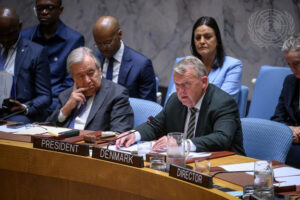
Right now, global acute hunger sits at record highs, with concurrent famines tearing through places like Sudan and Gaza. Officials gathered at a high-level United Nations Security Council open debate to talk about this exact nightmare. They pointed fingers at resolution 2417, a landmark agreement passed unanimously back in 2018 meant to stop the weaponization of food.
The text exists. The mechanisms exist. The political will does not.
The broken promise of resolution 2417
Back in 2018, the world celebrated when the Security Council passed resolution 2417. It tied armed conflict directly to food insecurity for the first time. It condemned the starvation of civilians as a method of warfare and criminalized blocking aid. It even gave the council power to use targeted sanctions against anyone cutting off food supplies.
It sounded great on paper. In practice, it remains largely toothless.
When the resolution passed, roughly 74 million people faced conflict-induced hunger worldwide. Today, that number has doubled to 147 million. Last year broke records with 266 million people suffering acute food insecurity. Officials like UN Secretary-General António Guterres and Denmark’s Foreign Minister Lars Løkke Rasmussen made it clear during the recent debate that the tool sits unused while millions starve.
We are watching a slow-motion failure of international law.
Why warning signs get ignored
Waiting for a formal famine declaration is a choice. It is also an institutional failure.
Look at what happened in Sudan’s Darfur region, specifically around al-Fashir. Leaders watched the atrocities pile up. Warning lights flashed bright red for months. Yet, the international community sat on its hands until people were already dying of sheer starvation.
Action Against Hunger presented staggering numbers at the recent UN session. They recorded over 9,300 incidents where conflict damaged food systems across more than 45 countries. Think about what that actually means on the ground. It means over 3,200 deliberate bombings targeting markets, active agricultural lands, and clean water infrastructure.
When you destroy a water plant, you aren't just fighting an army. You are sentencing children to die of thirst and disease.
The politics of inaction
Why doesn't the Security Council just use sanctions? Because geopolitics always gets in the way.
Permanent members of the council hold veto power, turning humanitarian crises into diplomatic chess matches. During the open debate, Russian Ambassador Vassily Nebenzia pushed back against expanding the application or creating new enforcement mechanisms for resolution 2417, arguing the existing text only needs country-specific application.
When superpowers disagree on who is to blame, aid trucks stall at borders. Warehouses sit full while civilians eat animal feed and leaves.
Diplomats debate semantics while people starve. Liberia’s Permanent Representative Lewis Garsheedah Brown II put it bluntly during the session, calling these crises a choice rather than fate. And where there is a choice, there is culpability.
What needs to happen right now
If the UN wants to stop treating hunger as an afterthought, leadership has to shift from reactive sympathy to proactive enforcement.
- Trigger sanctions immediately: The Security Council needs to stop treating sanction provisions as empty threats. Freeze assets and ban travel for commanders and officials who weaponize food access.
- Act before the famine label: Waiting for agencies to officially declare a famine guarantees that thousands are already dead. Early warnings must mandate immediate political and financial intervention.
- Protect food infrastructure: Bombing a farm or a grain silo must carry the exact same legal weight as bombing a hospital. Accountability has to apply across every board.
Until the international community starts punishing those who starve civilians, resolutions like 2417 are just expensive paper. Hunger will keep spreading. The warning lights are already flashing. Stop waiting for the crash.