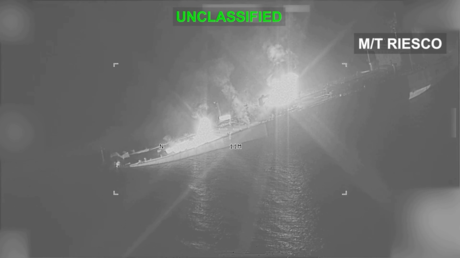
The nature of modern conflict has shifted away from stagnant trenches and deep into the sky. Ukrainian President Volodymyr Zelenskyy recently laid out a blunt target for his military and domestic manufacturing base. The objective is to scale up long-range drone production until Ukraine can launch one thousand drones a day toward targets inside Russia.
Right now, the average sits at roughly three hundred per day. Jumping to one thousand isn't just a numerical milestone. It marks a fundamental shift in how Kyiv plans to impose direct costs on Moscow, targeting everything from fuel infrastructure to military airfields.
Behind the Numbers of Long-Range Strikes
Why one thousand? Scale changes physics in warfare. When you deploy a handful of unmanned aerial vehicles, air defense systems catch them, intercept them, or absorb the blow with minimal disruption. When the sky fills with an industrial swarm of one thousand drones a day, interception economics completely break down. Interceptor missiles cost far more than the drones they shoot down.
Moscow has ramped up its own aerial campaigns, utilizing jet-powered Shahed variants to strike cities like Kyiv, Kharkiv, and Zaporizhzhia. Ukraine's strategy relies on reciprocal pressure. By hitting back at deep targets, Kyiv aims to force Russian leadership to feel the immediate economic and logistical friction of the war.
Recent operations show that this strategy goes beyond rhetoric. Ukraine has successfully struck major domestic oil facilities, including the Lukoil-Nizhny Novgorodnefteorgsintez refinery in Kstovo and the Slavneft-YANOS facility in Yaroslavl. These refineries form the backbone of Russia's fuel production.
The economic fallout is already showing up in official data. For the first time in modern history, Russia has had to import gasoline to plug domestic shortages while funneling state budget reserves directly into its oil companies. Naval ports like Novorossiysk have also faced operational blockades from incoming maritime drone threats, choking off export revenue.
The Manufacturing Challenge
Scaling production to one thousand long-range drones a day is an immense industrial hurdle. Ukraine's defense sector has scaled rapidly from small backyard workshops into a sprawling network of decentralized manufacturers. However, building thousands of long-range, guidance-resistant, and weather-hardened units requires a steady supply of microelectronics, specialized payloads, and raw materials.
Beyond offensive capabilities, Zelenskyy has emphasized the urgent need for fast-produced interceptor systems. Countering fast jet-powered drones requires a different defensive tier than slower propeller-driven models. Kyiv needs to simultaneously expand its strike fleet and protect its own skies from ongoing aerial bombardments.
If Moscow refuses to negotiate an end to the conflict on rational terms, these strikes will only intensify. Bringing the war directly to the eyes and minds of the Russian public remains the primary lever Kyiv has left.
Stop underestimating how quickly aerial warfare evolves. The thousand-drone baseline is coming. Watch how supply chains and air defense networks adapt to survive the swarm.
Russia-Ukraine War: Kyiv Planned 1,000 AI Drones To Target Moscow Airports, Zelenskyy's Plan Exposed
This video provides additional context regarding Ukraine's ambitious drone strategies and large-scale operational planning directed against Russian infrastructure.