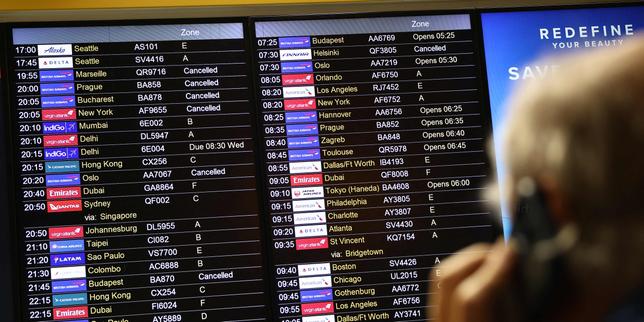
If you tried flying through London Heathrow or Gatwick last week, you probably spent hours staring at departure boards that only showed red warning signs. Another major software meltdown at National Air Traffic Services (NATS) grounded over 2,000 flights, leaving tens of thousands of travelers sleeping on terminal floors and stranded on tarmac.
It's the third time in just over three years that Britain's airspace has essentially crashed. And honestly, people are tired of the empty apologies.
The Real Cost of a Broken Flight Processing System
When the flight data processing system went down, controllers lost the software tools that automatically track aircraft through UK airspace. Instead of letting safety margins slip, NATS forced a massive reduction in capacity. They chose widespread cancellations over managing endless piles of rolling delays.
Heathrow took the heaviest blow. Over 700 cancellations piled up there alone, while Gatwick, Stansted, Luton, and Manchester caught the shockwaves.
Air travel is a tightly synchronized dance. When the main stage stops moving, the whole routine falls apart. Aircraft ended up thousands of miles away from where their flight crews needed to be. Budget carriers like Ryanair reported that over 65,000 of their customers faced severe disruption, while legacy carriers like British Airways had to scrap entire banks of international departures and arrivals.
Passengers stuck on planes for four hours at a time quickly realized that airline customer service desks had zero immediate answers. When you're sitting on a tarmac with cabin crew handing out emergency snacks, you quickly learn how fragile international transit hubs really are.
Why This Keeps Happening to NATS
You have to ask why a country with one of the most mature aviation markets in the world keeps stumbling over basic IT infrastructure. NATS leadership quickly ruled out a cyberattack, pointing instead to a complex internal glitch. Subsequent reports even indicated that a military aircraft's flight plan data may have triggered the software failure, highlighting an alarming vulnerability in how foreign and domestic traffic inputs are handled.
Chief Executive Martin Rolfe faced furious calls to resign from airline bosses who are fed up with recurring technical failures. Transport Secretary Heidi Alexander hauled NATS leadership into meetings and gave them a strict window to deliver an exhaustive review.
The public defense is always the same. Executives promise that safety was never compromised and that procedures worked as intended to protect the skies. But safety standards shouldn't require system shutdowns every few years. When a single flight processing software glitch knocks out thirty percent of a nation's daily scheduled flights, the architecture has structural cracks.
What Travelers Should Do Next Time the Skies Lock Up
You can't control what happens in air traffic control centers, but you can change how you react when the system breaks.
- Book the earliest flight of the day. Morning departures leave the terminal before delays compound. If a system glitch hits at noon, your plane is already airborne.
- Track your own aircraft. Use apps like Flightradar24 to watch your inbound plane. If it's sitting on the ground three airports away, your flight isn't leaving on time, no matter what the gate agent says.
- Know your rights, but don't expect easy payouts. Because these crashes usually get classified as extraordinary circumstances outside airline control, standard statutory compensation laws often don't apply. Focus instead on securing immediate rebooking and hotel vouchers.
The UK airspace is back online, but the underlying anxiety remains. Until structural overhauls fix these aging flight processing networks, every traveler heading through London is playing roulette with their itinerary. Pack light, keep your phone charged, and never assume your connection is safe.