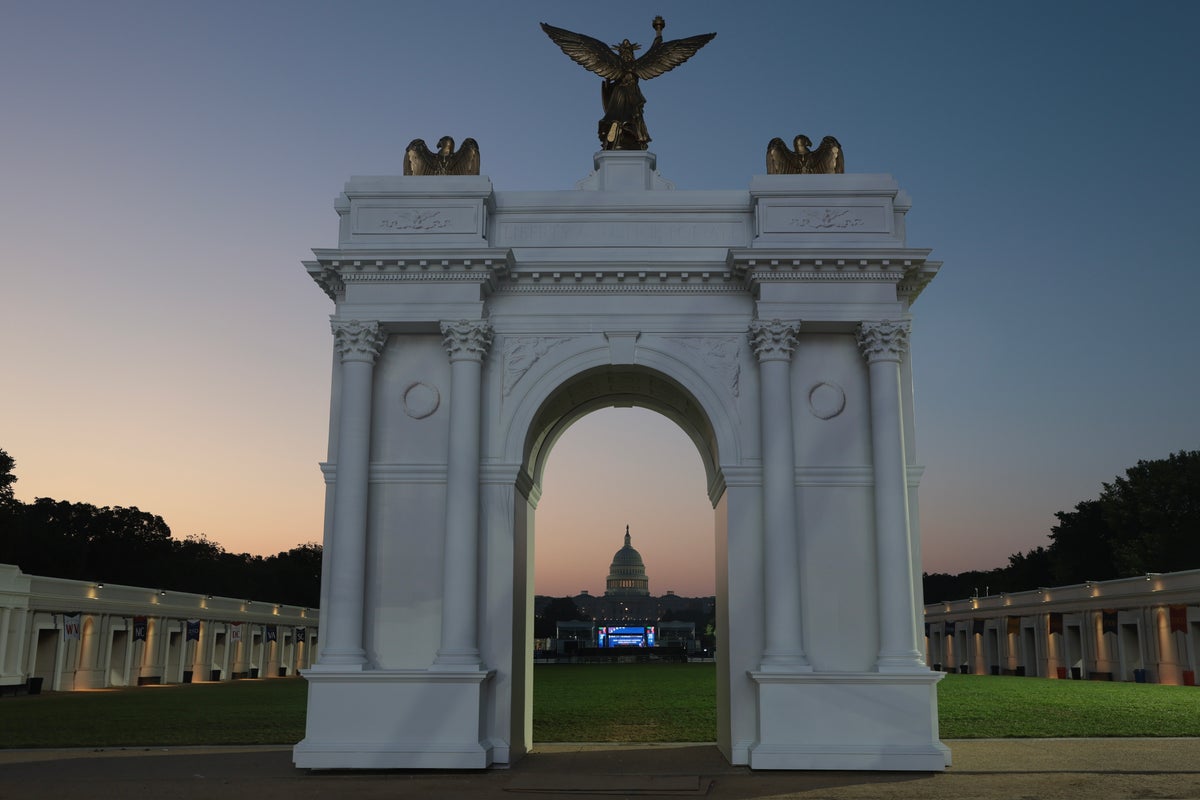
You can't just drop a 250-foot monument into the middle of Washington without breaking a few rules. Or, in this case, breaking a century of careful urban planning.
Donald Trump wants a massive arch built near Memorial Bridge. The National Park Service just released a 133-page study backing the project. They admit it wrecks the famous sightlines connecting major capital landmarks. They don't care. They argue the chosen spot is historic enough to justify the disruption.
That contradiction sits right at the heart of the controversy. Washington DC is a city built on visual geometry. Every monument talks to another monument. Now, a giant new structure is poised to interrupt that conversation.
What the National Park Service Report Actually Says
Let's look at the facts. The newly published federal document confirms that the proposed Trump arch will interfere with visual alignments across the Potomac. We're talking about the careful lines connecting the Washington Monument, the Lincoln Memorial, the Jefferson Memorial, and Arlington House.
For generations, urban planners guarded these views like state secrets. They were meant to symbolize unity and history. The new arch changes the character of the entire space.
Yet, the Park Service report drops a major justification. It claims that the exact sensitivities making Memorial Circle a preservation headache also make it the only historically appropriate location for the build. Moving it somewhere else defeats the purpose. Officials say avoiding the visual impacts is basically impossible if the project moves forward at all.
That logic gives the administration heavy ammunition. Legal challengers are furious. A lawsuit filed by veterans and an architectural historian argues that a project this massive requires congressional approval, not just executive willpower.
The Broader Blueprint for Washington
The arch isn't an isolated idea. It's part of a sweeping effort to reshape federal real estate and leave a permanent physical stamp on the capital.
Consider the other pieces on the board:
- Renovating and renaming the Kennedy Center.
- Constructing a massive new White House ballroom.
- Overhauling the Lincoln Memorial Reflecting Pool.
- Redesigning a public golf course in East Potomac Park that threatens local running and biking trails.
Critics argue these moves bypass public input and legislative checks. Supporters view them as bold modernization efforts that inject new life into aging civic infrastructure.
Why This Fight Matters Now
If you care about how historic cities evolve, this battle is a masterclass in executive power versus preservation law. Washington isn't just a normal city. It's a national canvas. Every administration leaves scratches, but a 250-foot structure is a permanent gouge.
Lawyers representing the plaintiffs point out that the report confirms their worst fears. The physical transformation of the National Mall is happening fast, and the approvals are moving through commissions stacked with presidential appointees. The U.S. Commission of Fine Arts already gave initial approval over the summer, and further review cycles are scheduled for the fall.
You have to decide where you stand. Is a city's historic layout a sacred museum piece that must never change, or is it a living capital that bends to the will of current leaders?
Keep an eye on the upcoming federal commission hearings this fall. The courts will decide whether executive decree beats congressional oversight. Until then, the blueprints keep moving forward.