Geopolitics rarely moves in a straight line. When US President Donald Trump ordered a substantial reduction in joint military exercises with South Korea, citing his personal rapport with North Korean leader Kim Jong Un and frustration over Seoul's stance on Iran, Washington sent shockwaves through East Asia. The annual Ulchi Freedom Shield war games were abruptly truncated from eleven days down to five, leaving defense analysts scrambling to calculate the strategic fallout.
Yet, trilateral defense coordination between South Korea, Japan, and the United States continues to press forward in unexpected ways. Despite sweeping directives from the White House to scale back major Pentagon-led exercises, security cooperation among the three democratic allies persists because regional threats don't pause for political pivots. Recently making headlines lately: Why Trump Believes The Iran War Ends Right After The Midterms.
The Reality Behind the White House Drill Cuts
Trump's directive caught military officials completely off guard. South Korean Foreign Minister Cho Hyun admitted during a parliamentary hearing that Seoul had no advance warning of the presidential social media post ordering the defense secretary to slash the scale of the drills.
The decision rested on a mix of old grievances and personal diplomacy. Trump pointed to the financial costs of the maneuvers, his warm relationship with Pyongyang, and Seoul's initial reluctance to join US military actions regarding Iran. By shortening the exercises and eliminating phase-two counterattack simulations, Washington hoped to jump-start stalled diplomacy with the Kim regime. Further details on this are explored by NPR.
Pyongyang wasn't impressed. Kim Yo Jong, the powerful sister of the North Korean leader, dismissed the move quickly. She stated that shortening the calendar didn't alter the inherently aggressive nature of the exercises. True to form, North Korea responded by commissioning new naval hardware and launching short-range ballistic missiles, proving that superficial concessions rarely appease an adversary upgrading its capabilities through active military ties with Moscow.
Why Trilateral Deterrence Adapts and Survives
You might think that US scaling back means the alliance is crumbling. That misses the bigger picture. Regional security in East Asia has evolved far beyond bilateral dependence on Washington.
Japan and South Korea face an increasingly aggressive security environment. North Korean troops have gained invaluable, real-world battlefield experience by deploying artillery and missiles alongside Russian forces in Ukraine, bringing home modern drone tactics and updated warfare doctrines. Meanwhile, Beijing continues to assert territorial claims across maritime boundaries, keeping pressure on regional stability.
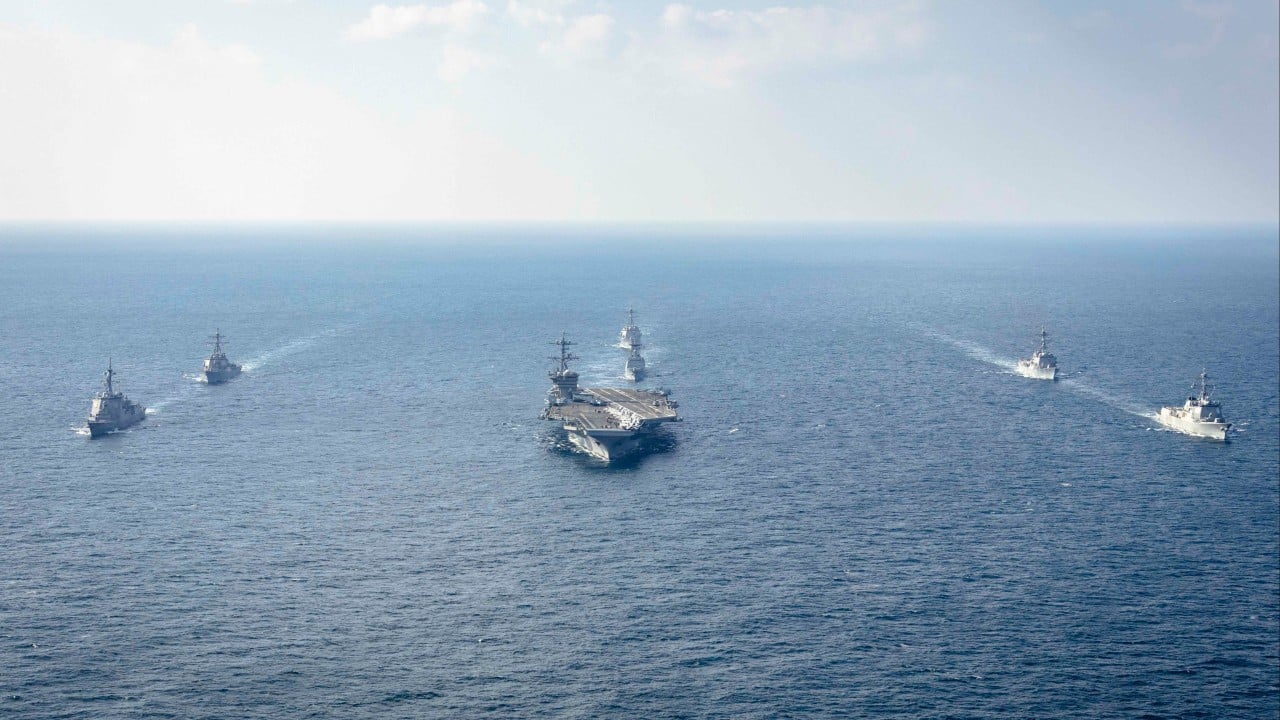
Because of these compounding threats, defense planners in Seoul and Tokyo understand that abandoning cooperation is simply not an option. Even as major joint US-South Korean maneuvers face political turbulence, trilateral frameworks involving Japan remain active. Navies from all three nations have continued specialized naval exercises designed to counter underwater threats and missile launches.
What Comes Next for East Asian Security
Seoul is caught in a tight spot. Analysts like Cheong Seong-chang at the Sejong Institute argue that the situation exposes the risks of relying too heavily on American political whims. The debate over whether South Korea should pursue independent nuclear deterrence or significantly expand domestic defense manufacturing has shifted from fringe theory to mainstream dinner table talk.
At the same time, practical readiness requires maintaining muscle memory between allied forces. Military officials are quietly shifting to computer simulations and targeted tabletop exercises to bypass political restrictions while keeping operational readiness intact.
The alliance is changing shape. Trump can cut the duration of a war game on social media, but he cannot erase the shared strategic realities binding Washington, Seoul, and Tokyo together.
Watch how procurement and intelligence-sharing agreements evolve over the next six months. Local defense budgets will likely increase to compensate for any perceived gaps in US commitment, ensuring that trilateral deterrence survives shifting political winds in Washington.
Why Trump is cutting joint military drills with US ally South Korea
This video provides an in-depth look at how President Trump's directive to reduce joint military exercises impacts the security alliance between the US and South Korea.
http://googleusercontent.com/youtube_content/1