The fragile peace in the Middle East didn't just crack this week—it shattered into a million pieces.
After a weekend of intense drone and missile exchanges that abruptly ended a brief, Pakistan-brokered ceasefire, President Donald Trump has decided to fundamentally rewrite the rules of global maritime trade.
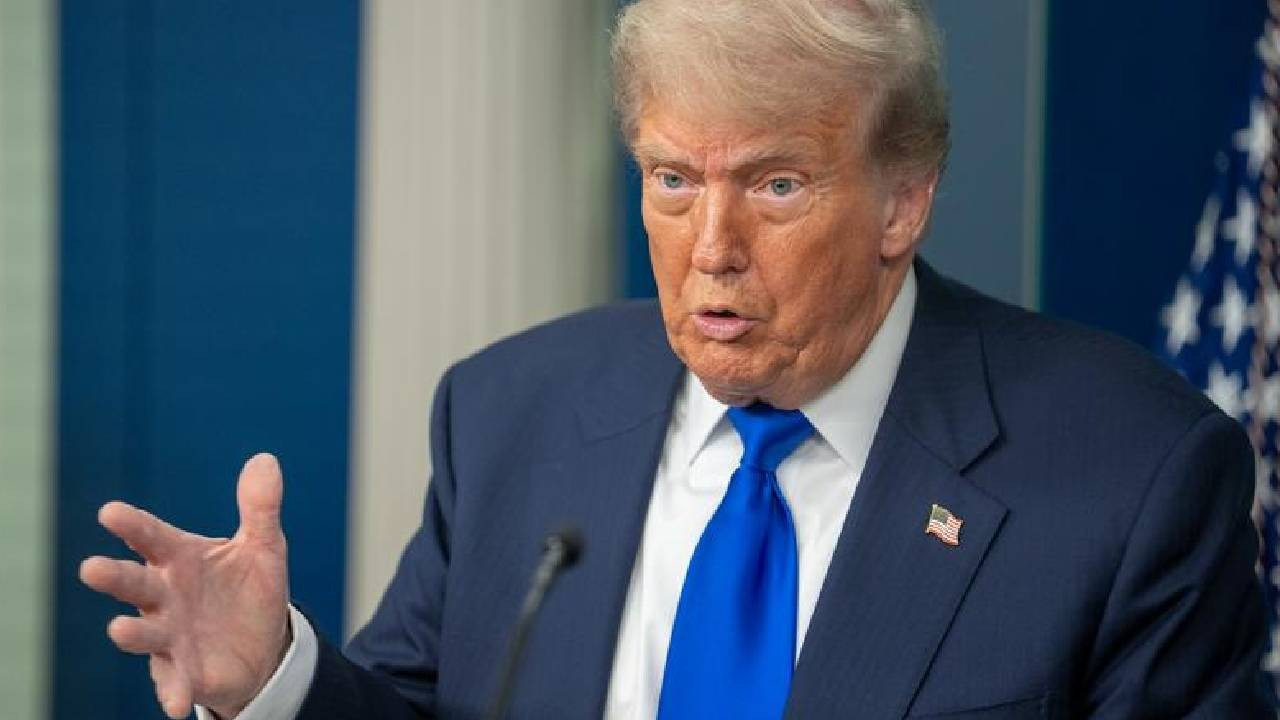
In a series of characteristic, high-decibel declarations on Truth Social and Fox News, Trump announced that the U.S. is reinstating a naval blockade on Iranian shipping. But he didn't stop there. He also declared that the U.S. is now officially the "Guardian of the Strait of Hormuz" and will demand a staggering 20% toll on all commercial cargo transiting the waterway to reimburse America for its security costs.
It's a dizzying escalation. It's also an operational and legal nightmare that borrows directly from Iran's own playbook. If you think this is just typical campaign-season bluster, think again. The U.S. Navy-led Joint Maritime Information Center has already issued an advisory confirming that the blockade will be enforced starting July 14, 2026.
The shipping world is in absolute chaos, and for good reason.
From Peace Talks to a Toll Booth on the High Seas
Just a few weeks ago, the vibe was entirely different. Vice President JD Vance was publicly assuring the shipping industry that Washington was counting on a "toll-free, long-term" reopening of the Strait of Hormuz. Talks in Islamabad, brokered by Pakistan, seemed close to resolving a conflict that has choked global energy markets since late February.
Then, the negotiations collapsed.
Disputes over nuclear enrichment, sanctions relief, and who actually gets to police the waterway proved too wide to bridge. When the fighting resumed over the weekend, Iran launched massive retaliatory strikes across the region, targeting military assets in Jordan, Bahrain, Kuwait, and Oman.
Trump’s response was swift and heavy-handed. "We're just gonna hit them very hard, and we're gonna keep the strait, and we'll probably run it," Trump told Fox News.
The paradox here is glaring. For months, the U.S. and its allies have loudly condemned Iran's attempts to levy its own tolls through its newly minted "Persian Gulf Strait Authority". Just weeks ago, Secretary of State Marco Rubio told Congress that "no country is allowed to charge tolls or fees on an international waterway".
Apparently, that rule doesn't apply to the self-appointed "Guardian of the Strait".
The Math Behind the Madness
Let’s look at the numbers because they are genuinely shocking.
Iran’s illegal tolling scheme reportedly attempted to charge transiting ships up to $2 million per passage, often demanding payment in cryptocurrency or Chinese yuan. It was a massive shake-down.
Yet, Trump's proposed 20% toll on the value of the cargo is significantly higher than anything Tehran dreamed of squeezing out of shippers.
Consider a modern supertanker carrying 2 million barrels of crude oil. At current prices, that cargo is easily worth $150 million. Under Trump's 20% toll, the shipping company would owe the U.S. government $30 million for a single passage.
- Who pays? Shippers can't absorb these costs. They will pass them directly to consumers.
- How is it collected? The White House hasn't offered a single detail on the logistics of collecting a 20% tariff on the open ocean.
- The Legal Mess: The International Maritime Organization (IMO) immediately fired back, stating firmly that the Strait of Hormuz must remain free of tolls in accordance with international law.
By claiming the right to tax international shipping, the U.S. is severely undermining the very global treaties it has spent decades defending. If America can charge a 20% "security fee" in Hormuz, what stops Egypt from doing the same in the Suez Canal, or Yemen's Houthis in the Bab el-Mandeb? It’s a dangerous precedent.
Enforcing a Blockade in the World's Most Volatile Waters
Declaring a blockade on Truth Social is easy. Enforcing it in a narrow, 21-mile-wide choke point littered with Iranian naval mines is another story.
[Persian Gulf] <---> Strait of Hormuz (21 miles wide) <---> [Gulf of Oman]
                           ^
             Seeded with Iranian Mines &
             Anti-Ship Missile Batteries
The military objective is clear: stop and inspect commercial traffic, and physically block any ships carrying Iranian oil or goods. But the operational hazards are immense. The Strait of Hormuz is completely within range of Iran's shore-based anti-ship cruise missiles and fast-attack drone swarms.
Furthermore, the U.S. is largely doing this alone. Traditional allies in Europe and the Gulf are terrified of an all-out regional war and are highly unlikely to pitch in naval assets to help enforce a unilateral American tariff scheme.
To bypass the physical danger of boarding ships under fire, the administration is leaning heavily on secondary economic sanctions. They are using trade laws to slap massive surcharges on any country that complies with Iran's parallel toll system or continues to buy Iranian crude. It's a financial blockade wrapped in a military one.
What This Means for Global Energy and Your Wallet
The Strait of Hormuz carries roughly a fifth of the world's seaborne oil and liquefied natural gas (LNG). When peace talks looked promising in June, oil prices fell by over 6%. Now, they are surging again.
The strategic cushion we used to rely on is gone. The U.S. Strategic Petroleum Reserve is at historically low levels, and global oil inventories are incredibly tight. We don't have the supply buffer to absorb a prolonged shutdown of the strait.
If ship owners refuse to pay Trump’s 20% toll, or if they decide the risk of Iranian missile strikes is too high, they will bypass the region entirely. Routing tankers around the Cape of Good Hope adds weeks to transit times, drives up insurance premiums, and guarantees a massive spike in global inflation.
Next Steps for Maritime Operators and Investors
If you are directly impacted by this maritime standoff, sitting on your hands isn't an option.
- Re-route immediately: If you have vessels scheduled to transit the Strait of Hormuz, consider alternative routes despite the added fuel costs. The risk of seizure, missile attack, or sudden U.S. naval interdiction is at an all-time high.
- Audit your insurance policies: War-risk insurance premiums are skyrocketing. Ensure your policy covers unilateral state-imposed blockades and potential cargo seizures.
- Prepare for secondary sanctions: If your supply chain touches Middle Eastern energy, double-check that none of your counterparties are violating the newly reinstated U.S. restrictions on Iranian ports and customers. Non-compliance could lock your firm out of the U.S. financial system overnight.


