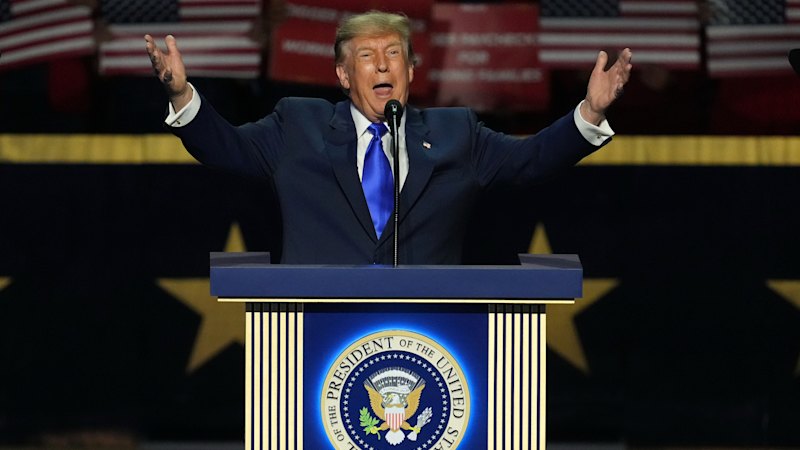
When Washington signed a civilian nuclear cooperation agreement with Saudi Arabia, analysts spent hours debating energy markets, non-proliferation standards, and geopolitical leverage. Then Donald Trump jumped on social media and added a massive catch: the deal won't happen unless Riyadh officially recognizes Israel.
It was classic political drama. With a single post on Truth Social, Trump explicitly tied the Department of Energy's civilian nuclear arrangement to Saudi Arabia joining the Abraham Accords.
This isn't just standard diplomatic bargaining. It throws a huge curveball into Middle Eastern diplomacy, forcing both American allies and regional rivals to scramble.
The Sudden Turn on the Saudi Nuclear Pact
The initial setup seemed straightforward. The U.S. and Saudi Arabia finalized a Section 123 civil nuclear agreement meant to help Riyadh build non-military nuclear energy reactors with American technological backing. Energy Secretary Chris Wright and his Saudi counterpart inked the framework to launch a 30-year partnership.
  +-----------------------+              +-----------------------+
  |  US-Saudi 123 Pact    |              |   Abraham Accords     |
  | (Civilian Nuclear)    |              | (Israel Recognition)  |
  +-----------+-----------+              +-----------+-----------+
              |                                      |
              +-------------------+------------------+
                                  |
                        [ Trump's Condition ]
                                  |
                                  v
                   +------------------------------+
                   | High-Stakes Diplomatic Gridlock |
                   +------------------------------+
Then came the surprise twist. Trump publicly declared that approval of the deal is "totally subject to Saudi Arabia joining the very respected and successful Abraham Accords". He also insisted there would be "no enrichment of material" on Saudi soil.
That statement immediately raised eyebrows in diplomats' offices across Washington, Riyadh, and Tel Aviv. Reports coming out of Saudi sources hinted that officials believed the treaty was already locked in. Adding retroactive demands after signing an agreement creates immense friction.
The sudden policy shift isn't just about optics. It highlights three critical realities shaping modern international politics.
1. Security Concerns In Washington and Tel Aviv
Nuclear technology always carries dual-use risks, no matter how strictly a contract labels it "civilian". Israel voiced major anxieties when news broke about American firms exporting nuclear know-how to the Gulf.
Israeli officials worry about long-term regional stability. Even under a strictly non-military umbrella, establishing nuclear infrastructure in Saudi Arabia changes regional strategic balance. If Riyadh gains enrichment capabilities or advanced fuel cycle tech down the road, neighboring states like Egypt, Turkey, or Algeria might demand similar privileges.
By insisting on Israel's recognition, Trump attempted to calm lawmakers in Washington and reassure leaders in Jerusalem. His goal was clear: prove that any expansion of Saudi energy capabilities comes with a historic diplomatic win for Israel.
2. The Saudi Stance on Palestinian Statehood
Riyadh isn't going to roll over easily. Crown Prince Mohammed bin Salman has consistently stated that official diplomatic recognition of Israel requires a clear pathway toward a two-state solution and independent Palestinian statehood.
That requirement poses a massive roadblock. Israeli leadership under Benjamin Netanyahu has repeatedly rejected calls for Palestinian statehood.
"When it comes to normalization, I don't see any signs they want to move forward," noted Middle East analyst Daniel Murciano, pointing out that Saudi Arabia remains serious about its nuclear goals while holding firm on its regional foreign policy commitments.
This leaves Saudi Arabia in an awkward spot. Accepting Trump's condition without concessions on Palestine could spark anger among the Saudi public and across the wider Arab world. Rejecting it outright, however, risks walking away from massive U.S. nuclear energy investments and tech transfers.
3. Washington's Balance of Power and Congressional Approval
Trump doesn't have total control here. Section 123 agreements require review by the United States Congress.
Many lawmakers in Capitol Hill—from both political parties—have long been skeptical of Saudi Arabia's human rights record and nuclear ambitions. Without explicit non-proliferation safeguards and a major diplomatic win like an Israeli peace deal, passing a nuclear pact through Congress would face brutal resistance.
Adding the Abraham Accords condition gives Trump a crucial bargaining chip to convince hesitant senators. It frames the nuclear agreement not as a risky concession, but as a masterpiece of American diplomacy.
What Happens Next
This high-stakes diplomatic standoff won't resolve overnight. Both sides are testing each other's limits to see who blinks first. Here is where key players go from here:
- Watch Congressional Action: Keep an eye on how Capitol Hill handles the formal filing of the 123 Agreement. Expect intense committee hearings over IAEA inspection access and monitoring protocols.
- Track Regional Backchannels: Look for quiet diplomatic exchanges between Washington, Riyadh, and Tel Aviv to see if a middle-ground compromise on Palestinian governance can break the deadlock.
- Monitor Competitor Moves: If American negotiations stall indefinitely, pay close attention to whether Riyadh re-opens civil nuclear conversations with alternative partners like China or Russia.
The path forward depends entirely on whether Trump's bold ultimatum forces a historic diplomatic breakthrough or freezes one of the biggest energy deals in the Middle East.