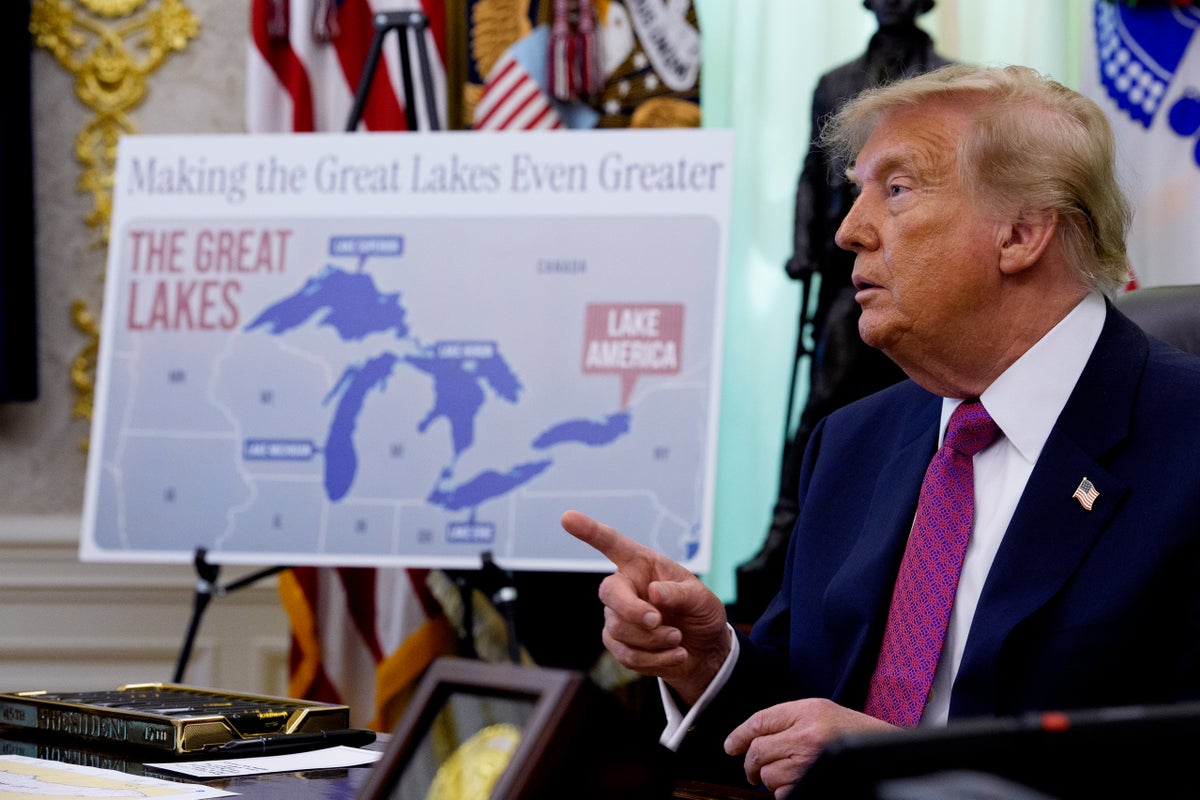
Voters are staring down grocery bills that refuse to budge, gas prices sitting well above four dollars a gallon, and an ongoing foreign conflict in the Middle East. What does the White House choose to do? Sign an executive order renaming Lake Ontario into Lake America.
It is the political equivalent of rearranging deck chairs on the Titanic while shouting at the iceberg. Donald Trump trotted out this grand geographical overhaul as the latest weapon in his ongoing trade dispute with Canada. Nobody asked for this. Canada certainly won't recognize it. International mapmakers are likely ignoring it entirely. Yet here we are, watching an administration burn political capital on a vanity project that belongs in a satirical script rather than the Oval Office.
If you are wondering why the capital feels stuck in a perpetual loop of exhaustion, look no further than this stunt.
The Politics of Petty Grievance
Trump has always relied on spectacle to drown out substance. When poll numbers drop toward 33 percent and midterm elections loom less than three months away, a normal politician pivots to bread-and-butter economic issues. They talk about wages, inflation, or health care costs.
Trump went the opposite direction. During a live press event, he mused about next renaming the Atlantic and Pacific oceans. The theatricality feels tired.
Republicans running for Congress this cycle are sweating bullets. They are trying to campaign on local issues while the head of their party stands in front of bizarre graphics redefining Great Lakes nomenclature. Voters do not care what a federal document calls a shared international body of water. They care if they can afford ground beef and whether the country is sliding into deeper international conflicts.
The Trade War Reality Check
Let's look at the underlying strategy. Trump treats international trade like a reality TV boardroom. His maximum pressure campaign worked on nobody except domestic consumers who got caught in the crossfire of retaliatory tariffs and surging food prices.
Canadian officials aren't crying over the name change. They are simply waiting it out. Ottawa knows the midterm clock is ticking, and they are prepared to stonewall the White House until domestic political pressure forces a retreat.
Treating neighbors and closest allies like hostile corporate takeovers creates immediate noise, but zero structural solutions. Ranchers are furious over surging costs and shifting beef tariffs. Grocery store shelves reflect a supply chain stressed by erratic policy shifts. A stroke of a pen renaming a lake fixes none of this.
The Media Trap We Keep Falling Into
We have seen this movie before. In fact, we watched the exact same broadcast mechanics play out for a decade.
Television networks lined up cameras to capture the entire spectacle live. Reporters sparred with the president over trivia and insults, giving him a clean microphone to deliver grievances directly to millions of homes. It sidelines serious policy debates. It starves actual legislative news of oxygen.
Networks learned some selective editing habits after 2016, but the old reflex dies hard. When a president dangles the prospect of renaming the oceans or taunting journalists, producers cannot look away. It generates clicks. It sparks outrage. It keeps the attention economy humming while real problems fester in the background.
What Happens Next
The midterm elections will test whether voters care more about performative nationalism or functional governance. Right now, the disconnect between Washington and Main Street feels wider than ever.
Governments cannot legislate geography into submission. Canada will still share Lake Ontario. The water will flow the same way. The only thing that changes is another notch carved into the belt of political absurdity, reminding everyone just how far the administration has drifted from reality.
Stop waiting for a course correction. The strategy is the spectacle.