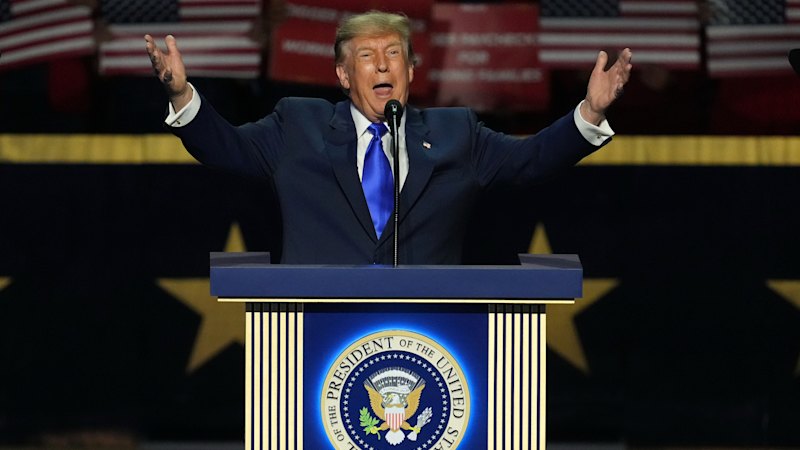
Donald Trump isn't buying the panic. While mainstream outlets and intelligence circles spend their days running worst-case scenarios about a direct Russian strike on Europe, the White House is taking a drastically different stance.
Trump flatly insists that Russian President Vladimir Putin won't attack NATO countries. He dismissed recent warnings, media reports, and high-stakes intelligence trips as overblown drama. But why is there such a massive disconnect between Washington's official optimism and Europe's mounting anxiety?
The Moscow Trip Everyone is Talking About
The tension kicked into overdrive following a rare visit to Russia by CIA Director John Ratcliffe. Major outlets like The Wall Street Journal and CBS News reported that Ratcliffe flew to Moscow to explicitly warn Russian officials against targeting the alliance. Western intelligence assessments had been circulating warnings that Moscow might test NATO’s collective defense pact with a limited hybrid assault or a false-flag operation.
Trump didn't play along with the dramatic framing. Speaking from the Oval Office and in subsequent interviews, he downplayed the intelligence chief's mission as standard business rather than an emergency intervention.
"Ratcliffe sees his Russian counterpart once every six months or once every year," Trump noted, brushing off the notion that a stern warning was delivered. "There was no message and there was nothing unusual."
When reporters pressed him on whether Putin had given any explicit guarantees not to strike alliance territory, Trump kept it simple. He stated he had good talks with the Russian leader and repeated his core thesis: "He's not going to be attacking a NATO territory."
Why European Capitals Are Still Sweating
Trump's casual dismissal stands in stark contrast to the mood across several European borders. Eastern and Central European leaders aren't feeling nearly as secure.
Poland and other front-line nations are watching the skies closely. Russian air campaigns in Ukraine have intensified, stretching Kyiv's air defenses to the absolute limit. Polish Prime Minister Donald Tusk recently warned his country and the broader international community to prepare for multiple scenarios, calling the upcoming months the most dangerous phase of the conflict yet.
European officials have spent months monitoring gray-zone tactics, sabotage operations, and cyber threats. These tactics stop just short of triggering Article 5, the collective defense clause of the alliance. Intelligence agencies worry that Moscow could probe alliance resolve through deniable actions rather than full-scale armored invasions.
Yet, senior EU diplomatic officials have publicly acknowledged that current defense assessments show no immediate preparation for a conventional military assault on member states. The threat exists in the shadows of hybrid warfare, not on conventional invasion maps.
Navigating the Middle East Factor
The debate over Russia's intentions isn't happening in a vacuum. It is heavily tangled up with global chess matches, including Moscow's commercial and military ties to Iran.
Trump was asked whether Washington would crack down hard on Russia for trading with Tehran amid heightened maritime security pressures around the Strait of Hormuz. His response was surprisingly mild given his administration's usual hardline rhetoric on Iran's regional partners.
"So far, I think Russia's behaved quite well, having to do with the Strait of Hormuz," Trump said.
By separating the theater of European security from geopolitical frictions elsewhere, the administration is trying to keep diplomatic channels open. They are pushing for an eventual negotiated end to the 2022 invasion of Ukraine, even as formal peace talks remain locked in a deep pause.
What to Watch Next
If you want to cut through the noise and figure out what comes next, stop reading the daily panic cycles. Pay attention to three actual indicators rather than anonymous leaks.
First, look at the frequency of high-level intelligence and diplomatic backchannels. If Washington and Moscow completely freeze dialogue, the risk spikes. As long as channels remain open, back-channel deterrence is working.
Second, monitor hybrid activity on Europe's eastern flank. The real battlefield isn't a massive armored column crossing a border; it is critical infrastructure, undersea cables, and cyber networks.
Third, watch the economic and military strain on Moscow. As domestic pressures mount inside Russia from retaliatory drone strikes and the sheer cost of the ongoing campaign, the Kremlin's bandwidth for opening new fronts shrinks dramatically.
Trump is betting that Putin knows the math. A direct war with the alliance is a losing proposition, and Washington's top brass intends to keep it that way through a mix of direct talk and calculated indifference to the media storm.