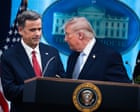
Secret intelligence flights don't usually stay secret for long. When CIA Director John Ratcliffe boarded a government transport plane bound for Moscow unannounced, Washington immediately began spinning theories.
Donald Trump didn't bite. He shrugged off the high-stakes journey as "semi-routine," telling conservative radio listeners to calm down. But behind closed doors, a sudden intelligence mission to the Russian capital during active global flashpoints is anything but ordinary.
Intelligence chiefs rarely fly into hostile territory on casual coffee runs. When a sitting spy director lands in Moscow, governments pay attention.
What Sparked the Moscow Panic
Speculation ran wild across Washington media channels almost instantly. Some insiders whispered that Ratcliffe made the covert flight because the White House feared Vladimir Putin was about to test NATO's defensive boundaries. Others claimed the trip was an urgent lobbying effort to secure Moscow's cooperation on heavy secondary sanctions targeting Iran.
Trump batted those theories away during an interview with Glenn Beck. He labeled the panic "crazy" and insisted none of those rumors hit the mark.
"He's there, you know, very sort of semi-routine," Trump stated. "I hate to disappoint people. We would like to see the war with Ukraine end."
Yet the timing raises eyebrows. This marks the first major visit by a CIA director to Moscow since Bill Burns traveled there in late 2021 to warn Putin against invading Ukraine. We all know how that warning turned out. Putin launched his full-scale invasion a few months later, completely ignoring American intelligence ultimatums.
The Real Pressures Driving Backchannel Diplomacy
Foreign policy rarely happens in plain sight. Right now, Washington and Moscow find themselves on opposite sides of a grinding geopolitical board. Following decisions to engage militarily with Iran, the US Treasury rolled out aggressive secondary sanctions. Making those economic restrictions bite requires cooperation from major global players like Russia and China—nations that frequently trade with Tehran.
Kremlin spokesperson Dmitry Peskov confirmed the visit occurred and noted that Ratcliffe did not meet directly with Putin. Peskov also threw cold water on any immediate hopes for a diplomatic breakthrough, calling talk of an upturn in bilateral relations "premature."
Still, Peskov acknowledged that intelligence channels remain open even during deep geopolitical crises. Sometimes spy chiefs talk precisely because diplomats have stopped listening.
Why the Spin Doesn't Tell the Full Story
Calling a top-secret spy mission to Moscow "semi-routine" is classic political bluster. Routine flights don't trigger simultaneous silences from the Pentagon, the White House, and the CIA. When every major agency locks down its public comments, high-level wheeling and dealing is happening in the shadows.
The war in Ukraine drags on with no clean end in sight, despite grand promises of swift resolutions. Ukrainian long-distance strikes continue to hammer Russian infrastructure, while Moscow fires wave after wave of drones at Kyiv.
Ratcliffe's trip reminds us that backchannel communication remains a vital pressure valve. Leaders can publicly minimize talks to appease domestic bases while desperately cutting deals behind the scenes.
Don't buy the narrative that nothing happened in Moscow. When intelligence chiefs fly into enemy capitals, major moves are always in motion. Watch what governments do next, not what they say on the radio.