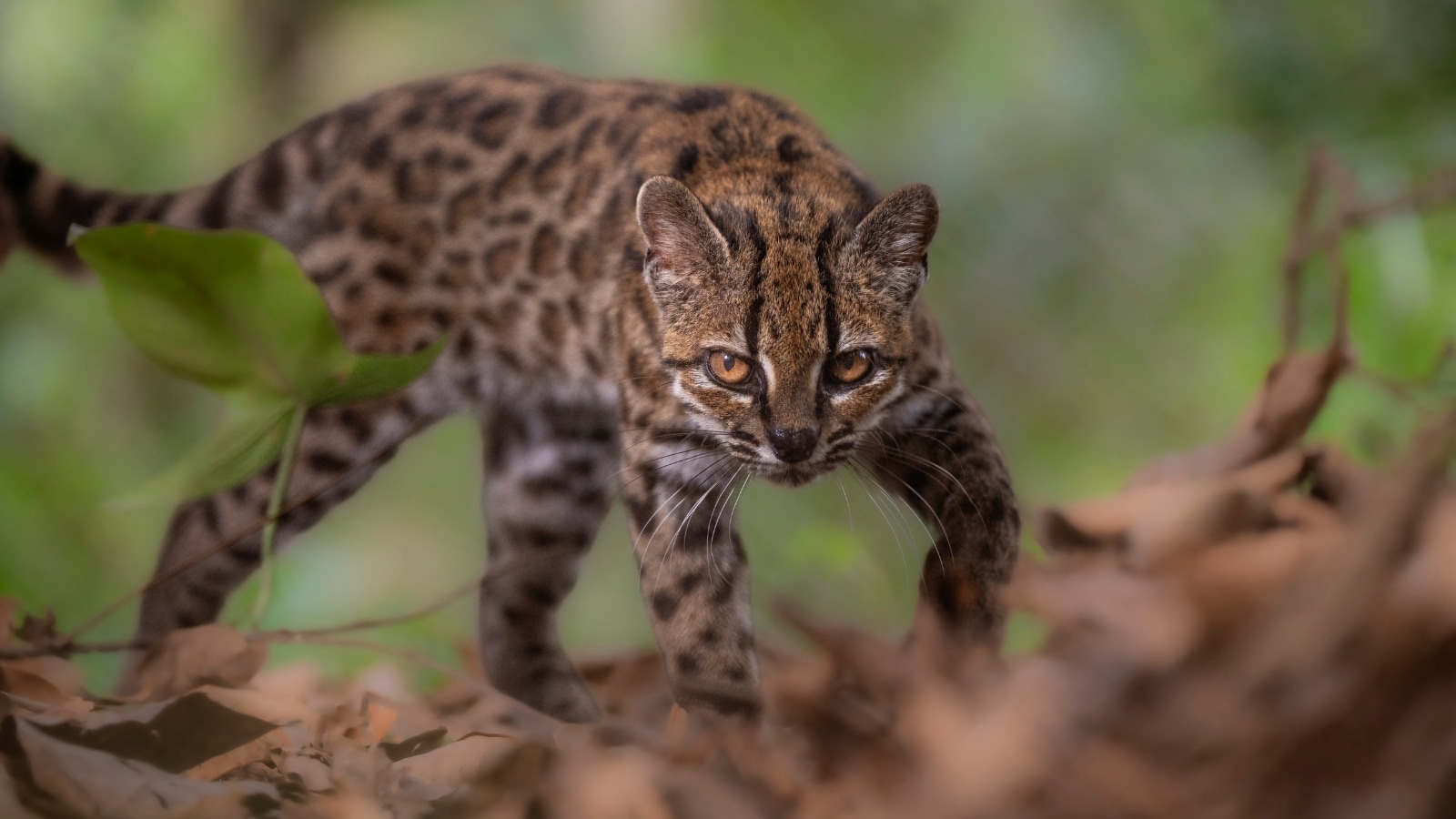
Science likes to pretend we have mapped every corner of our planet. Then a tiny, three-pound wild cat walks out of a Bolivian cloud forest and completely shatters our confidence.
Researchers have officially named a newly discovered feline species: Leopardus tilcayo, commonly known as the tilcayo. Published in the journal Current Biology, this breakthrough marks the first time in over a century that scientists have formally described a brand-new living cat species. The last time this happened was back in 1923 with the pampas cat. Read more on a related topic: this related article.
If you assume we would notice a brand-new type of cat, you are underestimating how well nature hides its secrets. This animal was sitting right in front of us, masked by a massive case of mistaken identity.
The Accidental Discovery That Started in a Sanctuary
The story didn't begin in a high-tech laboratory. It started in 2016 when a local man in Bolivia found a tiny animal near a forest road. Thinking it was an ordinary stray domestic kitten, he took it home. He fed it whatever was on hand—including rice, noodles, and eggs—before realizing the creature had zero domesticated traits and belonged in the wild. Additional analysis by Reuters explores comparable perspectives on this issue.
He surrendered the animal to the Senda Verde Wildlife Sanctuary. That is where Bolivian biologist and National Geographic Explorer Paola Nogales-Ascarrunz first encountered the creature.
She expected to see a standard tiger cat (Leopardus tigrinus), a small, spotted South American feline known to science since the late 18th century. Instead, she found an exceptionally tiny cat measuring roughly 18 inches long, weighing a mere three pounds, and sporting oversized rosettes on its light-brown coat. It was actually smaller than a typical house cat.
"I took a hundred pictures of it," Nogales-Ascarrunz recalled. "I was so fascinated."
Years later, while putting together an educational booklet on local wildlife, she realized something was deeply off. The physical traits of this sanctuary cat matched no known records of regional tiger cats. That realization triggered a rigorous multi-year genomic investigation alongside international geneticists.
What DNA Sequencing Revealed About the Cat Family Tree
To crack the case, researchers analyzed complete genomes from 38 individual cats across the Leopardus genus, utilizing museum specimens and field samples.
The results shocked the research team. What biologists historically grouped as a single, sprawling tiger cat species is actually a complex of five distinct species.
DNA data proved that Leopardus tilcayo branched off on its own distinct evolutionary path roughly 1.4 million years ago. To put that timeline in perspective, that genetic distance is equivalent to the evolutionary split between modern lions and extinct cave lions.
Local indigenous communities in Bolivia's Yungas cloud forest didn't need a DNA sequencer to know the animal was unique. For generations, locals referred to the animal by the traditional name tilcayo. When researchers asked where the name came from, locals simply replied that their grandparents used it. Scientists chose the specific epithet tilcayo to honor that preserved generational knowledge.
Why This Changes Conservation Strategy Forever
Finding a new animal is thrilling, but the real-world implications for conservation are staggering.
When multiple distinct species are lumped together under a single scientific umbrella, their individual population numbers look healthier on paper than they actually are. Biologists call this taxonomic inflation or deflation risk. By properly splitting the tiger cat group into distinct species, conservationists realize that some of these lines are far rarer and more vulnerable to habitat loss than previously assumed.
The tilcayo lives exclusively within the rugged, humid, and threatened Yungas cloud forests on the eastern slopes of the Andes. Deforestation and agricultural expansion threaten these exact high-altitude jungle habitats. Because scientists have only documented a couple of live individuals and limited camera-trap sightings, the actual population size remains a total mystery.
We barely know what they eat—mostly small rodents based on limited scat evidence—or how they reproduce.
What We Can Learn From the Tilcayo Discovery
The discovery of Leopardus tilcayo offers a humbling reminder for modern science. We live in an era obsessed with satellite mapping, AI analytics, and deep-space telescopes, yet our own backyards still harbor undiscovered mammalian carnivores.
If a spotted feline can hide in plain sight for decades—even passing through domestic households and sanctuaries without being recognized—what else is waiting to be found in the dense, misty folds of the Andes?
Protecting biodiversity requires looking closer at local wisdom, funding grassroots fieldwork, and refusing to assume we have figured out every page of nature's handbook.