Don't believe everything you hear about the Strait of Hormuz. When Iran's Islamic Revolutionary Guard Corps (IRGC) announced that two oil tankers exploded after hitting sea mines in the world's most critical maritime chokepoint, oil markets flinched. But within hours, the US military shot the story down.
US Central Command (CENTCOM) didn't mince words on social media, stating simply that like most IRGC claims, this one is flatly false.
So what's really happening? This isn't just a random disagreement over a couple of ships. It's a high-stakes information war playing out during the most severe military escalation between Washington and Tehran in years. Washington is raining down airstrikes, and Tehran is using the threat of global economic chaos as its primary shield.
The Anatomy of a Chokepoint Panic
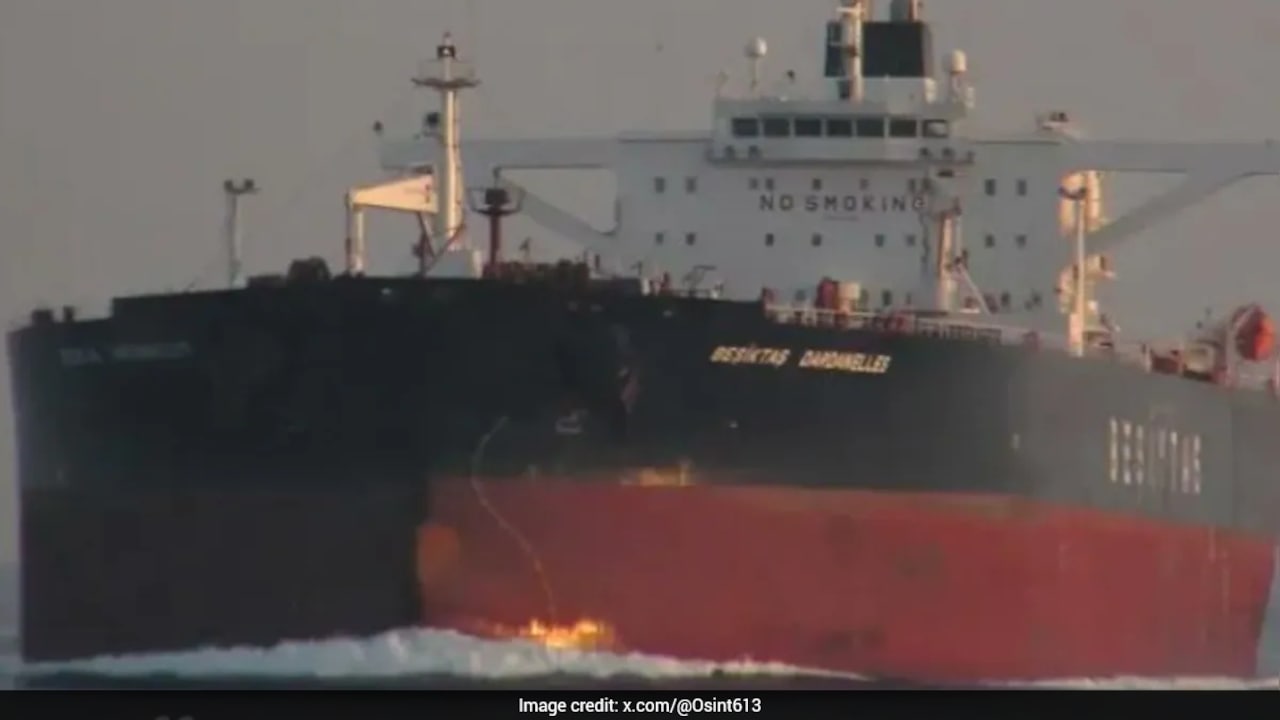
The IRGC claimed that two oil tankers trying to pass through a minefield south of the Strait of Hormuz exploded and caught fire. They blamed "deceptive American intelligence agencies" for guiding the ships into danger. Shortly after, the Guards claimed they stopped four other vessels trying to break through the waterway under the protection of the US military.
If true, global energy supplies would face immediate strangulation. Roughly one-fifth of the world's petroleum transits this narrow strip of water daily.
But no one else saw the smoke. No commercial tracking data backed up the claim. No shipping companies issued distress signals. The lack of evidence highlights the reality of modern warfare, where fake news about supply chains is weaponized just as easily as anti-ship missiles. Iran wants the world to believe it holds a knife to the throat of global shipping, whether the blade is actually there or not.
Seven Nights of Smoke and Mirrors
This phantom tanker crisis didn't happen in a vacuum. The US military just wrapped up its seventh consecutive night of airstrikes inside Iran. The goal of these raids is straightforward: degrade the IRGC's ability to harass commercial shipping.
The strategy shifted when US forces destroyed a critical maritime surveillance tower at the Shahid Kalantari Port in Chabahar. The Pentagon notes that the IRGC used this specific tower for decades to track and target commercial vessels in the Gulf of Oman. By knocking out Iran's eyes along the coastline, the US is trying to force open the channel.
In response, Tehran is lashing out globally and locally. Iranian state media claims they launched retailatory strikes against US military installations across Qatar, Kuwait, Jordan, Oman, and Syria. They claimed hits on an ammunition depot at Camp Al-Adiri in Kuwait and fuel tanks at Jordan's Al-Azraq base.
The Economic Weapon of Mass Distraction
Why invent a tanker explosion? Because fear drives up oil prices, and rising oil prices hurt the global economy.
When Iran feels pushed into a corner by relentless nightly bombing runs, its loudest megaphone is the threat of an energy blockade. By claiming that the US military is failing to protect ships and is actively causing explosions, Tehran aims to turn international pressure against Washington. They want global trade partners to demand a American halt to the strikes.
It's a classic asymmetric strategy. You don't need to win a direct military engagement with a superpower if you can convince the world that the superpower's actions are about to trigger a global economic depression.
If you're tracking this conflict, keep your eyes on the actual shipping manifests and independent satellite data, not the initial press releases from local state broadcasters. The true battle right now isn't just over who controls the water, but who controls the narrative of the war.