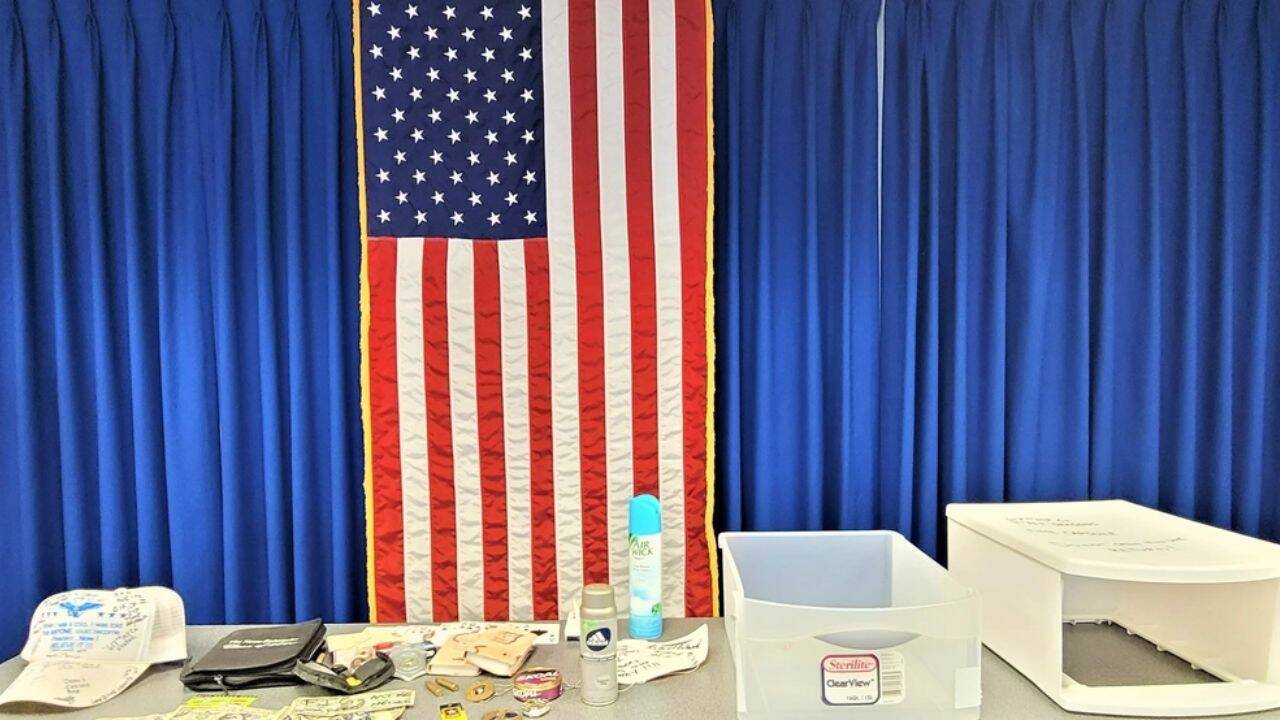
In 2004, the world looked very different. Soldiers were trading text messages on chunky flip phones, the internet was a Wild West, and deployment meant leaving behind everything familiar for a war zone. Before a group of Kentucky National Guard soldiers from the 617th Military Police Company shipped out to Iraq, they did something impulsive. They tucked a plastic drawer filled with their lives into a wall at Fort McCoy, Wisconsin.
They fully expected to be back to grab it.
They weren't.
The capsule stayed hidden behind drywall for nineteen years. When construction crews finally ripped it out during renovations in 2022, they didn't just find a junk drawer. They found a snapshot of human experience right before it was permanently altered by combat.
What Was Inside the Box
Forget grand historic documents or gold coins. These soldiers left behind the raw, gritty reality of a 2004 pre-deployment. If you look at the inventory, it reads like a frantic packing list for a life left behind. There was a signed ball cap, a pack of cigarettes, some snacks, and a 2004 Six Flags season pass.
There were also personal notes. One dollar bill was scribbled with a message about missing family and a dog. Another item had a signature from a soldier who wanted to be remembered. These aren't polished artifacts intended for a museum. They are desperate attempts to anchor their identity before heading into the chaos of Operation Iraqi Freedom.
Honestly, it’s a miracle the items survived. Contractors are usually focused on getting the job done, not playing archaeologist. Fortunately, the site team realized they had stumbled onto something significant and handed it over to the public affairs office.
Why This Specific Unit Matters
You can't talk about this capsule without acknowledging the 617th Military Police Company. They weren't just hanging out in the rear. They were on the front lines in Baghdad. Their mission was high-risk: convoy escorts, patrols, and guarding major supply routes.
Combat changes people. Fast.
The unit faced heavy exposure to improvised explosive devices and enemy fire. Reports indicate that roughly half of the 183 soldiers who deployed earned Purple Hearts. This was a company that lived through some of the most intense periods of the Iraq War. When you hold that signed cap now, it carries the weight of everything they went through after they pulled their hands out of that wall.
Silver Star recipient Leigh Ann Hester was in that unit. Command Sgt. Maj. Timothy F. Nein, who was there, later earned a Distinguished Service Cross. This wasn't just a collection of random junk; it was the final tangible link to the people these soldiers were before they became combat veterans.
The Reality of Forgetting
People often ask why they never went back to retrieve it. It’s a fair question, but if you've spent any time around military culture, you know the answer. When you’re dealing with the intensity of an active deployment, followed by the struggle of reintegration, a plastic drawer in a barracks wall ranks pretty low on the priority list.
Life moves on. Soldiers move to new units, retire, or start careers. You don’t remember the small, silly things you did in training because your brain is occupied with much heavier stuff. That drawer wasn't abandoned out of malice; it was abandoned because the soldiers it belonged to were fighting for their lives and then working to reclaim their civilian identities.
Preservation as a Learning Tool
Today, those items sit in the Fort McCoy History Center. It’s not just a display case; it’s an educational touchpoint.
I’ve seen plenty of military museums that focus only on strategy and massive battles. Those are important, sure. But this display is better because it’s personal. It forces visitors to realize that soldiers aren't just statistics or uniform numbers. They are people who had favorite snacks, people who had pets, and people who were worried about missing their families.
If you ever find yourself near Fort McCoy, take the time to see it. It’s a sobering look at how fast life can shift from everyday boredom to life-altering conflict.
How to Handle Your Own Time Capsules
If you’re thinking about starting your own time capsule, do it differently than the 617th.
- Location matters. If you hide it behind a wall, nobody will see it until you die or the building is demolished. Use a weather-resistant container.
- Context is everything. The items in the Fort McCoy capsule are powerful because we know who they belonged to. Include a letter explaining the "why." Don't just dump items in a box.
- Set a reminder. It sounds obvious, but you’ll forget. Put a digital calendar alert for ten, twenty, or fifty years from now.
Don't overthink the objects. The best capsules aren't filled with expensive items. They’re filled with things that show who you were at that specific point in time. A local newspaper, a receipt, a handwritten note—these are the things that actually tell a story.
History isn't just written in textbooks. It’s hidden in the walls of the buildings we work in. Sometimes, you just need a contractor with a sledgehammer to bring it back to the surface.


