You won't hear official declarations of war, but European capitals are already under siege. Moscow isn't sending tanks across the Polish border or launching conventional missile blitzes against Berlin. Instead, Russian intelligence is running a persistent, low-grade shadow campaign right in the heart of the continent.
Security analysts and European lawmakers are sounding the alarm because this grey-zone aggression is shifting. What started as cyber disruptions, GPS jamming, and mysterious warehouse fires is rapidly approaching kinetic assassinations. If you think the conflict stays contained to the trenches of Ukraine, you are missing the bigger picture.
The Leipzig Warning and the New Normal
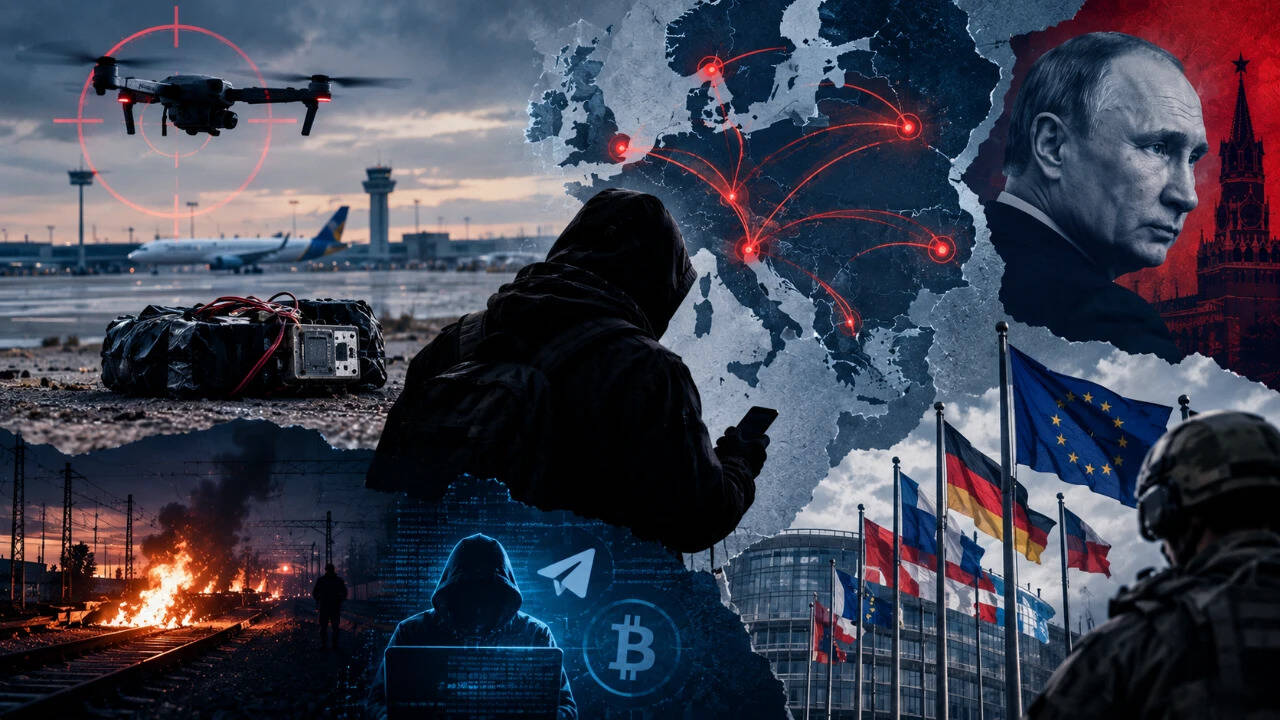
Germany is waking up to a terrifying reality. Berlin recently accused Moscow of orchestrating a failed explosive drone attack targeting Leipzig/Halle Airport, where a device was found sitting uncomfortably close to a Ukrainian cargo aircraft. Kremlin officials deny it, but intelligence agencies see a clear operational fingerprint.
It fits a broader pattern. Across the European Union, critical infrastructure faces constant probing. Rail lines suffer sudden sabotage, communications cables get severed under the Baltic Sea, and arson attacks hit factories linked to military supply chains. Moscow is testing Nato's collective nerve. They want to see how much strain alliance members can handle before political unity shatters.
The Rise of Disposable Operatives
Gone are the days when foreign intelligence agencies relied exclusively on highly trained, deep-cover sleeper agents who blended in for decades. Modern Russian hybrid warfare runs on cheap, outsourced labor.
Western security assessments reveal a disturbing trend. Moscow recruits disposable operatives directly through online messaging platforms like Telegram, paying them in cryptocurrency to carry out arson, railway disruption, or surveillance tasks. These low-level actors often don't even know who is ultimately pulling the strings. It gives the Kremlin immediate plausible deniability. If an operative gets caught torching a warehouse in London or a logistics hub in Warsaw, Russian diplomats simply shrug and cry Russophobia.
This model makes containment a nightmare for local police forces. You can't easily profile a threat when the attacker is an ordinary civilian hired over the internet for a few thousand crypto tokens.
From Arson to State Terrorism
Arson and drone buzzes are bad enough, but security experts warn that the trajectory points straight toward targeted killings. Roderich Kiesewetter, a German lawmaker and defense specialist, predicts that state-sponsored assassinations on European soil are the next logical step.
We have seen this playbook before. The 2018 Salisbury nerve agent attack in the UK proved that Russian operatives are willing to deploy lethal chemical weapons in civilian neighborhoods, resulting in innocent casualties like Dawn Sturgess. Former British defense minister Tobias Ellwood points out that Moscow has grown dangerously comfortable operating in the space between peace and war.
As Western military aid to Ukraine continues, Russian intelligence services face intense pressure to disrupt supply chains at the source. If blowing up a factory doesn't stop the weapons shipments, eliminating the engineers, defense executives, or political figures driving the support becomes an attractive alternative for the Kremlin.
Fracturing Western Political Will
The ultimate goal of this hybrid campaign isn't just physical destruction; it's psychological exhaustion. Moscow wants European citizens to feel unsafe, exposed, and tired of supporting foreign entanglements.
By stoking political polarization, amplifying anti-immigrant narratives, and fueling distrust in democratic institutions, Russian influence operations aim to make governments turn inward. If capitals like Paris, Berlin, and Washington start spending all their energy managing domestic sabotage and fear, their commitment to eastern European security naturally frays.
Nato's Article 5 mutual defense clause was designed for massive tank columns crossing borders, not for teenagers recruited on Telegram setting fire to paint factories or rogue drones appearing over cargo hubs. Adapting to this invisible threat requires an aggressive overhaul of counter-intelligence and border security before a targeted killing forces a crisis nobody is prepared to manage.