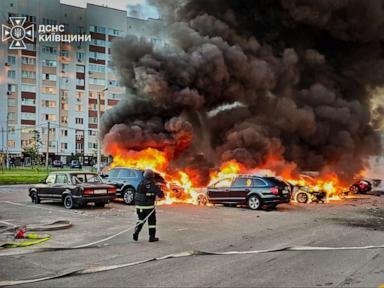
If you think the ongoing waves of aerial strikes hitting Ukraine's capital are random, you're missing the entire point. Russian drones batter Ukraine's Kyiv region, hitting apartments and warehouses in a calculated strategy designed to break civilian morale, choke the economy, and stretch air defense networks to their absolute breaking point.
When you look past the breaking news alerts, a grim pattern emerges. This isn't just about destroying military infrastructure. It’s a war of attrition waged against ordinary urban life.
The Strategy Behind the Sustained Aerial Bombardment
Recent waves of strikes have targeted high-rise residential buildings, logistics centers, and commercial warehouses across multiple districts in Kyiv and the surrounding region. According to local military administrations, attacks over recent 24-hour cycles have damaged dozens of sites, including multiple apartment buildings, private homes, and industrial storage facilities.
Why warehouses and homes? Simple math. Hitting storage depots destroys consumer goods, books, and food supplies, creating supply chain friction. Hitting apartment buildings ensures that fear is brought directly to the kitchen table.
Military analysts point out that newer, fast-moving jet-powered drones are being deployed in waves. The objective is twofold:
- Exhaust available air defense interceptors by flooding the sector with cheap or fast vectors.
- Keep the population trapped under continuous air-raid alerts that stretch for hours, disrupting daytime commerce and exhausting residents.
Life Under Constant Air-Raid Alerts
Imagine trying to maintain a normal routine while sirens wail for fifteen hours straight. That was the reality for Kyiv residents during recent prolonged alerts that essentially locked down the capital.
Civilians are learning to live on a knife-edge. Families spend hours sheltering in subterranean metro stations or windowless corridors. Yet, life somehow persists amidst the ruins. Take the widely reported story of a Kyiv couple whose apartment was heavily damaged by a blast wave from a nearby warehouse strike just hours before their scheduled wedding. Instead of canceling, they dug their wedding clothes out of the rubble, brushed off the shards of glass, and proceeded to the registry office—even as new sirens began to wail overhead.
That resilience drives residents forward, but it comes at a severe cost. Air quality in parts of the region has deteriorated due to lingering smoke from industrial fires, forcing authorities to advise citizens to keep windows sealed and limit time outdoors.
The Broader Campaign to Weaponize Winter
As autumn settles in, these sustained drone and missile attacks serve as a grim preview of colder months ahead. Ukrainian officials have repeatedly warned that Moscow is reviving its seasonal campaign to target critical power grids and heating infrastructure.
In regions closer to the southern front lines, like Kherson, persistent aerial bombing and glide-bomb attacks have already severely damaged power generation plants, prompting officials to urge vulnerable residents to evacuate before winter sets in. In Kyiv, the constant barrage against logistics hubs and housing blocks serves to keep the entire nation under immense pressure, forcing emergency services into endless cycles of response, repair, and rescue.
Don't expect these tactics to stop anytime soon. The campaign of pressure is designed to grind down Ukrainian resolve one explosion at a time.
Check local emergency alerts, map out your nearest secure shelter if you are on the ground in affected zones, and stay informed through verified local channels to navigate ongoing disruptions safely.
Russian strikes hit homes, warehouse, shopping mall across Ukraine
This video provides a direct visual look at the aftermath of the intense warehouse strikes and explosions on the outskirts of Kyiv.
http://googleusercontent.com/youtube_content/1