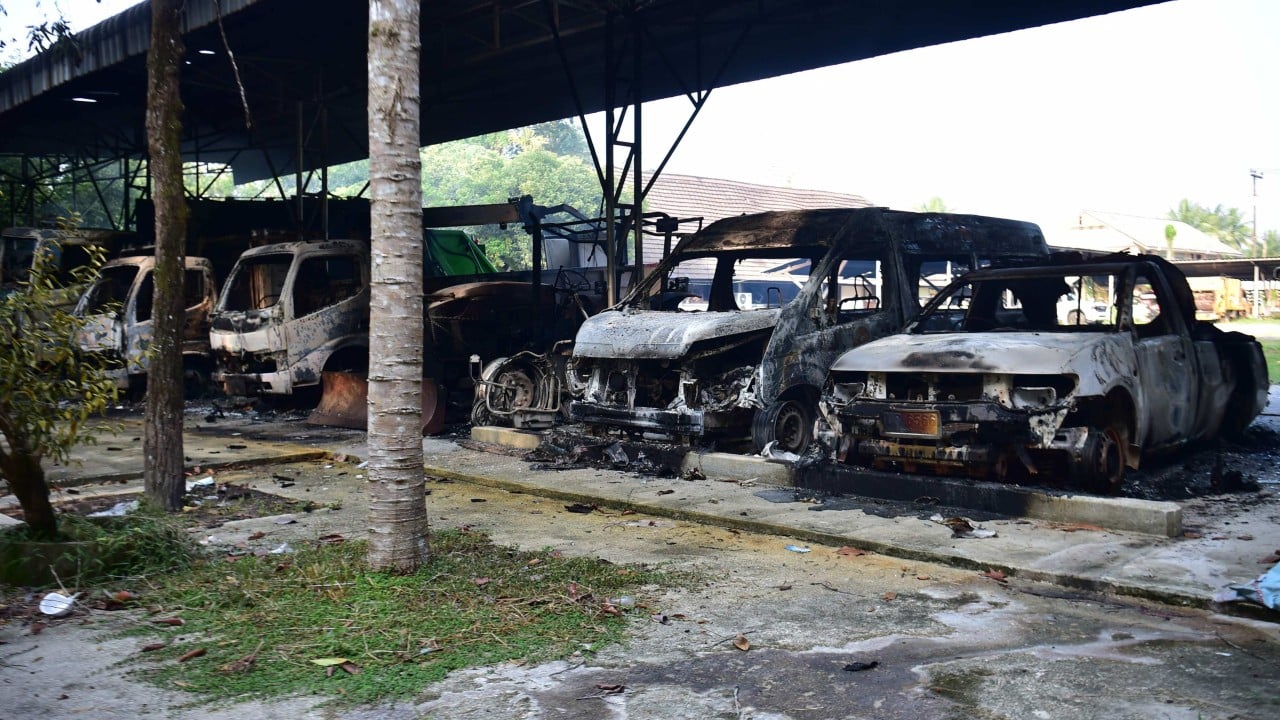
Seventy-eight coordinated strikes in a single weekend. Arson fires chewing through local government offices, convenience stores, and railway tracks. If you look at Thailand's tourism brochures, you see pristine southern beaches and smiling faces. But step into Pattani, Yala, or Narathiwat, and you enter a completely different world. A world defined by checkpoints, military patrols, and a relentless cycle of anxiety that ordinary people cannot escape.
Let's be real about what is happening on the ground. The recent surge of violence isn't just a random flare-up. It's a structured reminder of a decades-long separatist conflict that Bangkok's peace talks keep failing to resolve.
Inside the Chaos of the Recent Attacks
Security guard Ni-arfan Doloh was just doing his nightly rounds in Narathiwat province when five masked men with rifles stepped out from the shadows of an office building. They didn't shoot him on sight. They forced him to sit with his hands behind his back and promised no physical harm before torching the building behind him.
Multiply that scene across dozens of locations simultaneously. That's what happened last weekend across four southern provinces. Utility poles went down, bombs wrecked railway lines, and businesses burned.
Why target these specific spots? Separatist groups like the Barisan Revolusi Nasional are sending a direct message to the state. They hit visible symbols of Thai authority to show they can strike anywhere, anytime. Peace negotiations are on life support, and civilians are paying the price.
The Human Toll Behind the Statistics
Numbers like "78 incidents" look clean on a news report. On the ground, they translate to raw terror.
Consider young people like Solae, a 21-year-old who caught a bullet in the stomach during the chaos, or ten-year-old Habib, who now hides under the blankets and can't sleep because the sound of military boots near his home brings back panic attacks. When children are terrified of men in uniforms who are supposed to protect them, the social fabric is completely broken.
People are trapped between two armed forces. On one side, you have insurgents planting improvised bombs and staging hit-and-run arson. On the other side, you have heavy military crackdowns, cordoned-off rubber plantations, and disputed security operations where locals fear being labeled as sympathizers just for being in the wrong place.
Why Bangkok's Strategy Keeps Stalling
The Thai government relies heavily on a mix of military containment and intermittent dialogue. It hasn't worked for decades, and it's not working now.
You cannot bomb or negotiate away an insurgency while treating the local Malay-Muslim population with perpetual suspicion. Trust is completely eroded. When a community feels alienated by state security forces and threatened by underground rebels, daily life becomes an exercise in survival. Villagers stop going out after dark. Business owners hesitate to invest. Young people pack up and leave for larger cities where they can live without looking over their shoulders.
What Needs to Happen Next
If policymakers genuinely want to break this cycle, standard military playbooks must change.
- Independent Accountability: When civilians are injured in crossfire or disputed operations, transparent investigations must happen immediately to restore basic trust in the justice system.
- True Community Engagement: Peace talks cannot happen solely in luxury hotels in foreign capitals. They need local civil society groups at the table.
- Economic Security: Protecting infrastructure is fine, but rebuilding local economies choked by fear is what will actually keep communities stable.
Until these shifts occur, villagers in Thailand's deep south will remain caught in the crossfire, waiting for the next wave to hit.
Thai deep south attacks update
This video provides an overview of the recent coordinated attacks across the southern provinces and details the official response to the crisis.
http://googleusercontent.com/youtube_content/1