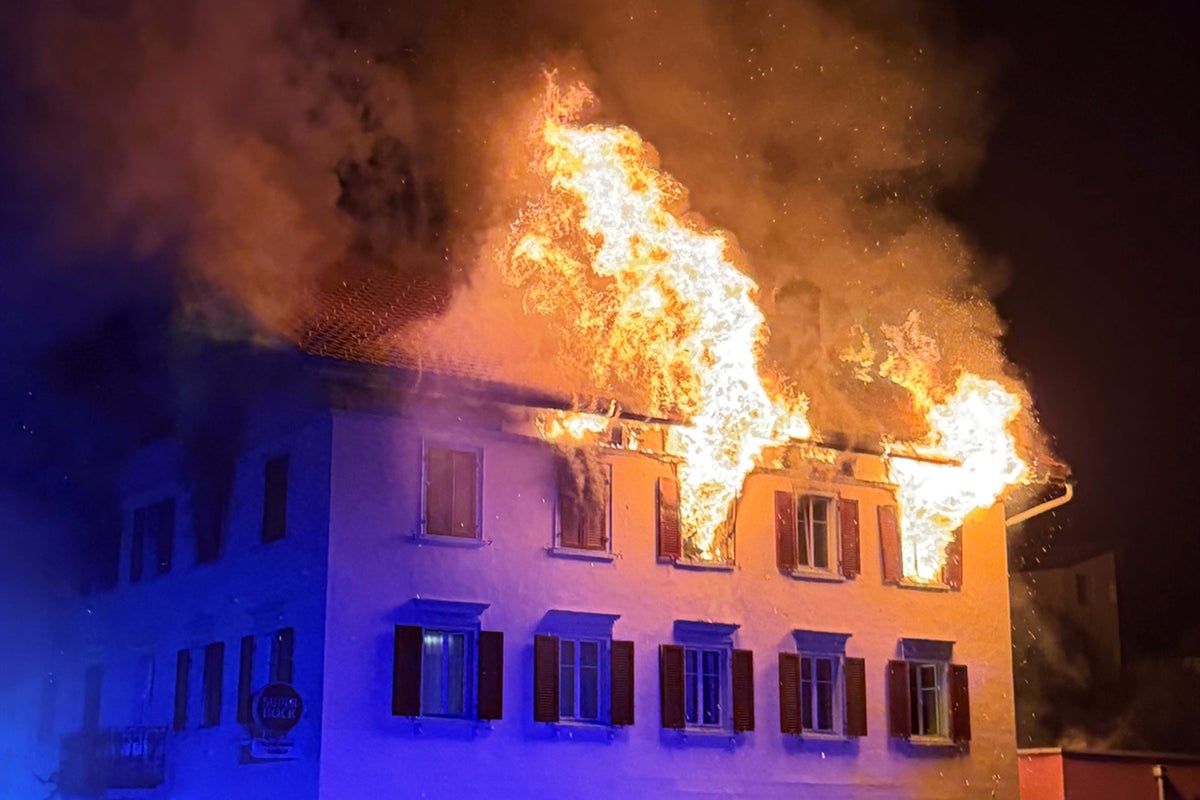
The quiet town of Thusis, tucked away in the Graubünden canton of the Swiss Alps, isn’t the kind of place where you expect headlines about catastrophic fires. You go there for the crisp mountain air, the winding roads, and that specific, slow-paced alpine lifestyle. But just after midnight this past Friday, that peace evaporated. A massive blaze ripped through a residential complex that housed both apartments and a restaurant, leaving five people missing and a community in shock.
When I look at reports like this, I don't just see a tragic news story. I see a nightmare scenario for emergency responders. Fighting fires in these types of structures is inherently different than dealing with a blaze in a flat-land city, and the situation in Thusis highlights exactly why.
Why Alpine Architecture Makes Firefighting a Gamble
If you've spent any time in the Swiss Alps, you know the aesthetic. Charming, often older, multi-story buildings that sit tightly packed along narrow, winding streets. It looks beautiful on a postcard. It’s a logistical nightmare for a fire department.
In the Thusis incident, the situation escalated fast. Reports indicate the fire started on the second floor, and the devastation was so absolute that the building was effectively destroyed. The most chilling detail? The central stairwell collapsed. Once that primary artery of the building goes, you lose your means of egress for residents and your primary path for firefighters to get inside.
Firefighters faced conditions that were, frankly, abysmal. When the stairwell gave way, they couldn't just pivot to a secondary plan. They had to bring in a crane to physically peel off the roof of the building just to get at the heart of the fire from above. This isn't standard procedure—it’s an emergency adjustment made when the structural integrity of a building has already failed.
The Reality of Emergency Response in Remote Areas
We often assume that because it’s Switzerland, the response time and the resources are essentially perfect. While the Swiss emergency systems are world-class, they are still limited by geography. Nearly 100 firefighters from local networks scrambled to Thusis. Getting that many people, along with heavy equipment like specialized cranes, to a mountain town in the middle of the night isn't instantaneous.
When you’re dealing with a fire that burns this hot and this fast, seconds count. Literally. The fact that fourteen people managed to escape is honestly a miracle given the scale of the destruction. Two people suffered serious injuries, and several others were moderate to minor. They were scattered to hospitals across Chur, Thusis, Ilanz, and Zurich. Think about that logistics chain for a second—moving trauma patients from a remote mountain town to specialized care units across different regions while a massive fire is still burning.
Lessons for Residents and Travelers
Could this have been avoided? We don't know the cause yet. Police and prosecutors are investigating. People often ask if these historical or older Alpine buildings are inherently unsafe. The truth is, they aren't necessarily "unsafe," but they are unforgiving.
If you are staying in an older, traditional building in the Alps, or anywhere really, you need to be proactive.
- Know your exits. The first thing I do when I check into a hotel or rental is locate the secondary staircase. Not just the main one. The one in the back.
- Check for smoke alarms. If you’re in a private rental, don't assume the smoke alarm works. Test it. Seriously.
- Keep a go-bag near the door. Especially when sleeping. A flashlight, your passport, and your phone. If you have to evacuate in the dark, through smoke, you won't be looking for your wallet under the bed.
What Happens Next in the Investigation
The search for the five missing individuals is the priority. Specialist teams are currently combing through the debris, but this is slow, dangerous work. When a building collapses like this, it creates unstable pockets of rubble. They can’t just go in with heavy machinery; they have to move debris by hand and with precision tools to ensure they don't cause further collapses.
The other point that shouldn't be missed is the timing. There was another, separate fire in a kitchen in the northern city of Schaffhausen on the same day. That one left eleven people injured. While likely unrelated, it serves as a grim reminder that residential fires are common, even if the scale of the Thusis blaze is rare.
Don't wait for a disaster to remind you to check your fire safety plan. Talk to your family about where to meet outside. Ensure your building management—or your Airbnb host—has provided clear, non-negotiable fire safety instructions. It sounds tedious until you actually need it. Then, it's the only thing that matters.
The community of Thusis is now facing a long recovery. Their focus is on the missing. Our focus should be on not letting these incidents become just another news story that we scroll past. Be aware of your surroundings, understand the risks of the buildings you occupy, and have an exit strategy ready. Always.