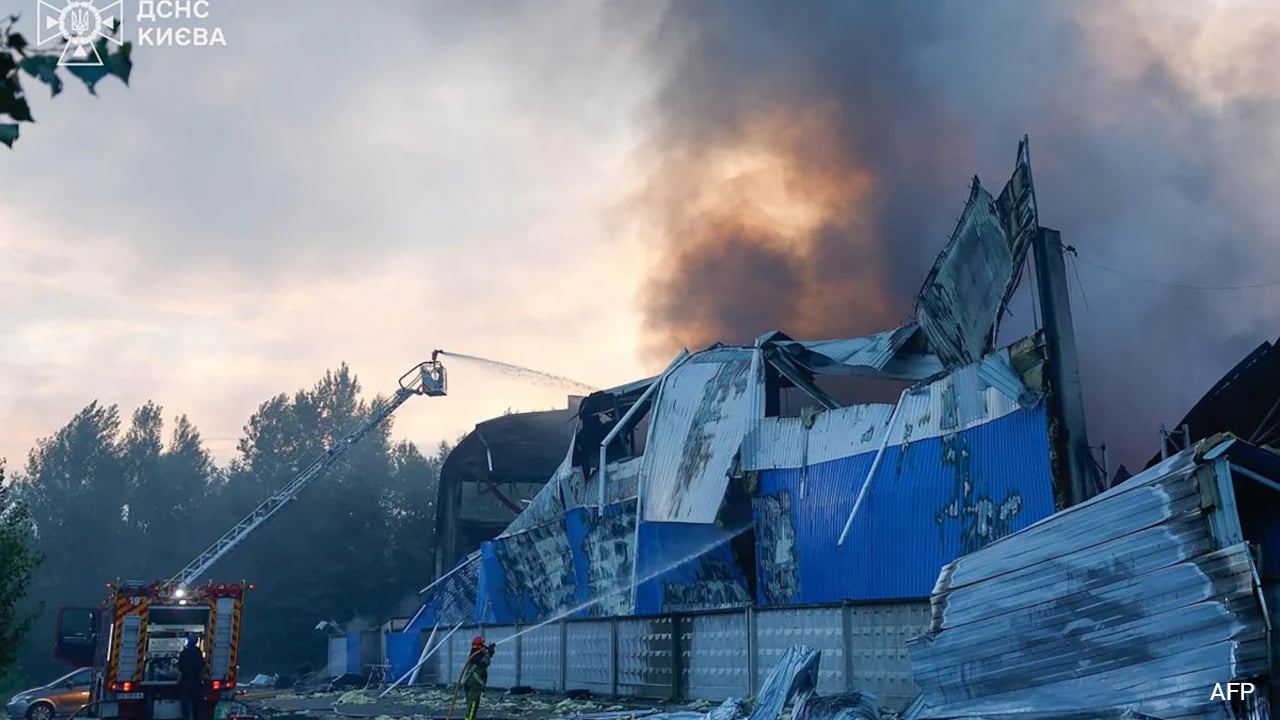
Shortly after midnight on Tuesday, July 14, 2026, the familiar, terrifying rumble of explosions shattered the silence in Ukraine’s capital. Just minutes earlier, the country's Air Force had issued a frantic alert warning of incoming ballistic missiles. Kyiv Mayor Vitali Klitschko quickly took to Telegram to confirm what millions of residents already knew. The city was under active attack. Air defense teams scrambled to intercept the fast-moving targets.
This wasn't an isolated incident. It was the latest chapter in a brutal, systematic bombardment campaign that has pushed Ukraine’s air defenses to their absolute limits this month.
While short news wires report these blasts as just another daily update, the reality on the ground is much more severe. Kyiv is facing a tactical shift in how it has to defend itself. Russia is aggressively exploiting a critical vulnerability—a dwindling supply of interceptor missiles and a sophisticated mix of high-speed ballistic weaponry designed to bypass early warning systems.
The Terrifying Speed of Modern Ballistic Warfare
To understand why these recent attacks are so devastating, you have to look at the physics of what Kyiv is dealing with.
For much of the war, residents had a window of preparation. When Russia launched slower cruise missiles or Iranian-designed Shahed drones, radars detected them hundreds of miles away. Sirens wailed. Families had time to gather their things, head to basement shelters, or at least apply the "two-wall rule" in their apartments.
Ballistic missiles changed everything.
These weapons, such as the Iskander-M or the North Korean-supplied KN-23, fly on a high-arc trajectory into the upper atmosphere before plunging down at hypersonic speeds. They cover the distance from launch sites in Russia’s Bryansk region or occupied Crimea to Kyiv in just a few minutes.
On July 11, 2026, the system broke. Missiles struck civilian infrastructure in Kyiv before the air raid sirens could even start screaming. President Volodymyr Zelenskyy had to acknowledge the grim reality. The capital’s warning networks simply could not keep pace with the flight times of ballistic strikes.
When a weapon lands before you even know it's coming, the psychological toll on a civilian population is immense. It turns daily life into a lottery.
Breaking Down the Brutal July Offensive
The midnight strike on July 14 didn't happen in a vacuum. It was the fourth major ballistic assault on Kyiv in less than two weeks. Russia has launched an relentless campaign to exhaust the capital's air defense inventory.
Here is how the devastating sequence has played out so far this month:
- July 2, 2026: A massive coordinated attack of missiles and drones slammed into the capital, killing 31 people and injuring over a hundred.
- July 6, 2026: On the eve of a critical NATO summit, Russia fired a massive wave of 68 missiles and more than 350 drones. The attack claimed 26 lives in the Kyiv region alone, destroying residential buildings in the Podilskyi district and the nearby town of Vyshneve.
- July 8, 2026: Ballistic missiles and drones struck again, sparking fires in warehouse facilities in the Sviatoshynskyi district and killing four people.
- July 11, 2026: A pre-dawn strike bypassed the early warning network entirely, injuring 11 people, including an 11-year-old boy, and damaging a theological seminary.
These attacks aren't random. They are calculated. By saturating the skies with cheap decoy drones, Moscow forces Ukrainian commanders to make a terrible choice. Do they fire their highly sophisticated, multi-million-dollar Patriot interceptor missiles at a slow-moving wooden drone, or do they save them and risk letting a ballistic missile slip through?
If they hold fire, civilians die. If they shoot, they run out of ammunition.
The High-Stakes Geopolitics Behind the Siren Alerts
The timing of this escalation is directly tied to international diplomacy. The intensified strikes in early July occurred right around high-level summit meetings where Ukraine’s allies debated long-term security commitments.
Zelenskyy has been shouting from the rooftops that Ukraine is practically defenseless against ballistic strikes without a massive influx of Western air defense systems. The primary tool capable of reliably knocking down ballistic missiles is the US-made Patriot system. But the global supply of Patriot interceptor missiles is low.
However, a major shift occurred on July 12, 2026. US President Donald Trump announced a deal to license Ukraine to manufacture its own Patriot missile interceptors. It's a surprising move given his past skepticism toward funding Kyiv's defense, but it highlights a growing recognition that the current model of donating finished military hardware is unsustainable.
On top of that, on July 13, Ukraine and nine other European nations formed a strategic coalition specifically designed to protect European airspace from ballistic threats. The coalition includes the UK, France, Germany, and several Nordic states. They recognize that if Kyiv’s shield collapses, the threat moves closer to their own borders.
Why Patriot Licensing is a Long-Term Solution to a Right-Now Problem
Licensing Ukraine to build its own Patriot interceptors is a massive strategic victory. It means Ukraine can eventually bypass Western political gridlock and produce its own ammunition.
But let's be honest. You don't build a high-tech missile factory overnight.
Setting up the manufacturing infrastructure, securing the supply chain for advanced guidance chips, and testing the solid-fuel rocket boosters will take months, if not years. Meanwhile, the blasts heard in Kyiv on Tuesday morning are happening right now.
Ukraine's immediate survival relies on immediate transfers. The newly formed coalition must expedite the delivery of existing batteries and interceptor stockpiles from European warehouses.
What Needs to Happen Next
If the international community wants to stop the daily terror in Ukrainian cities, it must move past symbolic handshakes and take direct operational steps.
- Immediate Interceptor Transfers: Western allies must search their own active inventories to supply Kyiv with RIM-161 or Patriot PAC-3 missiles immediately. Waiting for Ukrainian production lines to spin up is a recipe for disaster.
- Targeted Strikes on Launch Sites: Ukraine must be allowed to use Western-supplied long-range weapons to strike the ballistic launchers inside Russian territory before they can fire. Treating Russian soil as a safe zone while Ukrainian children huddle in subway stations is strategically absurd.
- Real-Time Intelligence Integration: NATO must integrate its satellite and early-warning radar data directly into Ukraine's municipal alert systems to give civilians those extra, life-saving two minutes of warning before ballistic impact.
The explosions in Kyiv are a wake-up call. They show that Russia is not slowing down. Air superiority and defense are the defining metrics of this conflict, and right now, the shield is wearing thin.