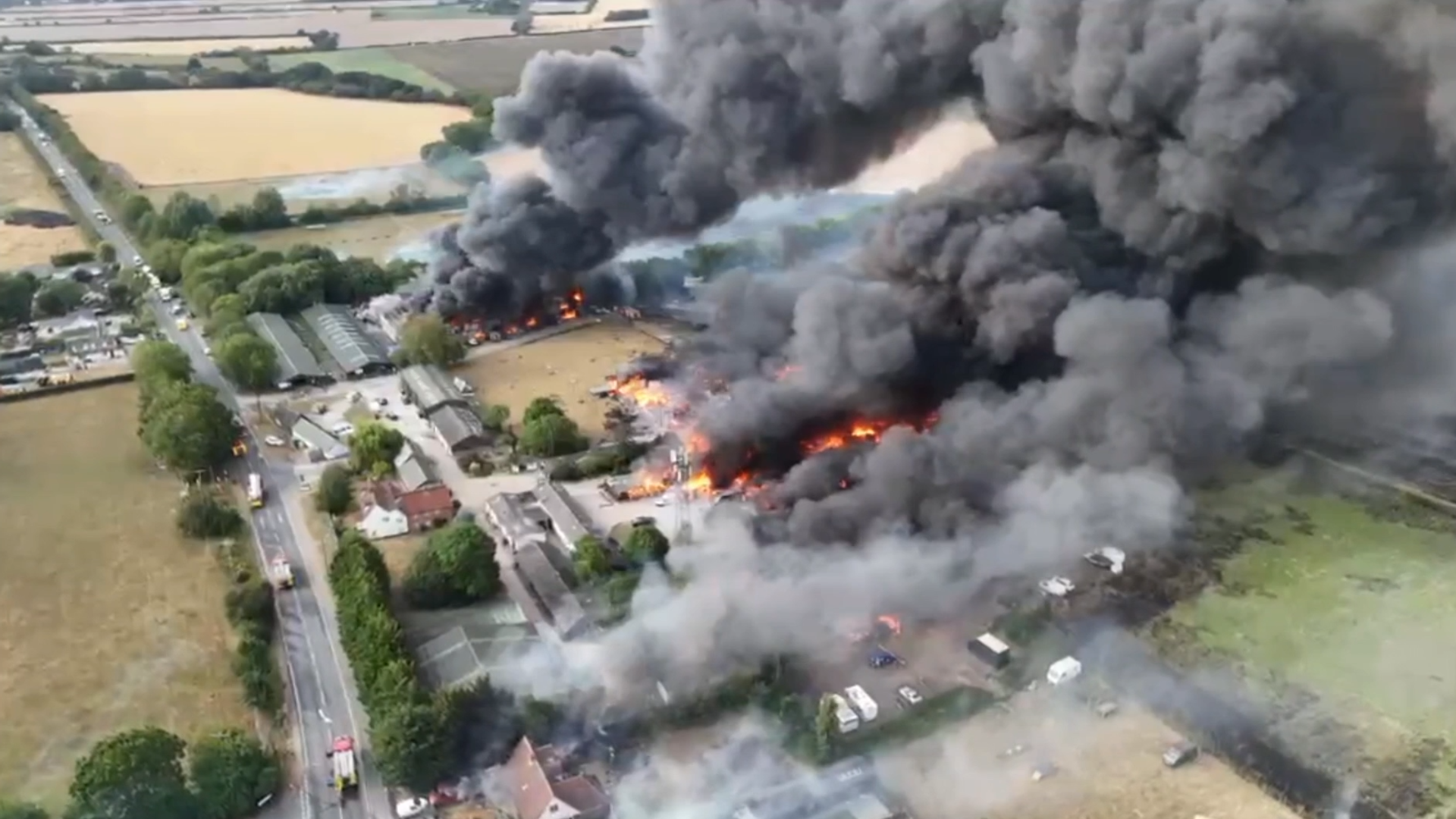
A massive fire tore through an industrial site on Southend Road between East Hanningfield and Rettendon on Friday afternoon, triggering a full emergency response as local residents felt houses shake from an explosive blast. Over 100 firefighters rushed to the scene after callouts began at 4:50 pm. The initial blaze quickly escalated into a major incident when agricultural fertilizer stored inside one of the industrial units detonated.
If you live in Essex or anywhere near rurally situated industrial complexes, this event exposed crucial insights about how quickly chemical hazards can transform a routine emergency into a critical operation.
How a Rural Industrial Fire Escaped Control in Minutes
Industrial units built near agricultural land present unique challenges for fire crews. When emergency responders first pulled up on Southend Road, they faced flames jumping between farm-adjacent structures and dry open fields. High summer ambient temperatures and dry vegetation allowed ground fires to race across nearby acreage before teams could build containment lines.
Drone footage captured by local drivers on the nearby A13 showed dense plumes of pitch-black smoke towering hundreds of feet over the Essex countryside. Within two hours, flames engulfed multiple commercial structures and spread into surrounding farmland.
The turning point came when intense thermal radiation reached stored agricultural fertilizer inside one of the primary units.
The Chemistry Behind the Explosive Blast
Ammonium nitrate and nitrogen-rich chemical fertilizers are staple goods across rural farming communities. Under standard conditions, fertilizer remains stable. However, when subjected to extreme heat, confined pressure, and organic contaminants from burning structural timber or oil, ammonium nitrate undergoes rapid thermal decomposition.
That decomposition releases massive volumes of gas instantaneously. The resulting shockwave sent a heavy boom echoing across Essex, rattling windows miles away in neighboring towns.
"A number of industrial units have caught alight as well as a field, and crews have been working to prevent the fire spreading to nearby houses," stated Essex County Fire and Rescue Service Area Manager Dave Bond during the incident response. "While on the scene, fertilizer inside one of the units exploded and residents across the county have reported hearing and feeling it."
Despite the force of the blast, structural integrity held just long enough for crews on the ground to maintain tactical positions without taking direct casualties.
Emergency Services Tactical Response and Containment
Coordinating over 100 firefighters across a hazardous site demands immediate division of labor. The East of England Ambulance Service dispatched its Hazardous Area Response Team (HART) alongside police, who closed Southend Road entirely to maintain an active safety perimeter.
Fire commanders broke the operation down into three core objectives:
- Primary Hazard Isolation: Directing high-capacity hose streams directly onto adjacent structures to prevent secondary fertilizer stockpiles from cooking off.
- Perimeter Defense: Creating wet breaks along field margins to stop wildfire expansion toward nearby residential homes.
- Community Evacuation: Clearing immediate neighbors out of the downwind smoke footprint.
By 8:15 pm, fire crews surrounded the active burn zone. Command officers officially downgraded the deployment to 50 firefighters and ten engines as hot spots were systematically doused.
Real Risks Facing Residents Near Industrial Complexes
Rural industrial parks often blend light manufacturing, auto repair, and agricultural storage. That mix creates unpredictable fire loading. One unit might hold inert timber, while the unit right next door holds volatile solvents or tons of bagged chemical compounds.
When an incident like this occurs, smoke toxicity poses the immediate danger to local health. Burning industrial materials release a mixture of carbon monoxide, nitrogen oxides, and fine particulate matter. That is why emergency services issued urgent warnings for everyone in the East Hanningfield and Rettendon districts to lock windows and shut off air intake systems.
Emergency response agencies routinely handle structural blazes, but compound chemical fires require specialized tactical approaches. Water applied directly to certain hot chemicals can accelerate reactions or create toxic runoff that threatens local waterways.
Lessons for Property Owners and Rural Businesses
This Essex incident serves as a direct wake-up call for business owners operating out of semi-rural industrial sites. Safe chemical management isn't just about compliance paperwork. It dictates whether your facility survives a fire or turns into a local disaster.
Key Operational Measures for Site Managers
- Maintain Proper Chemical Stacking Distances: Never store nitrogen-based fertilizers against external walls, combustible pallets, or fuel storage tanks. Keep clear buffer zones.
- Upgrade Site Ventilation: Proper thermal venting in storage bays allows pressure and heat to escape, significantly reducing explosion risks during structural fires.
- Keep Updated Chemical Inventories: Emergency crews need instantaneous access to safety data sheets when arriving on scene. If firefighters know fertilizer is inside before they lay hoses, they adjust their distance and tactics immediately.
- Clear Fire Breaks Near Boundary Lines: Dry grass adjoining industrial buildings offers an easy path for external wildfires to breach indoor facilities.
What You Should Do If an Industrial Fire Breaks Out Near You
If you live near an active industrial fire or hear an explosion in your local area, take these immediate actions:
- Go inside immediately and seal openings: Turn off central heating, air conditioning, or ventilation systems that pull outside air indoors.
- Avoid driving toward smoke plumes: Rubbernecking delays fire engines and exposes you to toxic air concentrations.
- Monitor official fire service channels: Trust updates from local authorities like Essex County Fire and Rescue rather than unverified social media claims.
- Prepare for precautionary evacuation: Keep a bag with essential medication, keys, and identification ready if emergency services knock on your door.
Fire crews remained on site overnight on Southend Road to monitor structural remnants and eliminate lingering embers within the field debris. Operations ended without a single reported injury among residents or frontline personnel.