A packed room suddenly goes pitch black. The heavy bass of a live band cuts out, replaced by a sudden crackle from a circuit breaker behind the stage. Within seconds, a sharp explosion tears through the room, and the ceiling turns into a sheet of fast-moving flames.
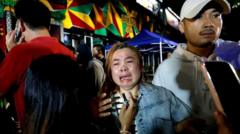
This wasn't a movie scene. It was the horrific reality inside the Rong Beer Na Lat Phrao music bar in Bangkok. The Sunday night crowd was just looking for a good time. Instead, at least 27 people lost their lives, and another 63 were left injured, with dozens fighting for survival in critical condition.
The tragedy is now recorded as one of Thailand’s worst nightlife disasters in nearly two decades. But as the smoke clears and forensic teams sift through the ash, a disturbing picture emerges. This disaster didn't just happen. It was manufactured by a series of critical safety failures, systemic neglect, and a jaw-dropping disregard for human life.
Inside the Death Trap at Na Lat Phrao
The fire broke out just before midnight in the Chatuchak district. The venue was packed to its capacity, filled with music fans watching the local band Tosakan.
Athipat Wijarn, the band's musician known as "Ice," was right on stage when the nightmare began. He recalled seeing smoke seeping from an electrical panel right behind the stage. Then the power died.
"There was an explosion, and I got hit at the back of my head," Wijarn later told local reporters. "I felt the heat and the burn."
In the sudden darkness, survival became a matter of pure instinct. Wijarn dropped to the floor and crawled through the blinding smoke toward the front exit. He made it out alive, but his body bore the burns of his escape.
Others weren't so lucky. The fire caught the soundproofing and decorative materials lining the ceiling. These materials ignited instantly, raining liquid fire down on the patrons below. The primary entrance quickly transformed into a giant furnace. Witnesses on the street recorded terrifying footage of a horizontal jet of flame blasting out of the front door, while desperate customers ran out with their clothes and skin literally on fire.
The Illusion of Safety
Local authorities quickly pointed out that the venue held a valid license as a restaurant and live music spot. It had passed a city inspection recently. Fire extinguishers were supposedly in place. The building had designated fire exits.
On paper, everything looked perfectly fine. In reality, the venue was a ticking bomb.
When the fire blocked the main front door, hundreds of panicked patrons turned around and fled toward the back of the building. They were looking for an escape route. What they found instead was a dead end.
Emergency workers found a shocking concentration of victims crowded inside the bathrooms and narrow hallways at the rear. Trapped by the advancing smoke and unable to find a way out, most of them suffocated.
Bangkok Governor Chadchart Sittipunt arrived at the scene to find an incredibly grim setup. The building technically had exit doors at the back, but they were entirely useless. One exit near the kitchen was completely blocked by stacked beer crates. Another secondary exit route was completely cut off by a heavy table placed right in front of it.
It gets worse. Investigators discovered that one crucial exit door had been intentionally bolted shut from the outside. The reason? The proprietor was terrified that customers might slip out of the bar without paying their food and beverage bills. A sign on the door simply read "staff only."
Prime Minister Anutin Charnvirakul publicly slammed this decision during his inspection of the charred remains. Had that single door been left unlocked and clearly marked, dozens of people would have walked right out into the alley safely. Instead, they were funneled directly into a toxic cloud of carbon monoxide.
The Tragic Blueprint of Nightlife Disasters
The Na Lat Phrao disaster feels sickeningly familiar because it follows the exact same script as dozens of other club fires around the globe.
Think back to the Santika Club fire in Bangkok on New Year’s Eve. That disaster took 67 lives. The causes were identical: flammable acoustic foam, locked emergency exits, and an overcrowded space with zero visibility once the lights went out.
The physics of a nightlife fire are incredibly fast. The acoustic insulation used to soundproof these spaces is often made of cheap, non-fire-retardant polyurethane foam. When it catches fire, it doesn't just burn. It releases highly toxic hydrogen cyanide and carbon monoxide gases.
A human being breathing in these fumes loses consciousness in less than two minutes. When you combine that toxicity with total darkness and blocked paths, you create an absolute death trap.
What Needs to Change Immediately
Right now, the Royal Thai Police have made negligence the primary theory guiding their criminal investigation. The owner of the venue is currently hospitalized but faces severe legal consequences.
But holding one bar owner accountable won't solve a deeper problem that spans across the global hospitality industry. Nightlife safety cannot rely on occasional check-the-box government inspections.
If you own a venue, perform in one, or simply enjoy going out on weekends, you need to understand what real safety looks like.
- Ditch the foam. Any venue using cheap, unrated acoustic foam on walls or ceilings is actively endangering its customers. Fire-rated materials are more expensive, but they give people the precious minutes required to escape.
- Exits must remain completely clear. A fire exit blocked by a single chair, a table, or a stack of inventory is no longer an exit. It is a wall.
- Panic hardware is non-negotiable. True emergency doors should always feature push-bars that open instantly from the inside, even if they are locked to prevent entry from the outside. Bolting a door shut to stop bill-dodgers is criminal negligence.
- Emergency lighting must have backup power. When the main circuit breaker blows, illuminated exit signs and path markings must turn on automatically via independent battery systems.
The tragedy in Bangkok is a stark reminder that safety regulations are written in blood. When venues cut corners to maximize space, save money on materials, or protect their nightly revenue, the cost is ultimately paid in human lives.
Next time you walk into a crowded bar, take a quick look around. Locate the secondary exits. Check if they are clear. Your life might literally depend on it.