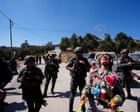
Air power rarely enters the tactical equation in the West Bank. That changed when an Israeli drone strike hit a vehicle near a building under construction in Jenin, killing three operatives, including a local Hamas commander named Qais Bitawi.
For months, military operations in the territory relied heavily on ground troops, armored vehicles, and prolonged neighborhood raids. A drone strike breaks that routine. It signals a shift in how intelligence and firepower intersect outside of Gaza. If you're trying to understand why this specific action matters right now, you have to look past the immediate casualty counts and examine the changing tactical landscape of the northern West Bank.
Breaking Down the Jenin Strike
The operation didn't happen by accident. According to joint statements from the Israel Defense Forces, the Shin Bet security agency, and elite police units, Bitawi was tracked as the head of Hamas activity in the Jenin refugee camp. Intelligence teams had been watching him for an extended period, arresting and questioning dozens of local contacts to map out his network.
When Bitawi and two accomplices exited a car near the outskirts of Jenin, intelligence assets confirmed they were armed. A single precision missile from a drone eliminated all three.
- Target: Qais Bitawi, identified as a senior operative directing attacks against Israeli civilians and security forces.
- Method: A targeted drone strike, marking the first significant aerial attack in the West Bank in roughly ten months.
- Aftermath: Ground forces quickly moved into the area, while humanitarian groups like the Palestine Red Crescent reported delays and brief detentions of medics trying to access the site.
Why Airstrikes Are Unusually Scant Here
Using air power in the West Bank carries a different political and logistical weight compared to Gaza. The territory operates under a patchwork of administrative control involving the Palestinian Authority, making large-scale aerial campaigns politically sensitive and prone to immediate escalation.
Ground operations remain the default choice because commanders prefer capturing suspects for interrogation or dismantling local infrastructure building by building. Tanks and heavy infantry have rolled into Jenin before, most notably during extensive past campaigns that forced thousands from their homes. Yet, deploying precision strikes from the air points to a high-urgency threat environment. Security chiefs clearly decided that waiting to close in with infantry posed too high an operational risk.
The Broader Security Shift
The timing of the strike coincides with heightened military preparations across Judea and Samaria. Senior military leadership recently ordered an additional regular division headquarters on heightened readiness to reinforce the sector ahead of holiday periods and rising regional tensions.
Armed factions in the northern West Bank have continuously tried to rebuild networks dismantled by previous operations. When local commanders like Bitawi manage to maintain communications with external handlers abroad and secure funding for attacks, military planners lean toward pre-emptive kinetic actions.
Militant groups immediately vowed retaliation, promising that the assassinations would be met with swift confrontation. Hamas and Islamic Jihad both claimed figures involved, highlighting the overlapping affiliations common among regional cells.
Security dynamics in the West Bank remain volatile. Keep a close eye on troop deployments and whether military planners expand the use of aerial assets beyond ground sweeps in the coming months.