When a stray projectile breaches NATO airspace, nobody gets to look away. That is precisely what happened when a suspected Russian missile crossed into Poland during a heavy aerial assault on western Ukraine. German Chancellor Friedrich Merz didn’t mince words. He called it out immediately, pointing directly at Moscow's complete lack of scruples and a calculated willingness to escalate tensions with the West.
Let's be clear. This wasn't just a navigational error or a minor border blip. When a barrage involving dozens of missiles and hundreds of drones pushes past sovereign borders into European Union and NATO territory, the risk calculus shifts instantly.
The Reality of Spillover Risk
We’ve talked about the "spillover effect" for years. Analysts love to use abstract terms like collateral risk or boundary testing. But reality hits differently when air raid sirens sound in countries sharing a fence with a war zone. Warsaw and its allies are dealing with a direct consequence of sustained high-intensity bombardment.
Moscow keeps testing where the red lines actually are. Each time a projectile crosses a border, the Kremlin tests alliance resolve.
NATO leadership confirmed they are in tight communication with Polish authorities. Meanwhile, European Commission President Ursula von der Leyen labeled the airspace violation entirely unacceptable. Yet, statements and condemnations won't stop the next trajectory error.
Why Berlin's Tone Has Hardened
Friedrich Merz has taken a distinctly assertive posture since taking the reins in Berlin. German leadership usually favors cautious diplomacy and endless deliberation. Not this time. Merz’s sharp rhetoric reflects a growing consensus across Western capitals: pretending these incidents are isolated anomalies is no longer an option.
When you look at the sheer scale of the recent strikes—tallying scores of ballistic missiles and swarms of drones targeting western regions—the margin for error shrinks to zero. Berlin sees this as an active provocation designed to wear down European public support for Kyiv.
What Happens Next on the Eastern Flank
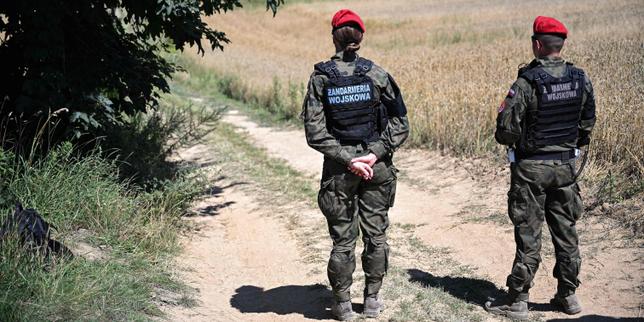
Poland and other frontline states are reinforcing their air defenses at a frantic pace. You can expect emergency consultations among defense ministers to hammer out tighter radar tracking and more aggressive intercept protocols along the eastern border.
The security architecture of Europe is bending under the weight of this ongoing conflict. It’s no longer a localized war contained within Ukraine's borders. Every stray piece of ordinance that lands on NATO soil brings the continent closer to a direct confrontation nobody claims to want, but few are actively managing to prevent.
German chancellor promises to help Ukraine produce long-range missiles
This video provides important context regarding Germany's shifting defense commitments and Chancellor Friedrich Merz's strategy on long-range military capabilities for Ukraine.