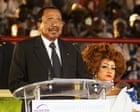
Cameroon is running on autopilot. Ninety-three-year-old President Paul Biya hasn't been seen or heard from in fifty-three days.
When a head of state vanishes for nearly two months under the guise of a "brief private stay" in Geneva, people notice. Officials scramble to offer conflicting excuses. Some claim he's working remotely. Others insist he's simply taking annual leave like any regular citizen. None of it holds up to scrutiny.
If you want to understand why this matters, you have to look past the official press releases. You have to look at a nation stuck in a perpetual state of political limbo.
The Anatomy of a Phantom Presidency
Paul Biya has ruled Cameroon since 1982. That spans decades of shifting global politics, yet the leadership in Yaoundé has barely budged. In recent years, his extended trips to a five-star hotel in Switzerland have turned into an open secret.
Except now, the silence has broken records.
Communication Minister René Emmanuel Sadi calls reports of illness "pure fantasy." Meanwhile, Labor Minister Grégoire Owona defends the absence by arguing that the president is just a worker taking a rightful vacation. Think about that logic for a second. We're talking about the oldest head of state on earth, steering a critical central African nation from a luxury European hotel room while pressing socioeconomic challenges pile up back home.
Citizens aren't buying the remote-work narrative. Social media is flooded with dark humor about the absentee president, even though talking about his health status remains legally risky. Authorities cracked down hard on public debates regarding his medical condition back in October 2024, issuing strict bans to regional governors. When a government makes a person's physical wellbeing a matter of national security, it usually means they have something heavy to hide.
The Danger of an Institutional Vacuum
Opposition figures are sounding alarms for a reason. Mamadou Mota, vice-president of the Cameroon Renaissance Movement, pointed out the obvious truth. A country cannot function efficiently when its leader governs by remote control.
Investors hate uncertainty. Business owners in Yaoundé and Douala feel the squeeze as major economic decisions stall out. Nobody wants to commit capital to a system where the top boss is perpetually missing in action.
Worse yet, the political machinery is completely jammed. Parliament reintroduced the office of vice-president earlier in the year through a constitutional overhaul, but Biya hasn't actually bothered to fill the position. That leaves zero constitutional safety nets if things go south. With parliamentary and municipal elections looming in early 2027, the lack of clear leadership threatens to throw the entire upcoming electoral cycle into chaos.
What Happens Next
Governments built around a single aging strongman rarely plan for the day after. They focus entirely on self-preservation.
Cameroon faces a stark reality. Speculation about succession plans—including whispers of dynastic handovers—will only intensify as long as the president stays abroad. Empty assurances from cabinet ministers won't fix the underlying crack in the nation's foundation.
Stop waiting for official transparency that isn't coming. Watch the institutional moves inside Yaoundé instead. Pay attention to how opposition groups mobilize and whether civic leaders demand real accountability before the 2027 polls arrive. That is where the actual story of Cameroon's future is being written.


