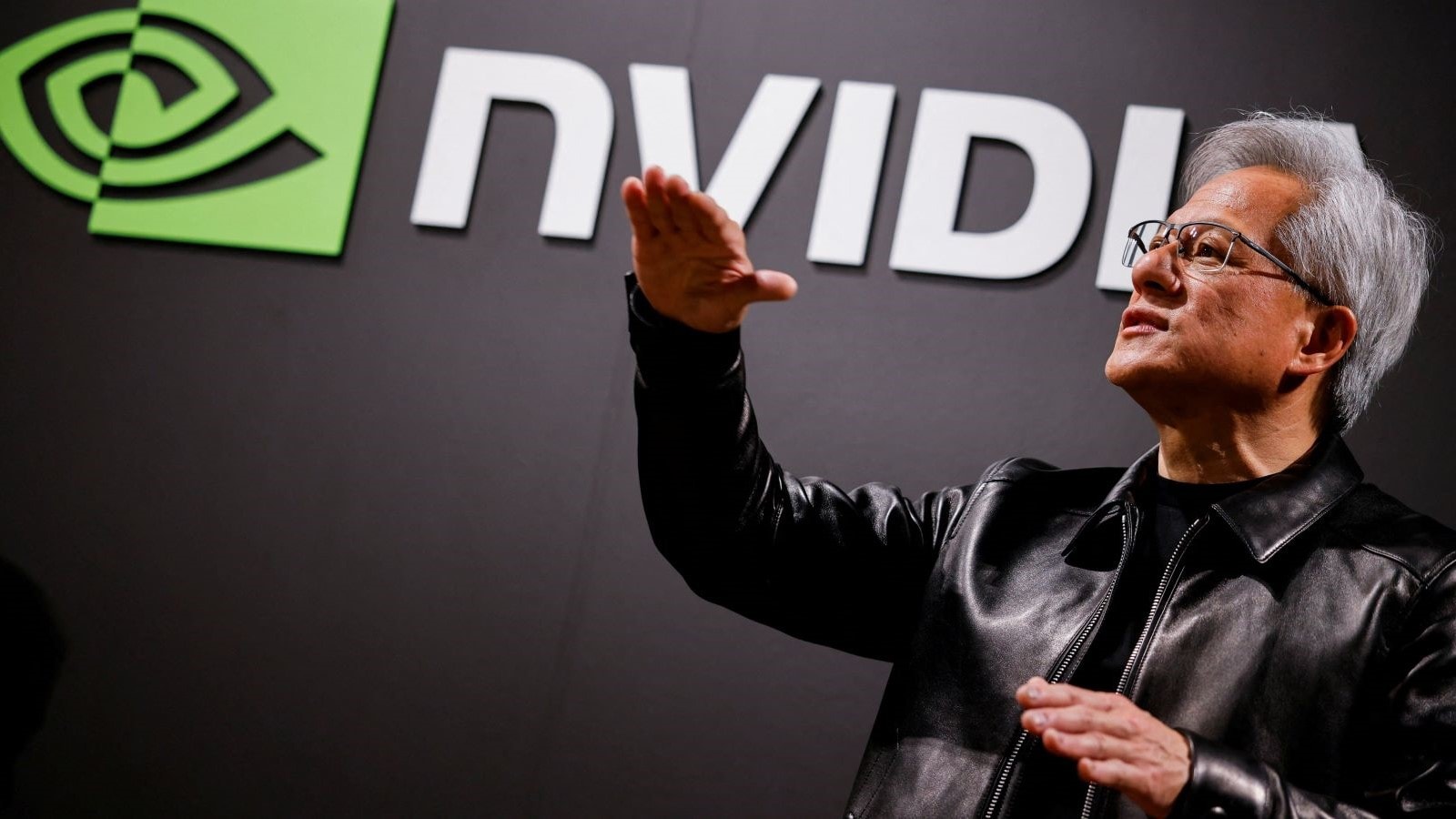
Governments love writing rules for things they don't understand. Right now, lawmakers across the globe are scrambling to draft heavy-handed legislation to cage artificial intelligence before it supposedly takes over the world. Nvidia CEO Jensen Huang thinks they should stop wasting their time.
Speaking at recent industry gatherings, Huang laid out a bluntly practical argument. He stated that artificial intelligence doesn't need a single new law or bespoke government rulebook to be built safely. According to the man supplying the chips powering the entire generative boom, safety is an engineering challenge, not a courtroom debate.
If you build systems out of silicon and code, you control them with engineering practices. You don't need politicians writing compliance manuals to stop a software bug from running amok.
The Problem With Treating Code Like an Alien Mind
A lot of modern safety discourse suffers from sensationalism. Some researchers in prominent labs talk about machine intelligence as if it is an unpredictable alien mind growing inside corporate server racks. Huang completely rejects that framing.
He points out a basic reality that gets lost in regulatory panic. Artificial intelligence is a complex computing system, but it is ultimately just a computing system. Humans build the hardware. Humans write the software. That means humans possess the full capacity to manage, audit, and constrain it using existing tools and corporate accountability.
When you treat technology like a mystical beast, you invite bureaucrats to create bureaucratic solutions. When you treat it like advanced software, you leave the responsibility right where it belongs: on the desks of the engineers writing the code.
Market Forces and the Myth of the Speed Versus Safety Tradeoff
Lawmakers often claim that tech companies will rush recklessly past safety guardrails unless the state steps in with heavy fines and audits. Huang calls BS on that narrative, too.
He argues that companies face an immediate, ruthless market penalty if they ship broken or dangerous models. Users simply won't adopt tools that ignore prompts, hallucinate constant disasters, or act against instructions. Alignment isn't just an ethical checkbox. It is a core feature that dictates whether a product succeeds or fails in the wild.
Furthermore, Huang pushes back against the idea that developers must choose between moving fast or building securely. He calls it a false choice. Companies can push development forward at top speed while still maintaining high standards, provided they maintain a strict policy: if you aren't confident your product works safely, you hit pause and get it right before shipping.
The Dangerous Trap of Regulatory Capture
There is another angle to this debate that corporate watchers understand all too well. When major labs push hardest for strict government licensing and complex safety oversight, they often do it to pull up the drawbridge behind them.
Smaller startups and open-weight model builders cannot afford massive legal compliance departments or government-mandated bureaucratic hurdles. When industry giants lobby for heavy regulation, they aren't necessarily protecting the public. They are often weaponizing the state to crush open competition.
By insisting that artificial intelligence needs no new laws, Huang is defending an ecosystem where innovation stays decentralized. If safety defaults to engineering execution and product liability laws that already exist on the books, smaller teams can still compete without begging permission from a federal committee.
What Developers Should Do Right Now
If you are building software or deploying models in your own stack, stop waiting for lawmakers to hand you a safety manual.
- Audit your pipeline for failure points before rollout, exactly as you would for any critical infrastructure.
- Build evaluation loops that test your model against malicious inputs, prompt injections, and erratic outputs.
- Keep the responsibility internal. If an agent behaves unpredictably, don't ship it to production just to hit a quarterly deadline.
The future of safe software isn't going to be legislated into existence by politicians who can barely operate their own email clients. It gets built line by line by engineers who refuse to cut corners.