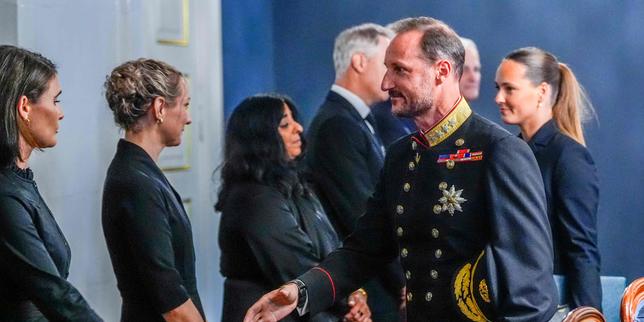
When King Harald V passed away at the age of 89, Norway didn't just lose its longest-serving modern monarch. The Scandinavian nation lost a cultural anchor. Crown Prince Haakon stepped up immediately, taking the regnal name Haakon VIII and inheriting a crown burdened by heavy public scrutiny. Harald's 35-year reign ended at Oslo University Hospital Rikshospitalet, following a worsening bloodstream infection and fluid retention linked to haemolytic anaemia treatments.
For ordinary citizens, Harald was the king who walked around in rubber boots and famously challenged the country to stop talking about "the weakest in society" because those people are often among the strongest. Now, Haakon VIII faces an entirely different reality. He assumes power not just during a time of collective national grief, but at a moment when the institution itself needs careful rebuilding.
The Weight on Haakon VIII
The transition happened at lightning speed. Following Harald's death on August 28, 2026, Haakon sat through an extraordinary Council of State at the Royal Palace alongside Prime Minister Jonas Gahr Støre and his own daughter, the new heir apparent Crown Princess Ingrid Alexandra. He chose his grandfather's historic motto, "Alt for Norge" (Everything for Norway), signalling a return to traditional constitutional duty.
Yet, you can't ignore the turbulence surrounding the palace right now. Haakon takes the throne carrying the heavy baggage of recent family scandals. Public trust took hits following revelations regarding Crown Princess Mette-Marit's past correspondence with Jeffrey Epstein, alongside other domestic headlines that tested the public's patience. Harald managed to glide above these controversies through sheer personal warmth and decades of earned goodwill. Haakon doesn't have that exact luxury. He has to earn that same level of deep-rooted affection while actively steering the monarchy through a modern media storm.
What Norwegians Expect Next
Unlike other European monarchies that saw elderly sovereigns step down voluntarily—such as in Denmark or the Netherlands—Harald refused to abdicate. He viewed his constitutional oath before the Storting in 1991 as a lifetime contract. Haakon shares that respect for tradition, but the playbook is shifting beneath his feet.
Look at how the succession unfolds practically:
- Haakon formally swore his oath to the Constitution before the Storting shortly after his father's passing.
- Over 46,000 mourners filed past Harald's coffin during a seven-hour queue at the palace chapel before a massive state funeral in Oslo.
- Foreign royals, European leaders, and international figures packed Oslo Cathedral to pay respects to Europe's oldest reigning monarch.
These ceremonial milestones hide a harder truth. The monarchy's survival in Scandinavia has never depended on divine right. It depends entirely on relevance.
The Road Ahead for the Crown
Haakon is 53 years old. He has spent decades preparing for this exact job, acting frequently as regent during his father's repeated hospitalizations for heart issues, infections, and a temporary pacemaker procedure in early 2024. He knows how the machinery of government works. He knows the ministers.
The real test for Haakon VIII isn't cutting ribbons or attending state dinners. It is proving that a hereditary institution can remain transparent, accountable, and deeply connected to a progressive society without losing its mystique. Crown Princess Ingrid Alexandra is waiting in the wings as the future of the house, but the heavy lifting belongs to Haakon right now. He has to stabilize the ship, quiet the noise, and prove that "Everything for Norway" isn't just a catchy phrase printed on a royal crest.
Stop expecting tradition to carry the crown on its own. Haakon has to earn every single bit of his legitimacy from the ground up.