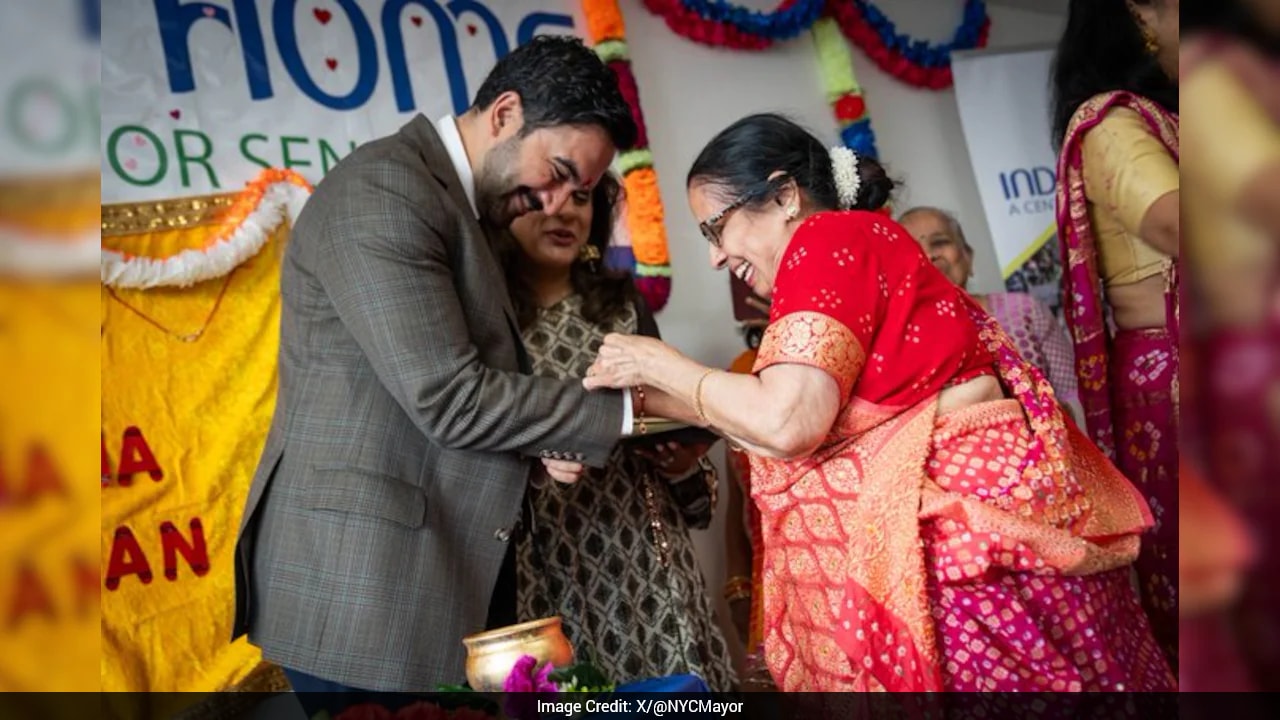
Local politics usually revolves around budgets, zoning laws, and transit delays. Sometimes, though, public life intersects with cultural traditions in ways that reveal a lot about how modern cities operate. New York Mayor Zohran Mamdani recently spent his afternoon at India Home, a community center for South Asian seniors. He wasn't there for a policy briefing. He was there to celebrate Raksha Bandhan, and the photos quickly made the rounds online.
If you follow municipal politics, you know that building bridges with diaspora communities requires showing up where people actually gather. Mamdani didn't just issue a bland, pre-written mayoral statement from City Hall. He sat down with elders, let an elderly community member tie a traditional rakhi onto his wrist, and posted about the significance of the ritual. That kind of retail politics moves the needle because it feels authentic rather than calculated.
What Raksha Bandhan Actually Represents in a Diaspora Setting
Most mainstream media reports treat festivals like Raksha Bandhan as exotic photo ops. They miss the real functional value. For South Asian seniors living thousands of miles away from their families in New York City, community spaces act as a substitute family structure. India Home provides that vital anchor.
When a sitting mayor walks into that space to participate in a traditional ceremony, it sends a clear signal. It tells older immigrants that their culture isn't invisible. It treats their traditions as part of the broader civic fabric of New York. Mamdani explicitly tied the festival's themes of protection and mutual support to the daily grind of running the city. He talked about building a safer and more affordable urban environment for everyone, turning an ancient cultural milestone into a practical conversation about municipal responsibility.
Navigating Local Politics and Cultural Friction
Public figures cannot please everyone, and Mamdani's visit happened during a tense week for local diaspora relations. Right around the time of the celebration, he also addressed upcoming events involving foreign political figures visiting Manhattan, drawing sharp lines about pluralism and his vision of a secular republic. That contrast matters. It shows that political engagement with an immigrant community isn't about blind endorsement of every faction within that community. Instead, it is about connecting with everyday residents while maintaining distinct political values.
When you look at how modern mayors communicate, the old playbook of mailing out holiday greetings doesn't work anymore. People want to see local leaders in the room. They want to see them engaging with everyday seniors who built neighborhoods from scratch decades ago.
Why Symbolic Representation Still Packs a Punch
Critics often dismiss cultural photo ops as empty gestures. They argue that a tied string on a wrist doesn't lower rent or fix pothole backlogs. They miss the point. Trust is built incrementally. Immigrant communities remember who showed up when cameras weren't rolling and who treated them like permanent fixtures of the city rather than seasonal voting blocks.
Mamdani's trajectory as the city's first Indian-American Muslim mayor gives him a unique lens for these interactions. He understands the nuances of hyphenated identities in America. By taking time out of a demanding executive schedule to spend an afternoon with South Asian elders, he set a high bar for local engagement.
If you want to understand how diverse cities stay cohesive, look at these small micro-interactions. They lay the groundwork for long-term civic trust. Stop dismissing cultural diplomacy as a distraction. It forms the backbone of community relations in any major metropolis. Show up, listen to the elders, and connect everyday traditions to real-world policy goals. That is how modern civic leadership works.