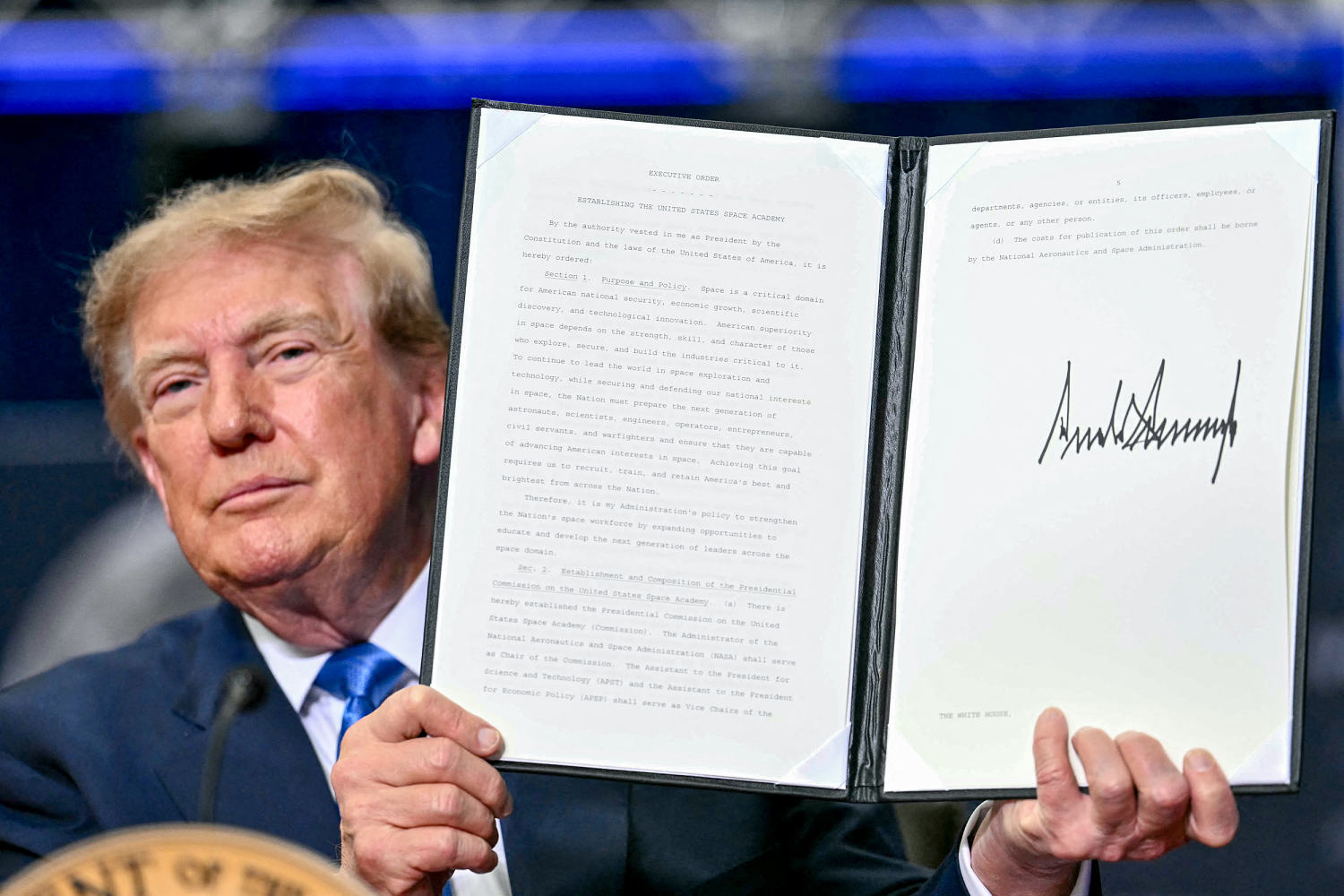
Most people laughed when the U.S. Space Force became an official branch. They shouldn't have. Space is no longer a peaceful frontier or a playground for billionaire hobbyists. It is the high ground of modern warfare. President Trump recently signed an executive order establishing the United States Space Academy, shifting how this nation prepares for conflicts beyond Earth's atmosphere.
You need to understand what this means for national security, aerospace engineering, and the future of military strategy. Let's break down why this executive order matters.
The Real Purpose Behind the Space Academy
For decades, training officers for orbital operations happened piecemeal. Air Force personnel handled satellite tracking, NASA managed civilian exploration, and private contractors built the rockets. That fractured approach doesn't work anymore.
The new academy aims to centralize training for NASA, the U.S. Space Force, and commercial partners. Think of it as West Point for the stars. The executive order sets up a framework to study and implement a dedicated institution. This place will groom officers who eat, sleep, and breathe orbital mechanics, cyber defense, and extraterrestrial logistics.
Military experts have argued for years that we are lagging behind competitors in orbital readiness. Satellites control everything from your morning GPS commute to global financial transactions and missile warning systems. If an adversary blinds our assets up there, life down here stops instantly.
Moving Past the Science Fiction Stigma
People hear "Space Academy" and immediately think of science fiction movies. Stop doing that. The threats are entirely terrestrial in nature, even if the battlefield is three hundred miles up.
Adversaries like China and Russia have spent billions developing anti-satellite weapons, orbital jamming tech, and co-orbital inspection craft that can disable American hardware. We aren't building Starfleet. We are building a specialized workforce to protect the infrastructure that keeps our society functioning.
When you look at the historical data, setting up a dedicated service academy takes years of logistical wrangling. The Air Force Academy started in Colorado Springs back in 1954 to build an independent arm for air power. The Space Academy follows that exact playbook. It treats orbital space as a distinct theater of war and commerce.
What Happens Next for Aerospace Careers
If you're tracking where federal funding and career opportunities are heading, pay close attention to this initiative. Traditional military career paths are shifting rapidly toward tech-heavy roles. Coding, orbital tracking, quantum encryption, and aerospace engineering now trump traditional infantry tactics for high-level strategic defense.
You should watch how Congress handles the funding bills and implementation studies tied to this executive order. Expect intense debates over campus locations, curriculum requirements, and how closely civilian space agencies will work with military branches. The groundwork is laid, but turning an executive order into bricks, mortar, and active cadets is a massive bureaucratic lift.
Keep your eyes on the budget allocations and institutional partnerships emerging over the next fiscal year. The transition to a space-centric defense posture is moving fast, and ignoring it is no longer an option.
President Trump Signs Executive Order To Establish The US Space
This video provides direct footage of the presidential announcement establishing the new academy.
http://googleusercontent.com/youtube_content/1