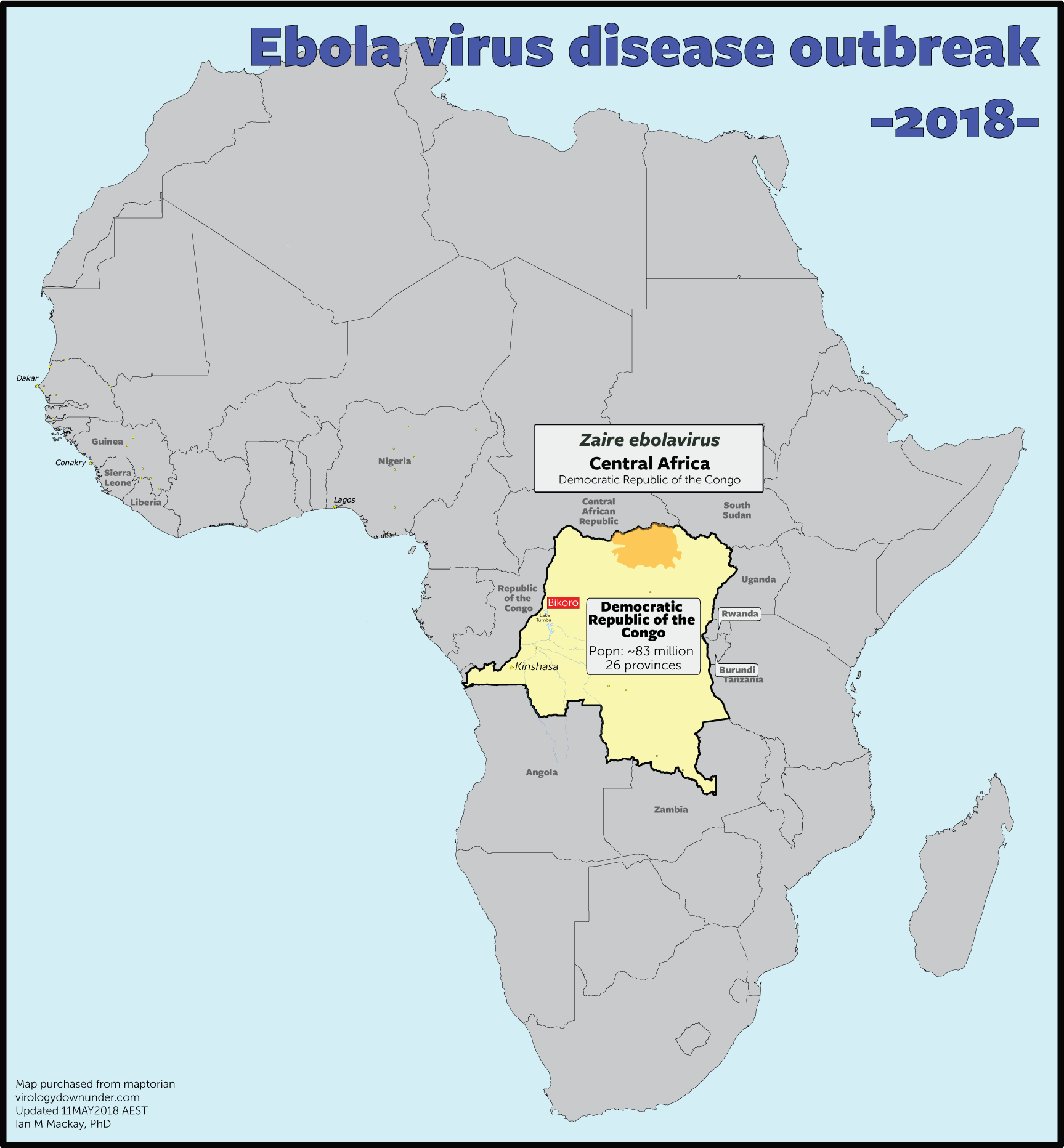
When a deadly pathogen crosses into new territory, every hour counts. Right now, the Democratic Republic of the Congo is fighting the fastest-moving outbreak in the history of the disease, with the total number of affected areas hitting 60. Biena and Manguredjipa, two fresh health zones in North Kivu province, just added their names to the growing tally. The statistics coming out of the region are stark: thousands of confirmed cases and a fatality rate sitting near 48 percent.
If you are wondering why containment measures are struggling to match the speed of transmission, the answer lies in a mix of geographical spread, strain specifics, and operational bottlenecks. This isn't just another routine health alert. It's a massive crisis unfolding across a vast territory, and traditional response models are breaking down under the pressure. Recently making waves lately: What Really Happened In The Harris County Mother Murder Case.
Understanding the Bundibugyo Strain Factor
Unlike past crises driven by the Zaire species, this 2026 epidemic is fueled by the Bundibugyo virus. That distinction matters immensely. Medical teams are dealing with a strain that lacks the widespread, ready-to-use vaccines and specific therapeutics that researchers spent decades developing for other variants.
While experimental distribution programs and clinical trials are pushing forward—such as the arrival of initial Ervebo vaccine doses and specialized treatments—the lag time leaves frontline health workers exposed. When you lack a universal shield against a specific viral variant, you are forced to rely heavily on old-school contact tracing, community isolation, and strict hygiene protocols. In crowded or insecure regions, those measures are exceptionally difficult to enforce consistently. Further details into this topic are explored by USA.gov.
Why the Geographic Spread is Accelerating
The virus isn't just moving; it's sprinting across an area roughly the size of France. Trade routes, dense population movements, and ongoing regional insecurity create an environment where the infection stays one step ahead of public health officials.
When infected individuals travel across provincial borders before showing symptoms, they establish new transmission chains that take days or weeks to map out. By the time response teams set up a treatment center—like the recent 30-bed facility opened by Médecins Sans Frontières in Lwemba—new cases have already popped up elsewhere.
The Reality on the Ground
Numbers on a page don't capture the immense strain on medical personnel. Healthcare workers have faced severe operational hurdles, including funding shortages and security risks that restrict access to remote communities. Trust is another massive hurdle. Without deep, community-led engagement, locals often view outside health interventions with suspicion, leading to hidden cases and delayed treatments that drive up mortality rates.
Stopping this trajectory requires a massive, immediate scaling up of resources, security guarantees for medical staff, and efficient distribution of the newly allocated vaccine supplies. If the international community fails to match the speed of the virus, the toll will continue to climb.
Keep a close eye on cross-border monitoring and vaccination rollout metrics over the coming weeks. Support local humanitarian organizations working directly in North Kivu and Ituri to ensure aid reaches frontline responders immediately.
Why DR Congo's New Ebola Outbreak is Out of Control
This video provides an in-depth visual analysis of the compounding factors driving the rapid transmission and high mortality rates in the current Democratic Republic of the Congo health crisis.
http://googleusercontent.com/youtube_content/1