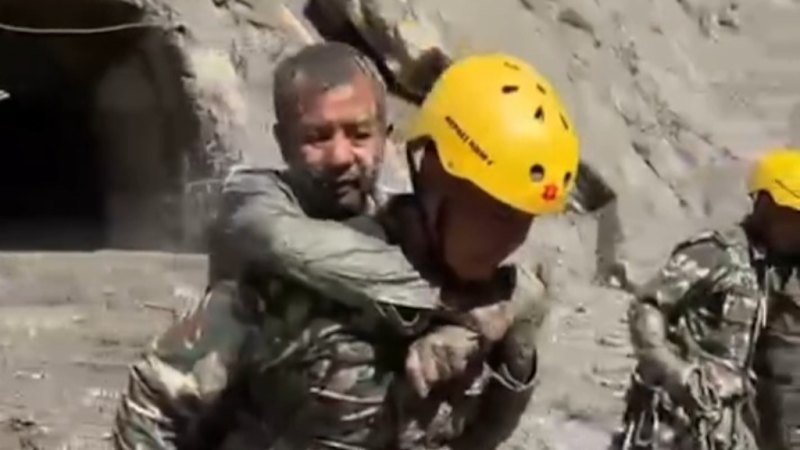
When a catastrophic flash flood triggered by a glacier collapse slammed the Nepal-Tibet border on August 26, 2026, it didn't just wash away bridges and roads. It sealed hundreds of workers inside pitch-black hydropower tunnels. Ten days later, amid mounting despair, the Nepali Army and international specialists achieved the unthinkable by pulling survivors alive from thick subterranean mud.
If you are wondering how anyone survived nearly a week and a half trapped underground in freezing, flooded conditions, you aren't alone. This crisis highlights the absolute limits of emergency response in rugged Himalayan terrain and shows why military intervention makes the difference between survival and tragedy.
The Reality of Subterranean Disaster Response
The August 26 flash floods devastated vulnerable river basins, specifically targeting roughly a dozen infrastructure projects along the Trishuli River. Around 900 workers went missing initially, with hundreds feared trapped deep inside underground tunnels choked with heavy debris and slurry.
Working in these conditions takes specialized engineering and sheer grit. Ashish Gurung, a local guide who joined the volunteer and military rescue efforts, noted that the mud inside the tunnels was overwhelmingly thick and nearly impossible to navigate safely.
The Nepali Army deployed thousands of ground troops alongside an aviation fleet consisting of military helicopters like the Mil Mi-17 and Bell 407. These aircraft became lifelines, ferrying emergency medical teams from Birendra Hospital and flying supplies into areas completely cut off by destroyed road networks.
Miraculous Breakthroughs Against All Odds
Search operations shifted heavily toward clearing debris from blocked tunnels. Day after day, experts warned that the window for finding people alive was closing fast.
Yet, extraordinary breakthroughs proved those grim statistics wrong. Joint teams comprising Nepalese soldiers and South Korean disaster experts successfully penetrated deep into a 225-meter tunnel at the Trishuli-3A and Upper Trishuli-1 projects.
Rescuers pulled out multiple workers alive days after the disaster struck, including a Chinese national and several local Nepalese workers. Footage released by the military showed dazed survivors being hauled out of pitch-black muck, given immediate water, and airlifted straight to hospitals in Kathmandu. In flood-hit Nuwakot, a woman was similarly excavated alive from a mud-covered home by soldiers who spotted movement beneath the wreckage.
Why International Cooperation Matters
No single country's military can tackle a disaster of this scale alone, especially when complex terrain and massive infrastructure destruction are involved. India stepped up by dispatching C-130J Super Hercules aircraft loaded with essential relief materials, while specialized personnel from China and South Korea joined local forces on the ground.
These joint operations proved vital for managing heavy machinery, pumping out persistent water, and utilizing night-vision aviation assets to maintain pressure around the clock.
What You Need to Know About Himalayan Disaster Preparedness
If you're tracking how modern disaster response handles remote mountain regions, keep these core factors in mind:
- Infrastructure Vulnerability: Hydropower projects built in narrow gorges face immense risks from glacial lake outburst floods.
- The Power of Rotary-Wing Aircraft: When forty-plus bridges collapse instantly, helicopters remain the only viable method for casualty evacuation and personnel insertion.
- Survival Windows: Subterranean pockets can trap air and sustain human life much longer than surface debris, provided oxygen and hypothermia aren't immediate killers.
The military's relentless push into these dark tunnels changed the narrative from total devastation to rare, hard-fought survival.
Nepal soldiers pull out Nepal-Tinel flood survivor from tunnel 9 days after disaster
This video documents the exact footage released of soldiers pulling a survivor from a hydropower tunnel days after the disaster struck.
http://googleusercontent.com/youtube_content/1