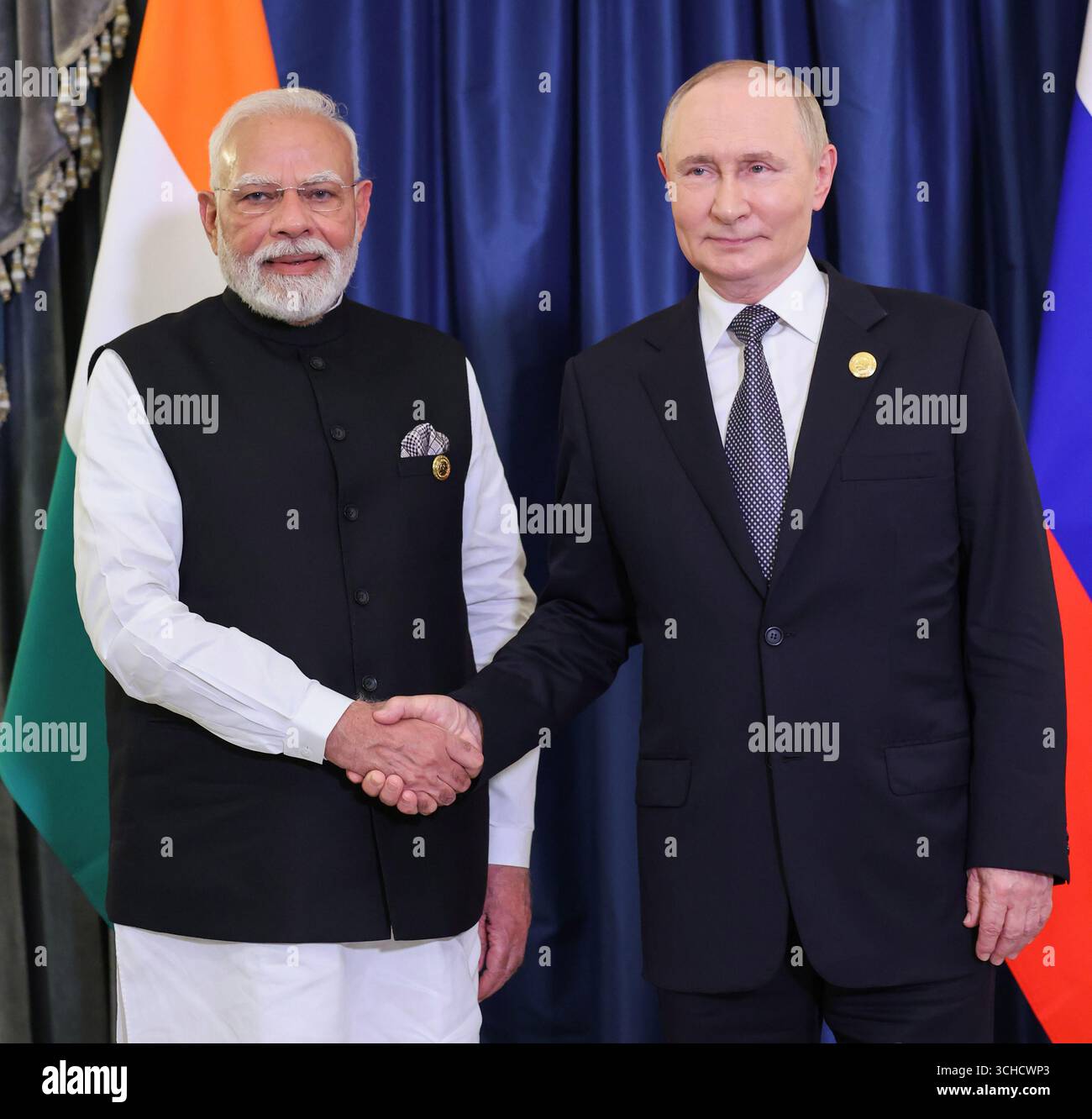
Prime Minister Narendra Modi and Russian President Vladimir Putin are sitting down for a bilateral chat on the sidelines of the Shanghai Cooperation Organisation summit in Bishkek starting August 31, and if you think this is just another routine diplomatic handshake, you're missing the bigger picture.
The Ministry of External Affairs confirmed this face-to-face during a special briefing outlining Modi's four-day diplomatic swing through Uzbekistan and the Kyrgyz Republic. MEA Secretary (West) Sibi George laid out the details, noting that scheduling specifics are falling into place as the summit approaches.
Why does this matter right now?
Because the diplomatic calendar is jammed with high-stakes optics. Just days before this announcement, External Affairs Minister S Jaishankar flew straight to the Kremlin to meet Putin, hand-delivering good wishes from New Delhi and mapping out an intense stretch of upcoming leadership interactions. Jaishankar briefed Putin on the recent India-Russia Inter-Governmental Commission meeting held in Moscow, highlighting how economic channels between the two capitals keep expanding despite massive global pressure.
Putin didn't hide his enthusiasm either, telling Jaishankar to pass his best regards to Modi and expressing clear optimism about their upcoming face-to-face encounters.
The Broader Diplomatic Roadmap
The Bishkek summit is only the starting gun for a much heavier diplomatic season.
Modi's itinerary kicks off with a stop in Uzbekistan from August 29 to August 30 at the invitation of President Shavkat Mirziyoyev. From there, he rolls into Bishkek from August 31 to September 1 for the 26th SCO Summit.
Once the dust settles in the Kyrgyz capital, the focus shifts back toward domestic turf. Putin is expected to travel to India later for the BRICS Summit, followed by the traditional annual bilateral summit framework.
When Jaishankar met Putin in Moscow, he laid out this exact sequence quite bluntly:
"Prime Minister Modi looks forward to meeting you at the SCO Summit, then welcoming you to India for the BRICS Summit, and, in due course, as per your mutual convenience, having the annual summit."
That is a heavy diplomatic workload for any pair of leaders, signaling that India and Russia are deliberately doubling down on their strategic partnership while the rest of the world watches closely.
What’s Actually on the Table
Don't expect this to be a quick chat about the weather. When Modi and Putin get behind closed doors in Bishkek, they have to navigate a very specific agenda.
- Economic Momentum: Following the recent IRIGC talks in Moscow, bilateral trade figures are under review. Both governments want to iron out payment bottlenecks and logistics hurdles that complicate direct trade.
- Regional Security: The SCO framework centers heavily on Eurasian security, counter-terrorism, and regional stability, making alignment between New Delhi and Moscow critical, especially with Central Asia's evolving geopolitical climate.
- Multilateral Coordination: Coordinating positions ahead of upcoming global summits ensures both nations maintain a united front on major international platforms.
Critics often wonder how New Delhi balances its deepening western partnerships with its historic Moscow ties. The reality on the ground is far more pragmatic than cable news pundits admit. India buys what it needs, maintains its strategic autonomy, and treats foreign policy as a tool for national interest rather than a popularity contest.
Keep an eye on the official readouts coming out of Bishkek at the end of August. That is where you'll see the real scorecard of where this relationship is heading next.