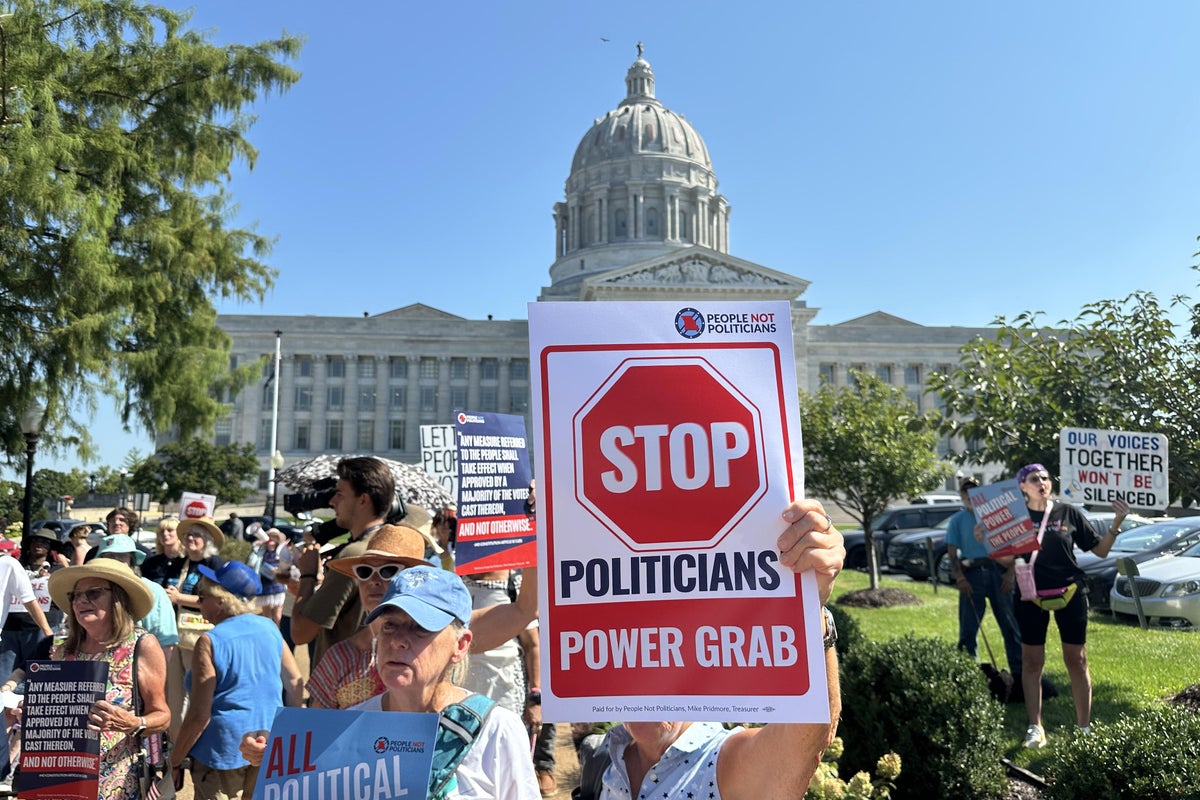
Redrawing political boundaries mid-decade sounds like an abstract legal battle. To voters on the ground in Missouri, it feels like an insult.
When the Republican-controlled state legislature rushed to overhaul the state's congressional map to squeeze out an extra GOP seat, they triggered a dizzying loop of court battles, contradictory state rulings, and an emergency intervention by the U.S. Supreme Court. Voters didn't just scratch their heads over which district they belonged in. They got mad.
If you've ever wondered how constant mid-cycle map tampering destroys trust in local institutions, look right at Kansas City and Jefferson City. The story isn't just about politicians playing chess with polling data. It's about citizens watching their everyday voice get tossed around like a spare part.
The Ping-Pong Map That Ruined Primary Season
Let's look at what actually happened. Missouri's congressional map was supposed to stay put for the decade following the 2020 census. That is how the system normally works. Then pressure mounted from national party strategies to secure an extra Republican seat in the U.S. House, where the GOP already holds six of the state's eight seats.
Lawmakers forced through a radically redrawn map. Urban cores like Kansas City got carved up and stitched into conservative rural districts stretching miles away. Jefferson City residents found themselves abruptly ripped out of their usual configuration and dropped into entirely different domains.
Then the courts stepped in. A flurry of lawsuits, state supreme court hearings, and a showdown involving Secretary of State Denny Hoskins turned voting logistics into a moving target. By the time August primaries rolled around, people were casting ballots under rules that legal experts were actively tearing apart in real-time.
Finally, a U.S. Supreme Court order stepped in to freeze the chaos for the November general election, reverting the state back to the 2022 and 2024 map. Leslie Moody, a retired chemist living in Kansas City, watched her neighborhood bounce between the 4th and 5th Districts. She didn't feel lost. She felt insulted.
"It's plain that it's completely ridiculous," Moody noted of the back-and-forth meddling.
Why Frustration Outweighs Confusion Every Time
Political analysts often assume that sudden electoral changes cause widespread operational confusion. People won't know where to vote, they argue, or they'll skip the ballot box entirely because they can't keep track of the candidates.
That misses the mark entirely.
Organizations like the League of Women Voters of Missouri reported receiving relatively few calls from panicked citizens trying to figure out their precinct. Voters are resilient. They figure out their polling place. They look up names.
What they won't accept quietly is the blatant manipulation of their representation. When you drop state capital residents into a congressional district centered hours away just to alter mathematical outcomes, people notice. Carolyn McDowell, a longtime Republican activist in Jefferson City, saw her home temporarily shifted into a district represented by Democrat Emanuel Cleaver before the Supreme Court snapped things back.
McDowell called the map unconstitutional from its inception. When party lines are carved up out of pure political opportunism mid-decade, it alienates even the most loyal partisans.
The Cost to Democratic Faith
It is easy to treat redistricting disputes as standard political theater. Both parties push for every advantage they can legally grab. But treating electoral maps like silly putty has a heavy long-term cost.
Ashley Sadowski, an independent voter in Kansas City, spent hours studying Democratic candidates for a primary district she was forced into, only to find herself bounced right back to her original district for the general election. She watched state supreme court arguments streamed live just to make sense of whether the secretary of state was defying judicial orders.
That level of friction burns out civic participation. It turns voting from a fundamental civic duty into an exhausting administrative obstacle course.
Even voters whose physical districts never actually changed felt the sting. Leslie French lives in Platte City, safely tucked inside the 6th District under any conceivable map. Yet watching the high-stakes political maneuvering left a bitter taste in her mouth. She travels internationally and admits the chaos makes her embarrassed to explain American democratic norms abroad.
"It's a blatant power grab," French said, pointing out how damaging these sudden shifts are to the country's democratic reputation.
What This Means for Future Elections
If you are watching how state legislatures handle future redistricting cycles, Missouri serves as a cautionary tale. Mid-decade map changes do not solve political divides. They deepen cynicism.
When courts have to threaten contempt charges against state officials just to enforce baseline compliance with previous judicial orders, the system is breaking down. Voters aren't stupid. They see through emergency legislative sessions designed to fix partisan math at the expense of community integrity.
Check your local registration status directly through state election portals instead of relying on third-party mailers. Pay attention to local legislative races, because statehouse votes determine these boundary lines long before federal candidates ever announce their campaigns. Protect your vote by staying informed, and don't let administrative chaos dilute your voice.


