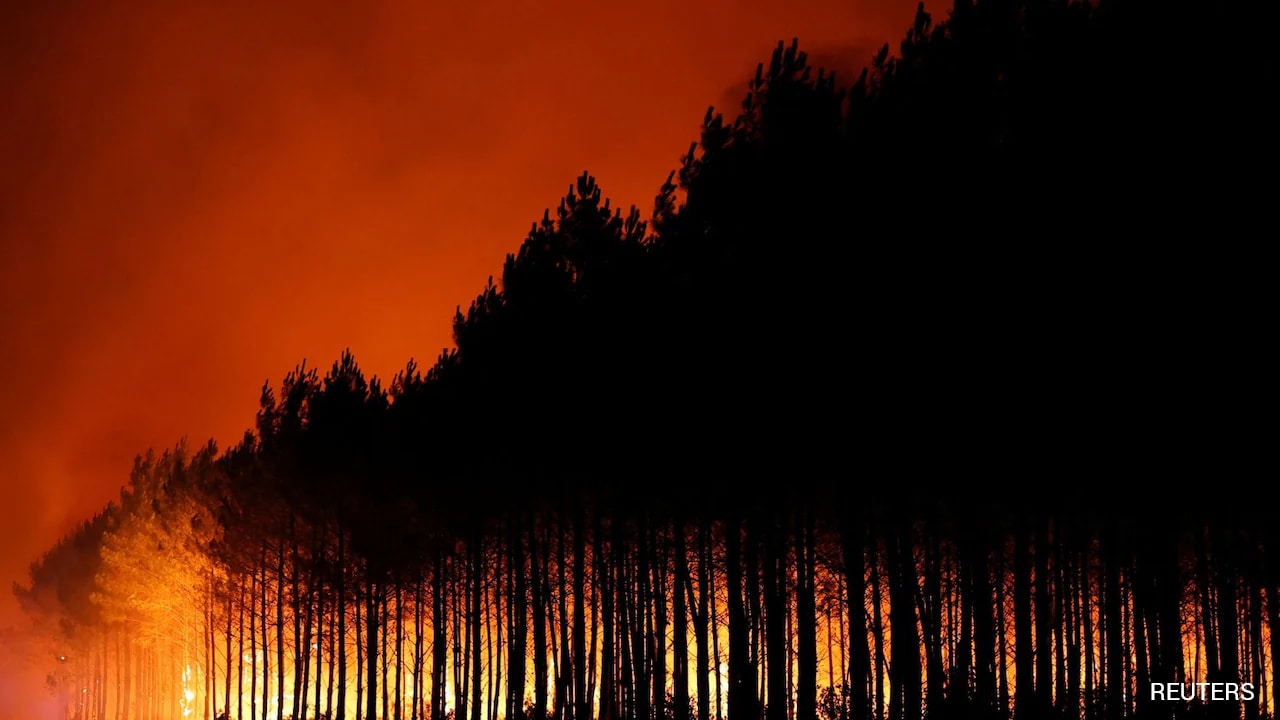
More than 300,000 people have fled their homes as volatile forest infernos tear through southwestern France and central Spain. If you have been following the news headlines out of Europe, you already know the raw scale of this crisis. What the standard news tickers miss is why these specific blazes are behaving so erratically, defying standard firefighting tactics and terrifying local communities at the peak of the summer holiday season.
The Reality on the Ground in Gironde and Madrid
The numbers are staggering. In France, the Gironde region around Bordeaux has borne the brunt of the devastation, with over 220,000 residents and stranded tourists forced to pack up and evacuate. Flames have marched dangerously close to the metropolitan outskirts, pushing authorities to close major highways and mobilize thousands of military personnel, firefighters, and police officers.
Across the border, Spain declared a rare national emergency after massive blazes merged west of Madrid. Prime Minister Pedro Sánchez noted that the country's burned acreage has far surpassed historical averages for this time of year. Meanwhile, a fresh fire front near Valencia has forced thousands more to flee on short notice, stretching emergency services to their absolute breaking point.
Why These Blazes Defy Control
If you wonder why firefighters struggle to contain these fronts, look at the physics of the fires themselves. French Interior Minister Laurent Nunez pointed out that the Gironde blaze has turned so intense that it is literally generating its own local winds.
When a fire gets this hot, it creates a feedback loop of turbulent air currents. These self-made gales whip the flames in unpredictable directions, throwing burning embers hundreds of meters ahead of the main front and sparking sudden new blazes before crews can establish defensive lines.
The Perfect Storm of Vulnerability
- Tinder-Dry Woodlands: Successive heatwaves starting as early as May baked European soils dry, robbing vegetation of essential moisture.
- Peak Tourism Season: Millions of holidaymakers occupying campsites, rentals, and coastal spots like the Cap Ferret peninsula complicated mass evacuations.
- Converging Fronts: In Spain, multiple separate fires fused into massive single walls of flame that overwhelmed regional containment capabilities.
What This Means Moving Forward
European Union assistance has kicked in, with neighboring nations dispatching specialized firefighting aircraft and water-bombers to support local crews. Yet the sheer volume of land scorched—approaching nearly 100,000 hectares in France and well over 130,000 in Spain—signals a grim shift in seasonal realities.
If you are planning travel to these regions or tracking European climate resilience, expect stricter seasonal access bans on forests, higher vigilance from local civil protection units, and rapid evacuation protocols that prioritize immediate human safety over property defense. Stay updated through official local alerts rather than social media speculation if you are anywhere near the affected zones.