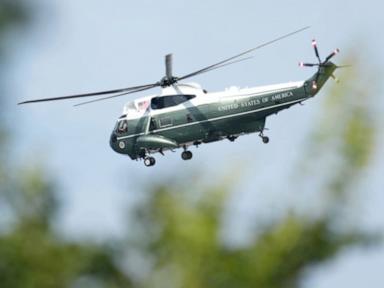
Radio silence is supposed to be tactical, not accidental. When you're talking about the presidential helicopter, dropped calls with air traffic control are terrifying.
Recent audio recordings from Reagan National Airport show that Marine One lost direct communication with the tower again just as a departure was getting underway from the White House Ellipse. Pilots gave their standard three-minute warning, but the tower heard nothing. Another chopper in the area had to step in and act as an airborne operator just to pass the message along.
If you've ever flown or worked around aviation infrastructure, you know that radio dead zones are a pilot's nightmare. But when it happens to the Commander-in-Chief's transport, it points to systemic flaws in how we manage congested airspace around Washington, D.C.
The Root Cause of the Blind Spots
Federal investigators tracing these incidents found a very mundane culprit: line-of-sight obstruction. Ongoing construction on the White House South Lawn forced Marine One to use the Ellipse as a temporary landing zone. That shift put the aircraft outside the direct radiation pattern of the local radio transmitter.
When you block an antenna's line of sight, high-frequency aviation radio degrades fast. The National Transportation Safety Board noted that pilot transmissions on August 4 and later in the month simply vanished before hitting the tower receivers at Reagan National Airport.
Radio waves don't care who is sitting in the back cabin. They require clear paths. If an antenna is buried behind buildings or placed in a residential pocket out of direct sight, you lose integrity.
When Secondary Relays Become the Backup Plan
Relying on a nearby helicopter pilot to shout across the frequency that the president is about to take off is unacceptable. On the day of the initial close call, an American Airlines regional jet lifted off near the same window, bringing the two aircraft within 0.82 miles horizontally and 700 feet vertically.
Federal Aviation Administration rules mandate strict separation buffers around Reagan National. Commercial departures are supposed to freeze when the presidential helicopter moves through shared paths. But if the tower doesn't get the radio call, air traffic controllers can't execute the holds.
It forces third-party aircraft to bridge the gap. In the audio logs, the tower controller openly admits the blind spot, asking a nearby crew to keep an ear out for Marine One. That's a makeshift fix for a critical national security asset.
Fixing the Infrastructure Flaw
You can't just cross your fingers and hope the radios work next time. The FAA eventually relocated a transmitter to the top of the Reagan National control tower to restore proper line-of-sight coverage to the Ellipse.
Testing followed, but the recurrence of communication glitches proves that legacy hardware struggles to adapt to temporary operational changes. Every time construction moves a landing zone, engineers have to map new propagation paths.
Pay attention to how agencies handle physical logistics next time you read about presidential transit. The glamorous side of aviation gets the headlines, but the boring engineering details dictate whether everyone comes home safe.
Marine One helicopter has trouble communicating with air traffic control again
This video provides an inside look at the recent radio communication breakdowns between President Trump's helicopter and air traffic controllers in Washington, D.C.
http://googleusercontent.com/youtube_content/1