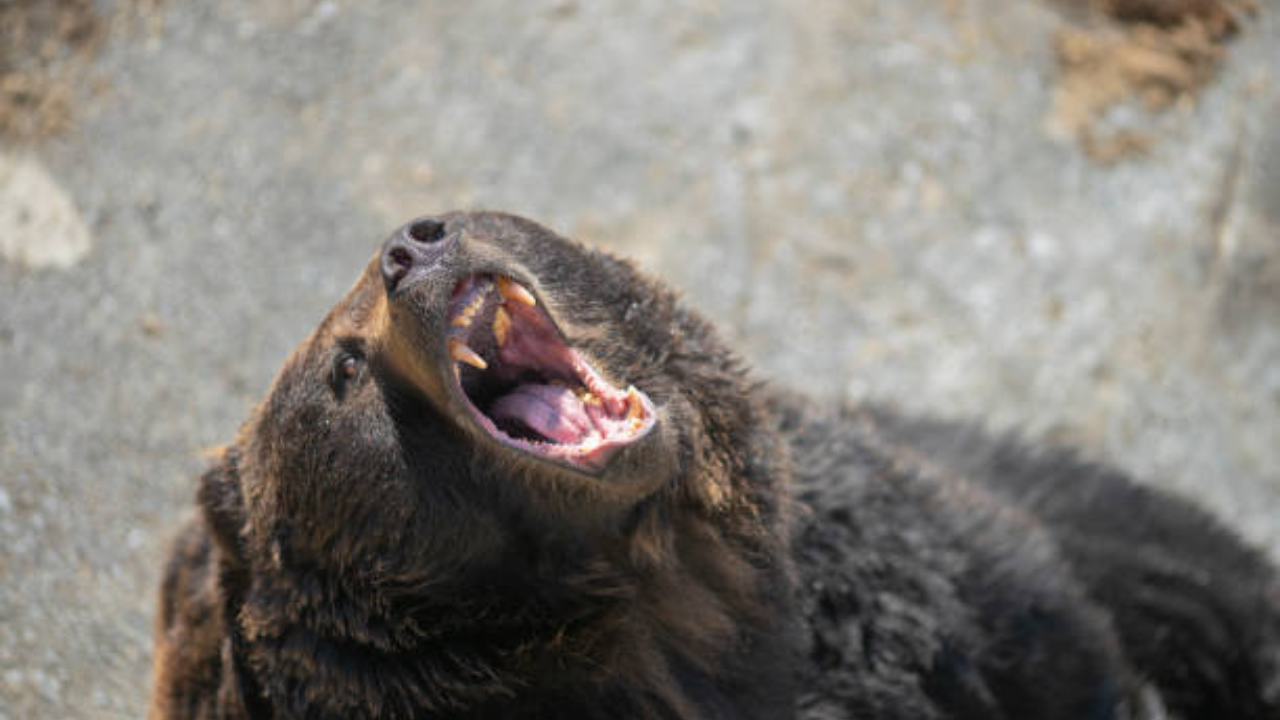
Walk into a mountain village in northern Japan right now, and you won't just see warning posters on lamp-posts. You'll see automated animatronic wolves flashing glowing red eyes to scare off predators, insurance companies selling specialized property protection against wildlife raids, and residents nervously eyeing the tree line.
Japan is fighting a war in its own backyard.
Between April 2025 and January 2026, the government oversaw the culling of more than 14,000 bears. Roughly 12,000 of those were Asiatic black bears, alongside 2,000 brown bears on Hokkaido. It sounds like an extreme measure, but officials felt backed into a corner. Japan recorded its deadliest year on record for wildlife conflicts recently, with bears attacking over 230 people and killing 13.
Yet, even after wiping out a massive chunk of the population—potentially taking out around twenty percent of the global Asiatic black bear total in a single year—the bloodshed hasn't stopped. Six more people have been killed, and the government is already targeting another 8,800 bears for removal.
Slaughtering thousands of animals isn't fixing the root cause. Here is why Japan's strategy is failing, and why a bullet won't solve a systemic ecological breakdown.
The Perfect Storm Driving Bears Into Towns
Why are bears suddenly swarming Japanese neighborhoods? It comes down to a collision of climate disruptions, shifting demographics, and biology.
Japan's mountain forests suffered brutal heat waves that ruined the growth cycles of beech nuts and acorns. These are the high-calorie foods bears depend on to pack on fat before winter hibernation. When the nuts fail, hungry bears go looking for calories elsewhere.
At the same time, rural depopulation is hollowing out Japan's countryside. Young people are moving to Tokyo and other major hubs, leaving mountain villages and farmland abandoned. The old buffer zones—cultivated fields and active human presence that once kept wild animals at a respectful distance—have vanished. Forests now bleed directly into overgrown backyards.
Bears didn't suddenly decide to become aggressive. They're just following food sources straight into empty towns.
Why the Cull Is Raising Alarm Bells
Conservationists are sounding the alarm for a simple reason: math.
Asiatic black bears are classified as vulnerable by the International Union for the Conservation of Nature (IUCN), with fewer than 60,000 estimated to remain worldwide. By removing over 14,000 bears in under a year, Japan may have permanently crippled regional populations.
Yuko Muroya, chair of the Japan Bear and Forest Society, put it bluntly: if this level of trapping continues, regional extinctions are a realistic threat.
Mass culls also fail because they treat wildlife management like a numbers game rather than a behavioral issue. Killing territorial bears often leaves vacant niches. Younger, more reckless transient bears simply move in to take over the empty territory, continuing the cycle of close encounters.
The Hunter Shortage Crisis
Japan faces a massive logistical barrier when dealing with wildlife: nobody is left to pull the trigger.
The country's licensed hunting association has shrunk dramatically. The number of active hunters has fallen by more than half since 1975, and the remaining workforce is aging rapidly. Many local associations simply don't have the manpower or younger members to monitor dense mountainous terrain.
In response, the government took drastic steps. They relaxed restrictions on shooting bears inside populated areas, dispatched police officers with rifles, and even called in military support from the Self-Defense Forces in hard-hit prefectures. Tokyo has also laid out plans to expand local government wildlife staff to 2,500 personnel and double the number of box traps.
Throwing bodies and traps at the problem ignores expertise. As one veteran hunting association chairman pointed out, assembling untrained people with firearms doesn't make communities safer if they lack deep field experience.
What Actually Works Instead of Slaughter
Japan's environment ministry has started shifting toward a long-term roadmap aiming for coexistence by 2030, but the execution leans heavily on lethal quotas. The real solution requires changing human behavior and securing the urban-forest boundary.
Successful coexistence programs already exist on a micro-scale. In Nagano's resort town of Karuizawa, specialized wildlife teams use non-lethal management. Trained Karelian bear dogs track and haze bears, teaching them to fear humans without harming them. Problem animals are tranquilized and relocated deep into the interior forests rather than put down.
Communities must also strip away the easy calories drawing bears into towns in the first place:
- Securing garbage bins and compost sites so bears can't access household waste.
- Cutting down unharvested fruit trees in abandoned orchards and residential yards.
- Installing electric fences around agricultural plots and rural homes.
- Clearing dense brush along riverbanks and roadsides where bears travel undetected.
Shooting thousands of animals offers a comforting illusion of immediate safety. But until Japan restores the ecological barriers and fixes its broken food forests, the bears will keep coming back.