Six months after a barrage of air strikes reshaped the Middle East and thrust Mojtaba Khamenei into power, the highest office in Iran is a ghost town. You haven't seen his face. You haven't heard his voice. Not a single photo, video, or audio clip has surfaced since he took charge during the chaos of the war's opening week.
People inside Tehran are asking the obvious question: Is Iran's supreme leader even alive, or are behind-the-scenes handlers running the entire state?
When a regime's entire structure relies on a single supreme authority, absolute silence creates panic. Officials claim Mojtaba Khamenei survived the initial US-Israeli strikes that killed his father, former supreme leader Ali Khamenei, but sustained severe facial injuries. They say he rules from the shadows for security reasons, delegating day-to-day management to a tight circle while retaining final veto power.
That explanation isn't satisfying anyone on the ground.
The Morale Crisis Inside the Islamic Republic
Even hardcore loyalists are losing patience. A member of the Basij volunteer militia in Qom put it bluntly to reporters: supporters need to hear a voice or see a sign to maintain confidence. When the top of the hierarchy stays invisible for half a year, rumors fill the vacuum.
Reformists and business owners in Tehran are even more cynical. Without proof of life, ordinary citizens assume the worst. How do you trust a government when you can't even confirm whether its ultimate decision-maker is breathing?
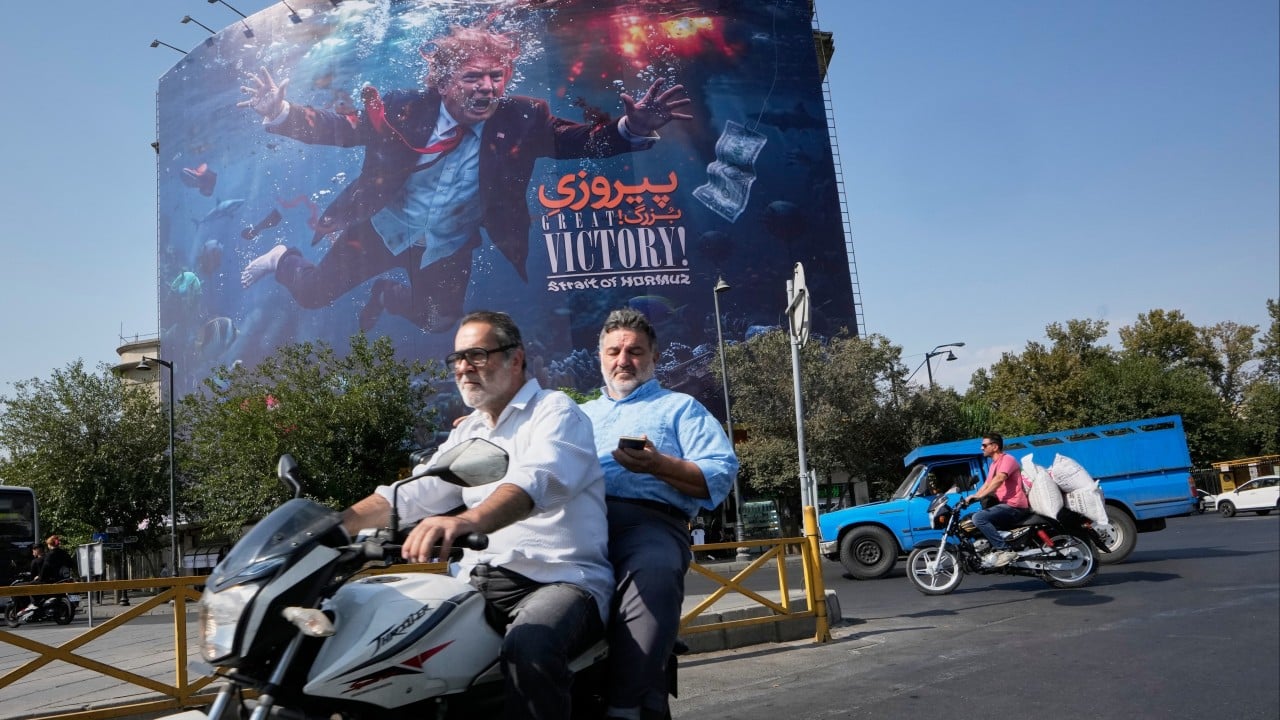
State media has tried to plug the leak with 21 written statements read aloud by anchors. President Masoud Pezeshkian claimed he sat through a seven-hour meeting with Khamenei to prove he is healthy. But words on a screen don't match the traditional visual dominance of the Supreme Leader, whose giant portraits still stare down from Tehran billboards while the man himself remains entirely hidden.
Who Is Actually Running the Country Now?
Security paranoia drives the secrecy. Regime insiders argue that any leak regarding Khamenei's location or physical condition could give foreign intelligence agencies the data they need to target him.
Yet this extreme operational security comes at a heavy cost. Analysts point out that a prolonged vacuum transforms Iran's autocracy into a fragmented collective leadership. The Islamic Revolutionary Guard Corps (IRGC) and powerful security figures are consolidating real authority behind closed doors.
When Khamenei reshuffled military leadership—appointing veterans like Mohsen Rezaei to the Supreme National Security Council and Hossein Taeb to head the Basij—it signaled a pivot toward survival and internal crowd control. But without the supreme leader's visible stamp of approval, rival factions are left guessing what he actually wants.
If Tehran wants to sustain a long conflict or negotiate a viable deal with Washington, an invisible leader cannot cut it. A system built on absolute personal authority falls apart when the person at the top turns into a myth.
Stop waiting for a transparent transition that isn't coming. The power struggle in Tehran is already happening behind the curtain.
Iran's Supreme Leader Missing From Public View? Mojtaba Khamenei Silent After Strike
This video provides a helpful overview of the initial reports surrounding the silence and uncertainty at the top of Iran's leadership following the early strikes.
http://googleusercontent.com/youtube_content/1