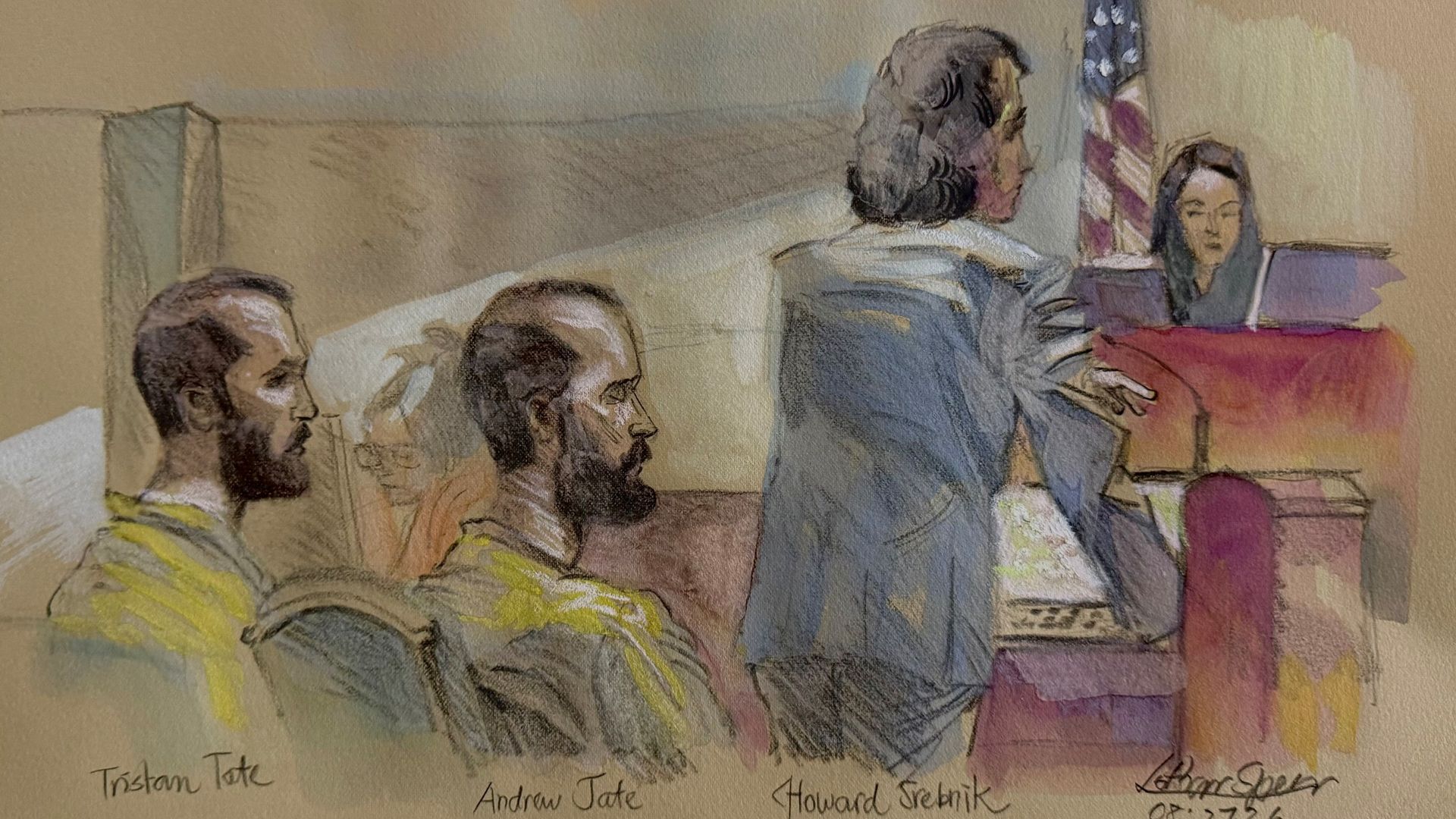
Handcuffed, shackled, and wearing tan detention center uniforms, Andrew and Tristan Tate stood before a federal judge in Miami to block their removal to Britain. The controversial brothers face a mounting mountain of legal pressure from the Crown Prosecution Service, which added dozens of heavy criminal counts to existing allegations spanning rape, human trafficking, and sexual assault.
Federal prosecutors in the United States didn't mince words during the high-stakes hearings. They painted the siblings as dangerous flight risks with deep pockets and international mobility. Meanwhile, the defense fired back with complaints about prison food, cramped cells, and the stark reality of confinement. You're looking at a multi-jurisdictional legal war that will dictate the future of two of the internet's most polarizing figures.
The Miami Bail Battle and Detention Complaints
During the federal court proceedings in Miami, Tristan Tate didn't hold back when describing his daily existence behind bars. Confined to a tight cell with minimal access to sunlight or proper exercise, he claimed his diet consisted primarily of sweets and crisps. "It's death by scurvy instead of death by starvation," he told the courtroom, arguing that his current conditions severely hampered his ability to assist legal counsel.
Government lawyers strongly pushed back against the grim portrait painted by the defense. Assistant US attorney Abbie Waxman argued that the charges brought by British authorities—totaling 59 counts involving multiple alleged victims—reflect severe actions rather than internet theater. Prosecutors pointed to the brothers' dual American and British citizenship, arguing that their financial resources and historical access to multiple passports make them prime candidates to flee if released.
The Persona Versus the Reality
A central pillar of the defense strategy relied on separating the online "Top G" brand from the men sitting in the courtroom. Lawyers argued that Andrew Tate's aggressive public persona is a calculated performance designed to provoke reactions and drive engagement online.
"Top G is a caricature," Andrew Tate testified on the witness stand, describing his online footprint as a hyperbolic creation meant to shake people out of apathy.
Tristan echoed that sentiment, noting that his brother acts like an online actor whose dramatic internet output is routinely misconstrued as literal behavior. Prosecutors rejected this distinction entirely. They maintained that the violent nature of the charges—ranging from alleged choking and rape to sex trafficking—relects genuine criminal conduct rather than harmless entertainment.
What Comes Next in the Extradition Process
US Magistrate Judge Lauren Louis ultimately ruled against releasing the brothers on bond, deciding that they failed to demonstrate they weren't flight risks or community dangers. They remain locked up in a federal facility in Miami while the legal machinery grinds forward.
British authorities hold the next cards, with deadlines closing in for submitting complete formal extradition documentation to the US State Department. The Tates continue to deny every single allegation, insisting that the accusations are unfounded and designed to dismantle everything they have built. As this cross-border legal saga drags on, the battle lines are drawn across two continents.
Andrew and Tristan Tate Seek Bail As They Fight UK Extradition
This video provides footage and a news report covering the Miami court appearance where Andrew and Tristan Tate fought for bail during their ongoing extradition battle.
http://googleusercontent.com/youtube_content/1