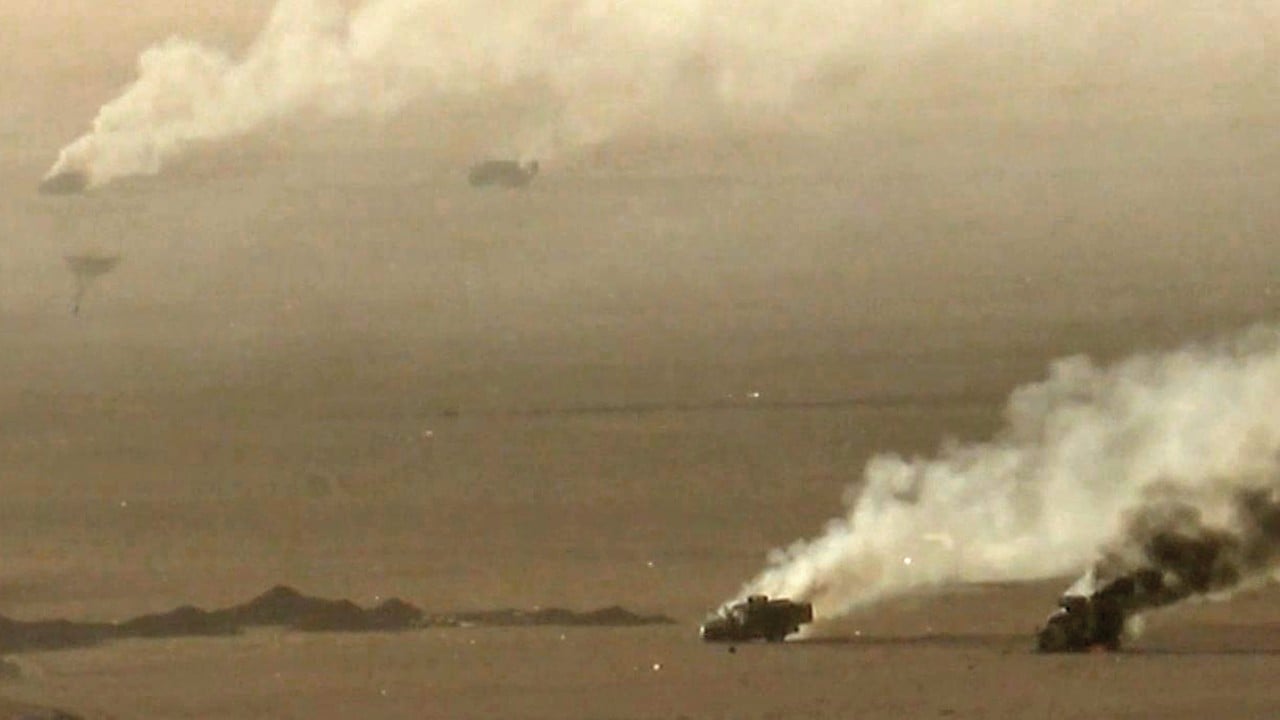
Air raid sirens recently shattered the evening calm across Mecca, Taif, and Jeddah. Royal Saudi Air Defense Forces intercepted an explosive-laden drone just south of Islam's holiest city.
Just like that, a localized regional conflict crossed a terrifying psychological threshold. For another look, consider: this related article.
The Saudi-led military coalition didn't mince words. Brigadier General Turki al-Maliki stepped forward to declare that the security of the Two Holy Mosques and millions of global pilgrims is a strict, non-negotiable "red line". Riyadh promised immediate, deterrent measures against Yemen’s Houthi movement. Meanwhile, the Houthi leadership flatly denied the operation, calling the interception report a worn-out fabrication designed to mask battlefield setbacks.
You have to look beneath the propaganda to understand why this specific interception alters the entire geopolitical architecture of the Middle East. Related insight on this trend has been provided by The New York Times.
The Strategic Reality Behind the Red Sea Offensive
This isn't happening in a vacuum. Days before the skies over Mecca lit up with interceptor trails, Houthi forces executed a lightning coastal offensive. They seized control of Yemen’s entire Red Sea coastline, vital offshore islands, and the strategic Bab al-Mandab Strait.
For global energy markets already choking on the fallout of a wider U.S.-Iran conflict, this is a nightmare scenario. With the Strait of Hormuz effectively strangled, Saudi Arabia has leaned heavily on alternative shipping lanes and its 1,200-kilometer East-West Pipeline to move crude oil to international buyers.
When the Houthis locked down the Bab al-Mandab Strait, they effectively grabbed the global economy by the throat. The drone incident near Mecca shifts the narrative from a mere maritime trade dispute into an existential religious and cultural war.
Propaganda Wars and the Battle for Public Opinion
The blame game started almost immediately after the debris hit the ground south of Mecca.
- The Coalition Stance: Riyadh insists the trajectory proved the drone was aimed squarely at the Kaaba, branding the move an act of terror targeting millions of believers worldwide.
- The Houthi Defense: Houthi spokesmen countered by pointing to dozens of retaliatory Saudi airstrikes across Yemen, maintaining that their military targets are strictly economic assets and military bases—not holy shrines.
International relations experts point out a stark reality. For the Houthis, who present themselves as a pious religious movement, a direct, verified strike on Mecca would be absolute political suicide. It would alienate regional sympathizers instantly.
Yet, military analysts note a technical alternative: given the crude guidance systems of assembled drones and homemade missiles, misfires happen. Whether intentional or a stray trajectory, the political fallout remains identical. Riyadh is using the moment to solidify domestic unity and rally international condemnation against the group.
Regional Shockwaves and Diplomatic Fallout
The international community reacted with immediate alarm. The 57-member Organisation of Islamic Cooperation (OIC) issued a scathing formal condemnation of the attempted strike.
At the same time, foreign leaders are scrambling to contain the bleeding. Pakistani Prime Minister Shehbaz Sharif publicly expressed deep sorrow and warned that the region teeters on the absolute brink of total catastrophe. Cairo and Riyadh are coordinating tightly to secure commercial shipping lanes through the Suez Canal corridor, acutely aware that regional instability starves Egypt of vital foreign revenue.
Diplomacy is currently gasping for air. With Saudi warplanes launching heavy counter-strikes across Yemen and Houthi coastal batteries defying international naval warnings, the window for a negotiated de-escalation is closing fast.
Watch the Bab al-Mandab corridor over the coming days. If commercial traffic stops entirely, energy prices will spike globally, and Riyadh's promised deterrent response will transform a messy proxy war into an open-ended regional conflagration.