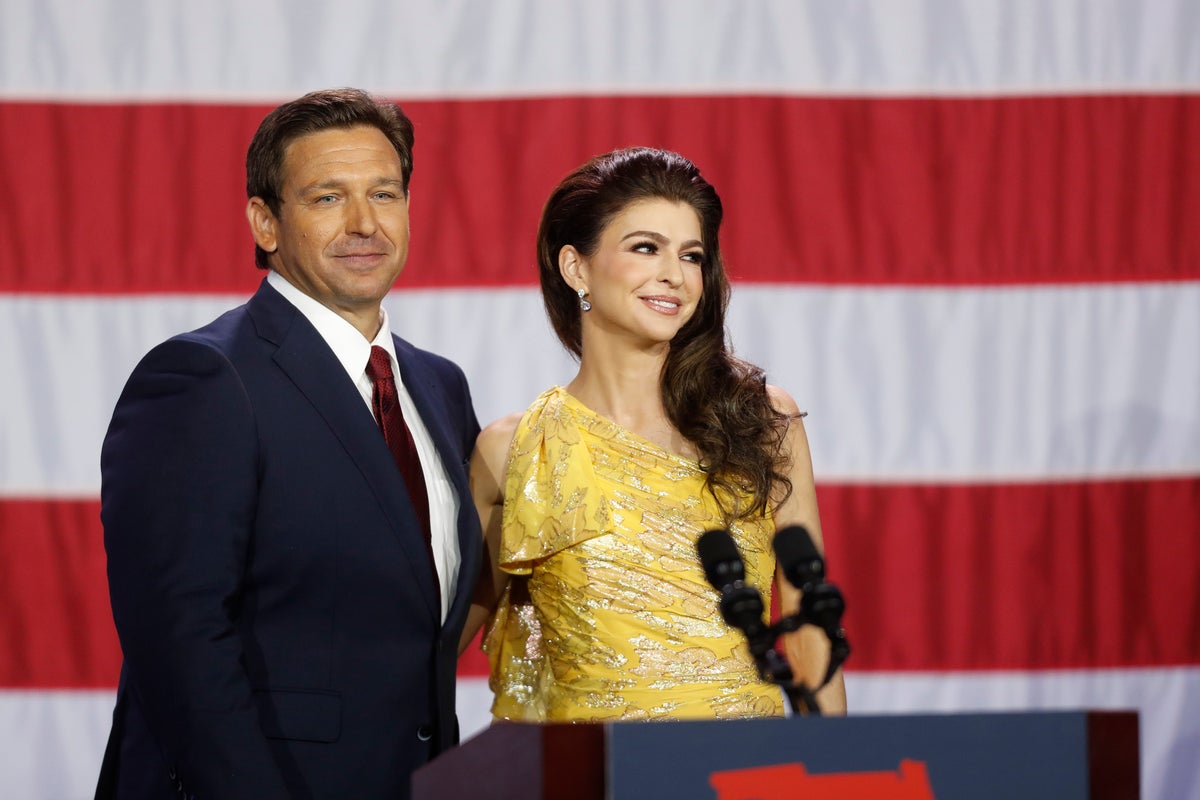
Ten million dollars meant for children's healthcare ended up funding political campaigns instead. At least, that's the conclusion of a Florida grand jury investigation that spent months looking into Governor Ron DeSantis' administration.
If you've been following Florida politics, you know this isn't just a routine accounting error. It's a tangled web of state settlements, charity foundations, political action committees, and a ballot initiative fight over marijuana legalization.
Let's break down what actually happened, why the money moved the way it did, and why the grand jury's final report stopped short of criminal charges even while blasting the administration.
Where the Money Started
The entire story kicks off with a massive Medicaid settlement. Centene Corp, the state's largest Medicaid contractor, got caught overcharging Florida for medical services meant for sick and underprivileged kids. To settle the dispute, Centene agreed to pay $67 million back to the state.
Out of that total, $57 million went directly to Florida's Agency for Health Care Administration. But the remaining $10 million took a very different detour.
Instead of going back into state general revenue to help pay for medical services, that $10 million was routed to the Hope Florida Foundation. This welfare assistance program was founded by First Lady Casey DeSantis. Its stated goal is simple: reduce reliance on government services by partnering with private companies.
Except the money didn't stay there.
The Trail to Political Action Committees
Days after the $10 million landed in the Hope Florida Foundation account, the money started moving again. Two different nonprofits requested $5 million grants.
One was Secure Florida's Future, a business advocacy organization tied to the Florida Chamber of Commerce. The other was Save Our Society From Drugs, an organization that pushes for stricter drug regulations.
Once those nonprofits got their grants, they funneled money straight into Keep Florida Clean. That was a political action committee managed by James Uthmeier, who served as Governor DeSantis' chief of staff at the time.
From there, the cash moved into familiar political territory:
- $5 million went directly to the Republican Party of Florida.
- $1.2 million went to the Florida Freedom Fund, another PAC run by Uthmeier.
What was the ultimate goal of these transfers? Investigators found the money was used to lobby against Amendment 3, a high-profile ballot initiative aimed at legalizing recreational marijuana in Florida.
Why No One Is Facing Criminal Charges
You might wonder how $10 million can be redirected from children's healthcare into political campaigns without anyone going to jail.
The grand jury report concluded that the funds were indeed misappropriated as part of a sophisticated network designed to fund political activities. But they declined to return indictments. Why? Because the grand jurors hit a brick wall during witness testimony.
Nobody would take responsibility.
According to the report, no witness could point a finger at the specific person who made the final decision to route the money to Hope Florida in the exact way it was done. Key figures like Governor DeSantis, James Uthmeier, and former Attorney General Ashley Moody were never even called to testify before the grand jury.
Without a definitive chain of personal accountability tying a criminal intent to a specific signature or directive, prosecutors couldn't bridge the gap required for criminal charges.
The Official Response and Defense
Unsurprisingly, the administration's camp pushed back hard against the findings.
Alex Lanfranconi, the communications director for Governor DeSantis, labeled the grand jury report a baseless smear that had already been debunked. He also raised legal questions about the report's release, calling the leak of a confidential grand jury document the only true crime committed in the affair.
James Uthmeier dismissed the entire process as a politically motivated witch hunt driven by Democrats and local prosecutors. He maintained that no probable cause of wrongdoing was ever established.
Meanwhile, Ashley Moody released a statement on social media emphasizing that her former office had nothing to do with negotiating the settlement details or deciding how the funds would be spent. She argued it was standard practice for her office to sign off on agency settlements without auditing their downstream distribution.
What Changes Now
Since criminal courts won't be sorting this out, the grand jury's real impact lies in its policy recommendations.
The panel called on the Florida legislature to pass strict new laws. They want any money recovered by the state through settlements to go straight into general revenue, cutting out the possibility of private charity detours. They also want rigid tracking requirements and explicit penalties for any direct support organizations that misuse taxpayer dollars.
Transparency rules are cheap to write and hard to enforce. Until the Florida legislature actually changes the statutory loopholes that allowed this money to move in the first place, similar funding pipelines will remain wide open.


