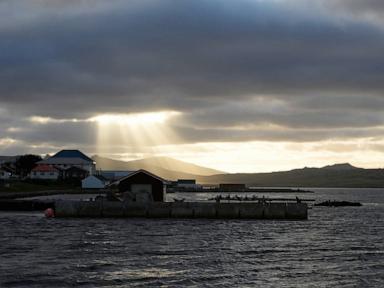
An Argentine federal judge just drew a hard line in the South Atlantic. Judge Mariel Borruto ordered British and Israeli firms to freeze development on the multi-billion-dollar Sea Lion oilfield off the Falkland Islands.
This isn't just about environmental protection or local red tape. It's a calculated escalation in a centuries-old sovereignty dispute that President Javier Milei has dragged back into the global spotlight. If you think distant territorial spats don't matter, look closer. Energy markets, international law, and shifting superpower alliances are all colliding 140 miles north of the archipelago. If you found value in this post, you should check out: this related article.
Let's break down what's actually happening, why companies are ignoring the court order, and what this means for the future of the region.
The Legal Maneuver Behind the Sea Lion Project
The injunction issued by the federal court in Tierra del Fuego targets the Sea Lion oil project. Israel's Navitas Petroleum and Britain's Rockhopper Exploration are the primary targets here. They've poured years and millions into the venture, eyeing first commercial oil production by 2028. For another angle on this development, see the recent update from USA.gov.
The immediate justification for the judge's ruling? Environmental lawsuits filed by local lawyers and 1982 war veterans. They pointed to the risks of chemical pollution, underwater noise, and potential oil spills threatening fragile marine ecosystems.
Yet, nobody is naive. The environmental concerns serve as a legal weapon for a broader geopolitical strategy. Argentina claims the islands—which it calls the Malvinas—and views any offshore extraction in those waters as the theft of sovereign resources.
Why the Court Order Won't Actually Stop Drilling
Paper rulings don't drill wells. In practical terms, Judge Borruto's injunction carries almost zero immediate weight on the ground. She openly admitted that enforcement depends entirely on international cooperation and the willingness of Navitas and Rockhopper to comply.
Spoiler alert: they aren't stopping.
Rockhopper and Navitas are pushing ahead. They have good reason to ignore Buenos Aires. The British government stepped in immediately with official guidance, assuring businesses that Argentine domestic law holds zero jurisdiction within the islands. London points straight back to the 2013 referendum, where Falkland residents voted overwhelmingly to remain a British overseas territory.
For the roughly 3,500 residents living on the islands, Sea Lion is an economic lifeline. Right now, their economy relies heavily on fishing. Oil could change everything. They aren't about to let an Argentine court dictate their financial future.
The Javier Milei Factor and Washington's Shadow
President Javier Milei has completely flipped the script on his foreign policy rhetoric. Early on, critics blasted him for praising Margaret Thatcher—the British prime minister who led the UK during the 1982 Falklands War. But politics moves fast.
Milei has seized on shifting diplomatic winds, particularly involving the United States. Following comments from U.S. President Donald Trump questioning Britain's reach and historic neutrality on the islands, Milei spotted an opening. He launched a aggressive campaign using diplomatic, judicial, and economic tools.
His administration is drafting legislation to tighten screws on any company operating near the archipelago. They’ve already filed criminal complaints against Navitas executives and other corporate players. Milei wants to make the cost of doing business in disputed waters too high to ignore.
What Happens Next
The timeline points straight toward 2028. That's when Sea Lion is scheduled to start pumping oil.
Britain will keep providing legal cover and diplomatic backing to the operators. Argentina will keep filing injunctions, pushing criminal charges, and rallying nationalist sentiment at home. Meanwhile, Navitas and Rockhopper will keep spending money and laying pipe, betting that corporate profit outweighs diplomatic fallout.
If you are tracking international energy projects or geopolitical risk, watch the corporate financing and insurance markets closely. That is where the real battle will be won or lost, long before any court bailiff tries to enforce a ruling 200 miles out to sea.
Malvinas: a Río Grande judge ordered a halt to the progress of the Sea Lion oil project
This video provides coverage from Argentine public television on the federal court ruling halting the Sea Lion oil project.
http://googleusercontent.com/youtube_content/1