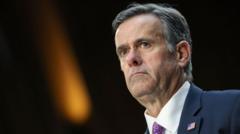
Secret diplomatic missions do not happen by accident. When CIA Director John Ratcliffe boarded a U.S. Air Force C-17 Globemaster III and flew straight into Vnukovo International Airport in Moscow, he sent a loud signal to the Kremlin. The flight transponder was left on. Washington wanted the world to watch. This was not a quiet, behind-the-scenes spy rendezvous. It was a high-stakes, public-facing warning shot.
For roughly eight hours on the ground, Ratcliffe met with Russian intelligence counterparts. Vladimir Putin did not sit down with him. Kremlin spokesman Dmitry Peskov confirmed the talks happened, but the snub was intentional. You have to ask yourself why the White House chose such a visible method for a clandestine agency head. Commercial business jets offer anonymity. A massive military transport plane screams urgency. Secretary of State Marco Rubio later downplayed the trip as routine channel maintenance, but nobody inside international security circles buys that spin.
Decoding the Moscow Agenda
The laundry list of topics Ratcliffe brought to the table reads like a catalogue of modern geopolitical crises. Intelligence reports leaked to outlets like The New York Times, The Washington Post, and Bloomberg point to multiple core objectives.
First, Ratcliffe pushed back hard against Russian escalations in Europe. Moscow's grey-zone operations, drone incursions, and sabotage acts across NATO territory have ratcheted up tensions to a boiling point. The CIA boss warned his Russian counterparts that testing the alliance's boundaries carries catastrophic risks.
Second, the entanglement of foreign conflicts took center stage. U.S. officials are deeply worried about intelligence sharing between Moscow and Tehran. Ratcliffe went to demand curbs on that partnership. At the same time, the administration wanted to dispel the Kremlin's calculation that Washington is too distracted by the Middle East to care about Eastern Europe.
Third, peace proposals hung heavy in the air. Reports suggested Ratcliffe floated the idea of a trilateral meeting involving Donald Trump, Volodymyr Zelenskyy, and Vladimir Putin to break the deadlock. The Kremlin quickly dismissed this specific proposal as an information hoax, leaving diplomacy stumbling in the dark.
Why History Repeats Itself Too Soon
This scene feels uncomfortably familiar. Back in November 2021, former CIA Director William Burns made a nearly identical emergency trip to Moscow. Burns sat across from Kremlin officials to warn them that an invasion of Ukraine would bring swift and devastating consequences. Putin ignored the warning. Tanks rolled across the border anyway.
Now, we are staring down the barrel of another critical juncture. Ukrainian President Volodymyr Zelenskyy recently dropped an enigmatic remark that September might change a lot. Whether he meant looming mass mobilizations by Moscow or bold new counterstrikes, the writing is on the wall. The war is entering a volatile new phase, and diplomatic backchannels are straining under the weight of mutual distrust.
What Happens Next
If you are tracking where this goes, look past the public posturing. Sanctions bills are moving through the U.S. Senate, European allies are bracing for hybrid border provocations, and the Kremlin is doubling down on its domestic war footing. Sending the head of the CIA to Moscow was a desperate gamble to alter Putin's risk calculation. History shows that dictators rarely change course because a spy chief flies into town for an eight-hour meeting. Expect tougher security postures across the Baltic states, tighter intelligence lockdowns, and an even harsher winter on the front lines.
What we know about the CIA director's mysterious visit to Moscow
This video provides a helpful analysis of how online flight tracking tools like Flightradar24 first exposed the CIA director's covert travel to Russia.
http://googleusercontent.com/youtube_content/1